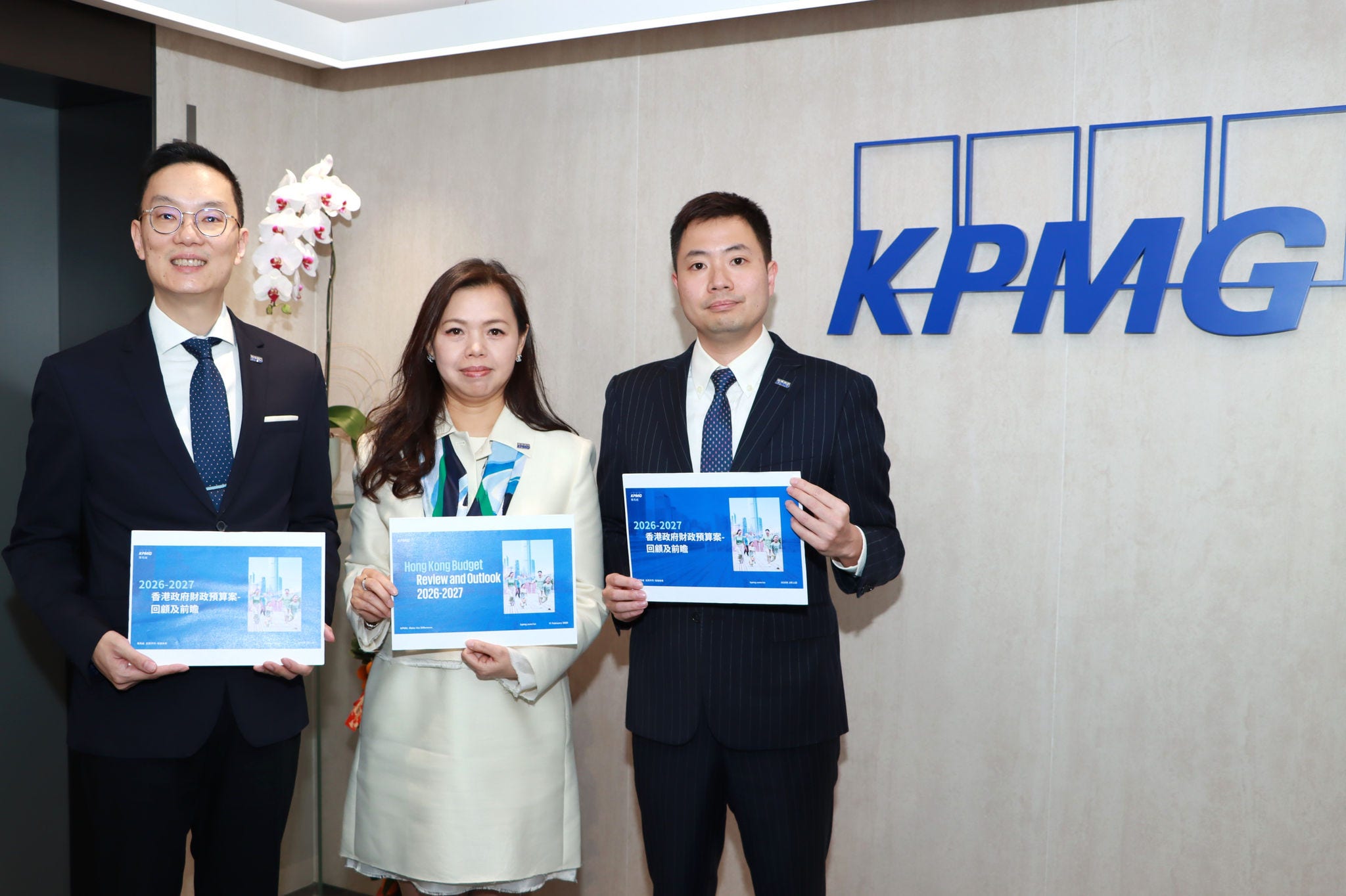
11 February 2026, Hong Kong (SAR), China ("Hong Kong") – In anticipation of the upcoming Hong Kong Budget, KPMG today released a comprehensive set of recommendations aimed at enhancing Hong Kong’s competitiveness and ensuring long-term fiscal sustainability.

      KPMG’s analysis indicates that Hong Kong’s fiscal position continues to improve, with the deficit narrowing for the fourth consecutive year. The firm estimates the 2025/26 deficit at HK$11.2 billion, significantly improved compared to the Government’s original estimate of HK$67 billion. Fiscal reserves remain healthy at approximately HK$643 billion as of 31 March 2026. This improved outlook is largely driven by better-than-expected stamp duty revenue, which exceeded forecasts by HK$45 billion.
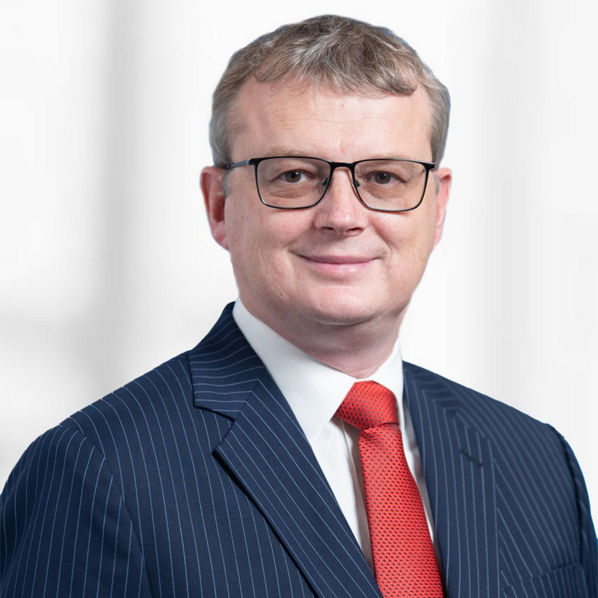


      譚培立(John Timpany) John Timpany, Head of Tax in Hong Kong SAR, KPMG China, stated:
      开引号

      To better align with the National 15th Five-Year Plan, propel Hong Kong's next phase of development, and maintain its attractiveness to global capital, we recommend focusing on three priority areas: 1) boosting business and competitiveness; 2) developing new industries and sustainability; and 3) supporting citizens and the community. A targeted approach to tax incentives can help attract multinational corporations and Chinese Mainland companies expanding overseas, thereby reinforcing Hong Kong's development as a premier international financial, shipping, trade, and innovation and technology centre, and a hub for high-end talent.

      关引号

      Boosting business and competitiveness
       

      As regional competition intensifies, KPMG recommends measures to reinforce Hong Kong’s role as a ‘super connector’ and ‘super value adder’. A key priority is attracting multinational corporations to establish regional headquarters in the city to stimulate the local economy, create high value jobs and support industrial development. With jurisdictions such as Singapore actively rolling out tax incentives to attract regional headquarters, KPMG proposes providing tax incentives on qualifying profits derived by regional headquarters established in Hong Kong to attract investment and promote local job creation.


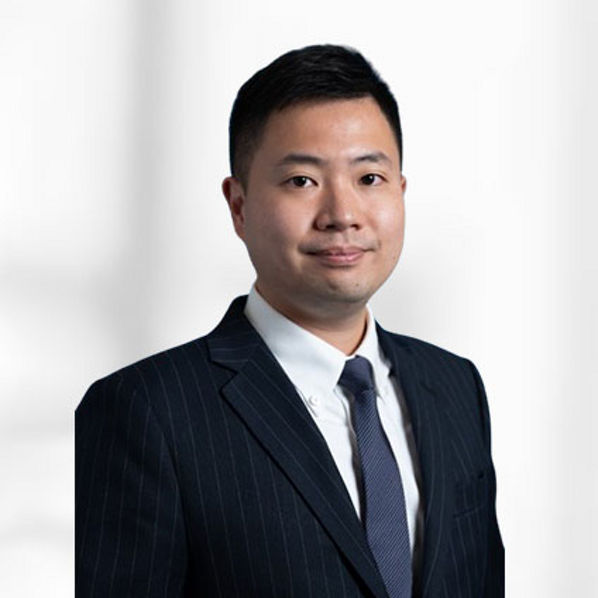
      何家輝 Stanley Ho, Tax Partner, KPMG China, comments:
      开引号

      Hong Kong’s ‘Four Centres and One Hub’ strategy sets a clear direction. Regional headquarters can play an important role in supporting growth and diversification, and well designed incentives would help Hong Kong compete effectively for investment across Asia Pacific.

      关引号

      For family offices, KPMG recommends enhancing the existing tax preferential policies by expanding their eligible investment scope to include digital assets and precious metals, which would make the scheme more attractive and effective. Furthermore, KPMG proposes granting stamp duty exemptions for asset transfers by high-net-worth individuals to their family-owned investment holding vehicles. Additionally, the firm suggests revisiting tax relief for overseas tax paid, regardless of whether Hong Kong has concluded a tax treaty with the relevant jurisdiction.


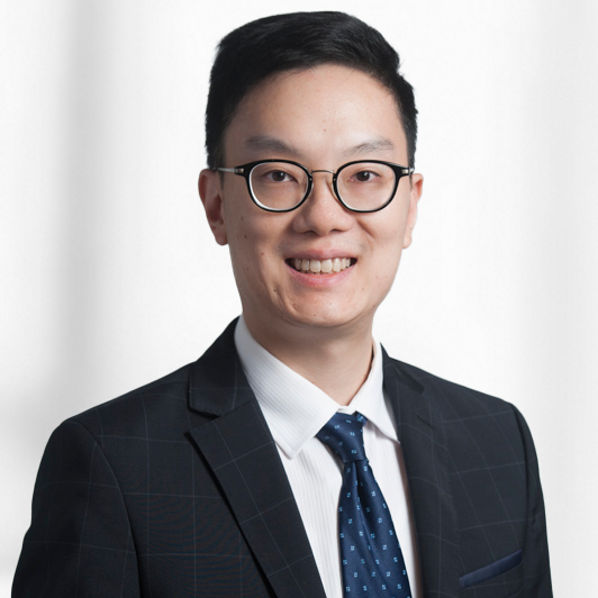
      梁愛麗 Alice Leung, Tax Partner, KPMG China, says:
      开引号

      As an international financial centre, Hong Kong benefits from strong regulation, a solid market infrastructure, and a growing digital asset ecosystem. With the Government actively promoting and supporting the family office sector, enhanced tax incentives would make Hong Kong an even more attractive destination for family offices.

      关引号

      Developing new industries and sustainability
       

      KPMG emphasises that Hong Kong is at an important point in its economic transformation, and that the Northern Metropolis provides a platform to accelerate innovation-led growth. Among its recommendations are introducing ‘super tax deductions’ for research and development carried out in the Greater Bay Area and the Northern Metropolis to encourage cross‑border innovation and support for the development of future industries.

      To help convert innovation into scalable economic activity, KPMG also recommends measures that improve the investment environment across the value chain. These include targeted tax measures to reduce operating costs, the use of public‑private partnership models where appropriate, more focused investment promotion for priority enterprises and improved talent matching to attract specialist professionals.


      李智深 Chi Sum Li, Head of Government & Public Sector in Hong Kong SAR, KPMG China, says:
      开引号

      Public-private partnerships enable more efficient use of resources and better risk management. Projects such as Hetao and San Tin in the Northern Metropolis show how Hong Kong is actively integrating into the Greater Bay Area. This not only supports China’s push for new quality productive forces, but also helps drive industrial upgrades – key goals in Hong Kong’s five-year plan.

      关引号

      Supporting citizens and the community
       

      To foster a more inclusive society, KPMG proposes a range of measures to support working families, homeowners and the elderly. These include: providing a tax allowance of HK$60,000 for working families who engage domestic helpers or grandparents to care for children aged 16 or below or disabled dependants; increasing the basic deduction for home loan interest deductions from HK$100,000 to HK$120,000 per year of assessment; and extending dependent parent and dependent grandparent allowances to cover eligible parents and grandparents residing in the Greater Bay Area. Other recommendations include a 100% tax rebate for Profits Tax, Salaries Tax and tax under Personal Assessment, capped at HK$6,000, as well as expanding the scope of tax-deductible charitable donations to include non-cash donations.


      Click here to view the full submission.


      -Ends-


      families

      Insights and proposals on tax, growth, and fiscal policy

      Media inquiries:

      Carrie Wong
      Direct: +852 3927 5636
      Email: cy.wong@kpmg.com

      Zoey Zhang
      Direct: +852 2978 8284
      Email: zoey.q.zhang@kpmg.com

      Francis Lee / Cynthia Chan
      Direct: +852 9631 7010 / +852 9496 3134
      Email: hkg.kpmg@fleishman.com


      Find out how KPMG's expertise can help you and your company.


      About KPMG

      KPMG in China has offices located in 31 cities with over 14, 000 partners and staff, in Beijing, Changchun, Changsha, Chengdu, Chongqing, Dalian, Dongguan, Foshan, Fuzhou, Guangzhou, Haikou, Hangzhou, Hefei, Jinan, Nanjing, Nantong, Ningbo, Qingdao, Shanghai, Shenyang, Shenzhen, Suzhou, Taiyuan, Tianjin, Wuhan, Wuxi, Xiamen, Xi'an, Zhengzhou, Hong Kong SAR and Macau SAR. It started operations in Hong Kong in 1945. In 1992, KPMG became the first international accounting network to be granted a joint venture licence in the Chinese Mainland. In 2012, KPMG became the first among the “Big Four” in the Chinese Mainland to convert from a joint venture to a special general partnership.

      KPMG is a global organisation of independent professional services firms providing Audit, Tax and Advisory services. KPMG is the brand under which the member firms of KPMG International Limited ("KPMG International") operate and provide professional services. "KPMG" is used to refer to individual member firms within the KPMG organisation or to one or more member firms collectively.

      KPMG firms operate in 138 countries and territories with more than 276, 000 partners and employees working in member firms around the world. Each KPMG firm is a legally distinct and separate entity and describes itself as such. Each KPMG member firm is responsible for its own obligations and liabilities.