In 2025, U.S. tariff hikes and trade tensions caused volatility in the first half of the year, but the global economy gained momentum as the U.S. Federal Reserve implemented interest rate cuts, while significant investments in artificial intelligence (AI), including advances from the Chinese Mainland, drove growth. Robust demand for technology and electronic products, and strong cross-boundary ties between the Chinese Mainland and Hong Kong fuelled a surge in exports, expanding Hong Kong’s economy by 3.5%1, up from 2.5% in 2024.
As the trade landscape stabilised throughout 2025, Hong Kong’s Hang Seng Index achieved a stellar 27.8%1 annual gain, residential property transactions volumes grew by 18%1 and overall residential property prices reverted to a modest increase of 3% after three consecutive years of declines1. Amid a rapidly growing technology sector, the Hong Kong stock market rally lifted business confidence during the second half of 2025, contributing to a 1.7%1 expansion in private consumption spending, effectively reversing the previous year’s contraction.
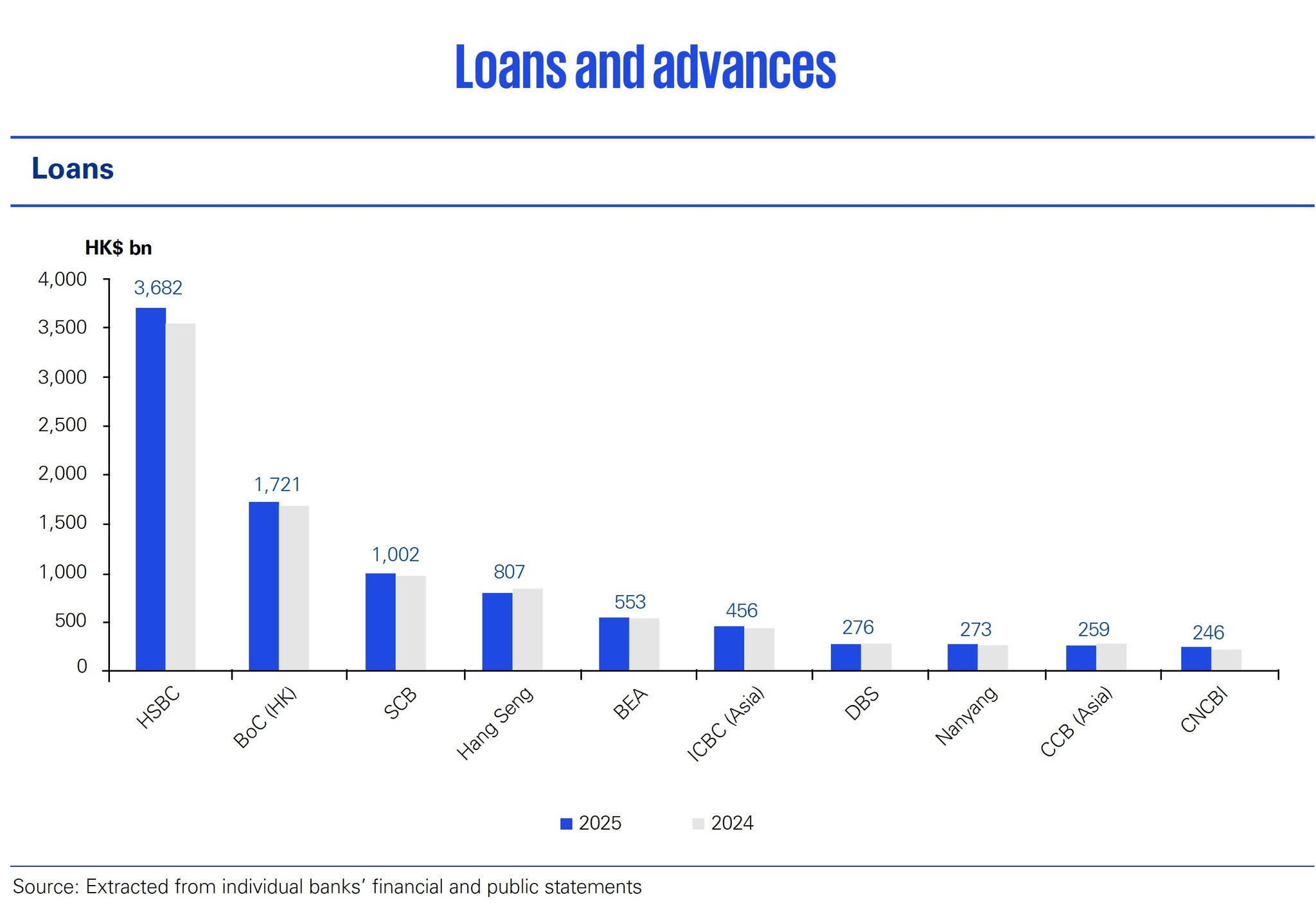
Within this environment, Hong Kong’s banking sector achieved strong overall balance sheet growth in 2025. The total assets of all licensed banks rose by 7.1% to HK$26 trillion, marking an acceleration compared to the previous three years, where year-on-year assets growth averaged 3.0%. Total loans and advances increased 3.3%, reversing three consecutive years of declines, while customer deposits grew by 9.1%, well above their recent average of 2.5% per year between 2022 – 2024.
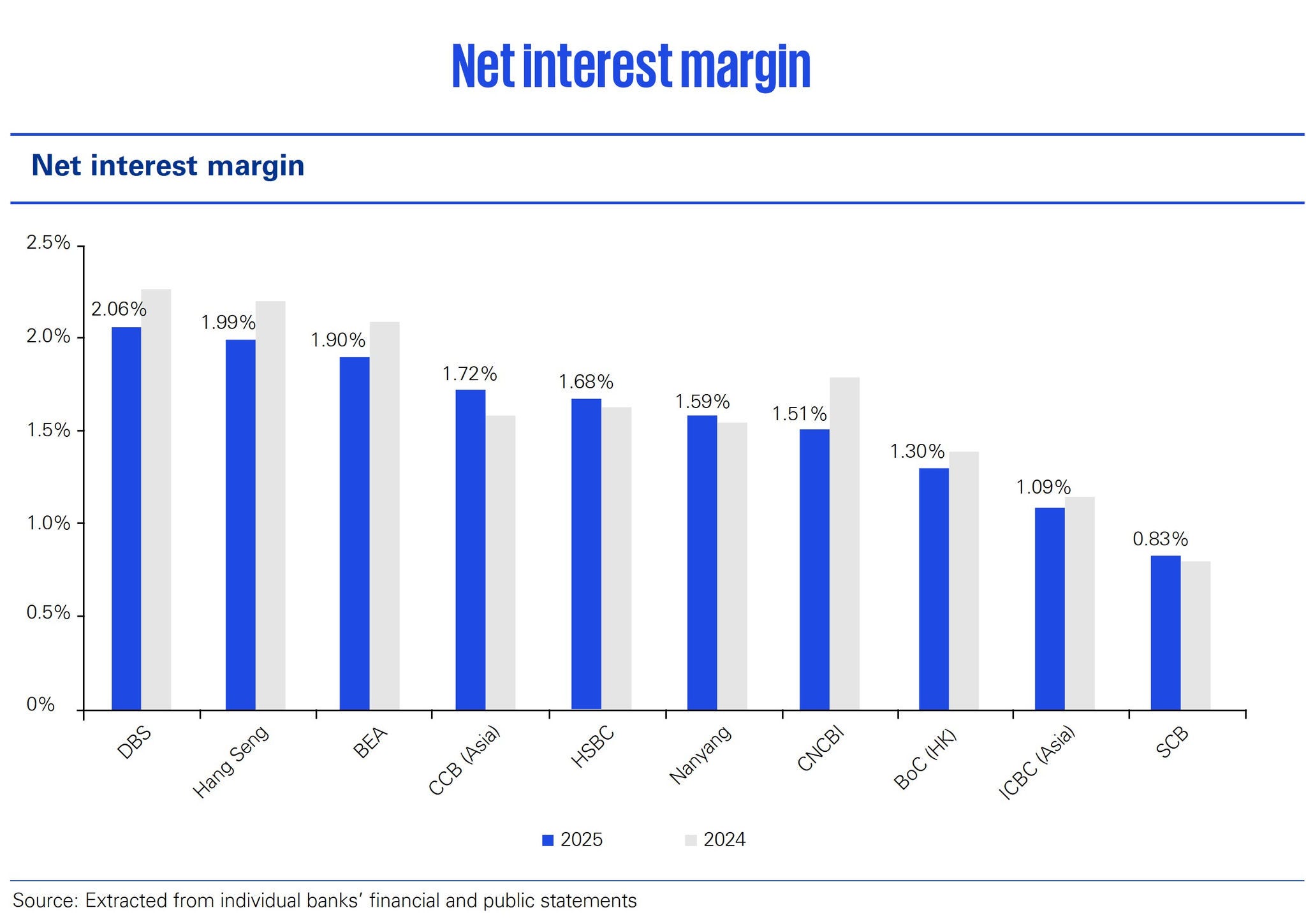
In line with our prediction in the 2025 Hong Kong Banking Report, the sector continued to be affected by shifts in U.S. monetary policy with net interest margins (NIM) declining by an average of 7 basis points year-on-year.
Building on the momentum of balance sheet growth, Hong Kong banks grew their operating profit before impairment charges to HK$337 billion in 2025, up 5.5% from the previous year, including a 5.7% growth in non-interest income.
The U.S. Federal Reserve reduced the federal funds rate by a total of 75 basis points in 2025 and has maintained the rate at 3.75% since December. Following this, the HKMA followed suit by lowering the base rate from 4.75% to 4.00% and the 3-month HIBOR dropped from 4.37% in December 2024 to 2.93%2 in December 2025. The composite interest rate, which is a measure of the average cost of funds for banks, also fell by 88 basis points from 2.24% in December 2024 to 1.36% in December 20253.
The Hong Kong (SAR) Government forecasts the economy will grow by 2.5% to 3.5% in 2026, after recording 3.5% growth in 2025. Consumer price inflation is expected to reach 1.7% in 2026, up from 1.1% in 20251. Hong Kong’s economy showed strong growth in the first quarter of 20264, driven by a surge in electronic product exports, as well as a rise in service exports, supported by robust regional manufacturing activity, sustained global demand for AI-related electronic products (e.g. around data centres), and a recovery in tourism and financial services.
While the global economy is projected to grow steadily in 2026, the outlook is also clouded by multi-sided risks. The AI boom is driving technology investments, yet concerns persist around high debt levels in the AI and other fast-growing sectors, especially if returns fall short. At the same time, ongoing conflicts in the Middle East are pushing up energy and shipping costs. These factors together have disrupted the U.S. disinflation process, dampening market expectations of further interest rate easing.
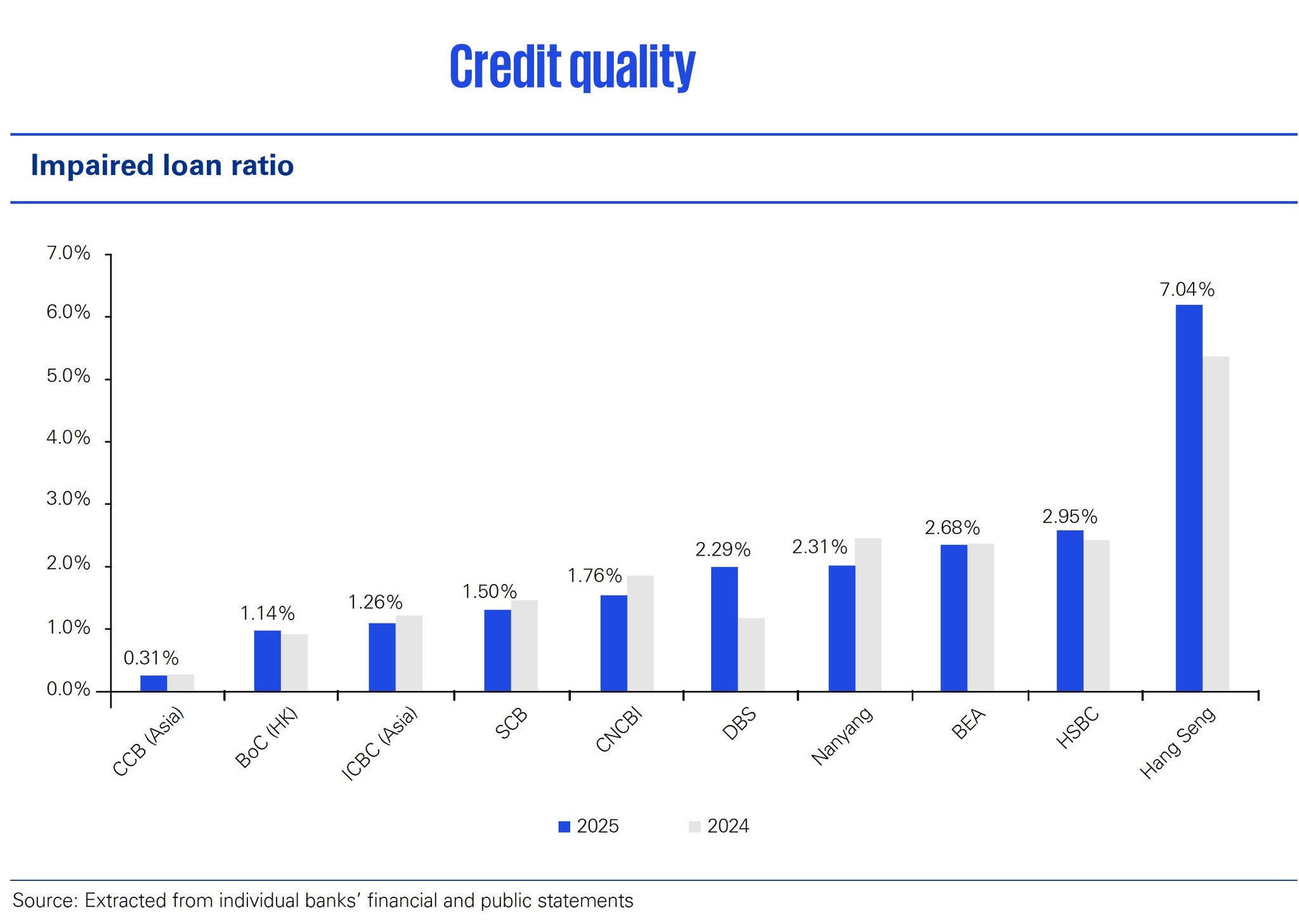
Notwithstanding these global uncertainties, the outlook for Hong Kong’s banking sector for the remainder of 2026 is, on balance positive. Strong global demand for AI-related products and easing trade tensions are expected to fuel export momentum, while enhanced cross-boundary connectivity, alongside supportive policies, is set to stimulate growth in service exports. Rising domestic consumer and business confidence is also expected to drive credit and asset expansion. Banks will nonetheless need to navigate some uncertainties: a rate environment that is not clear on direction, the ongoing pricing and sales downturn in the Chinese Mainland housing market, which may persist, and softness across Hong Kong’s commercial real estate sector5. Against this backdrop, banks should maintain prudent risk management and actively monitor exposures within highly leveraged real estate portfolios and vulnerable corporate commercial sectors.
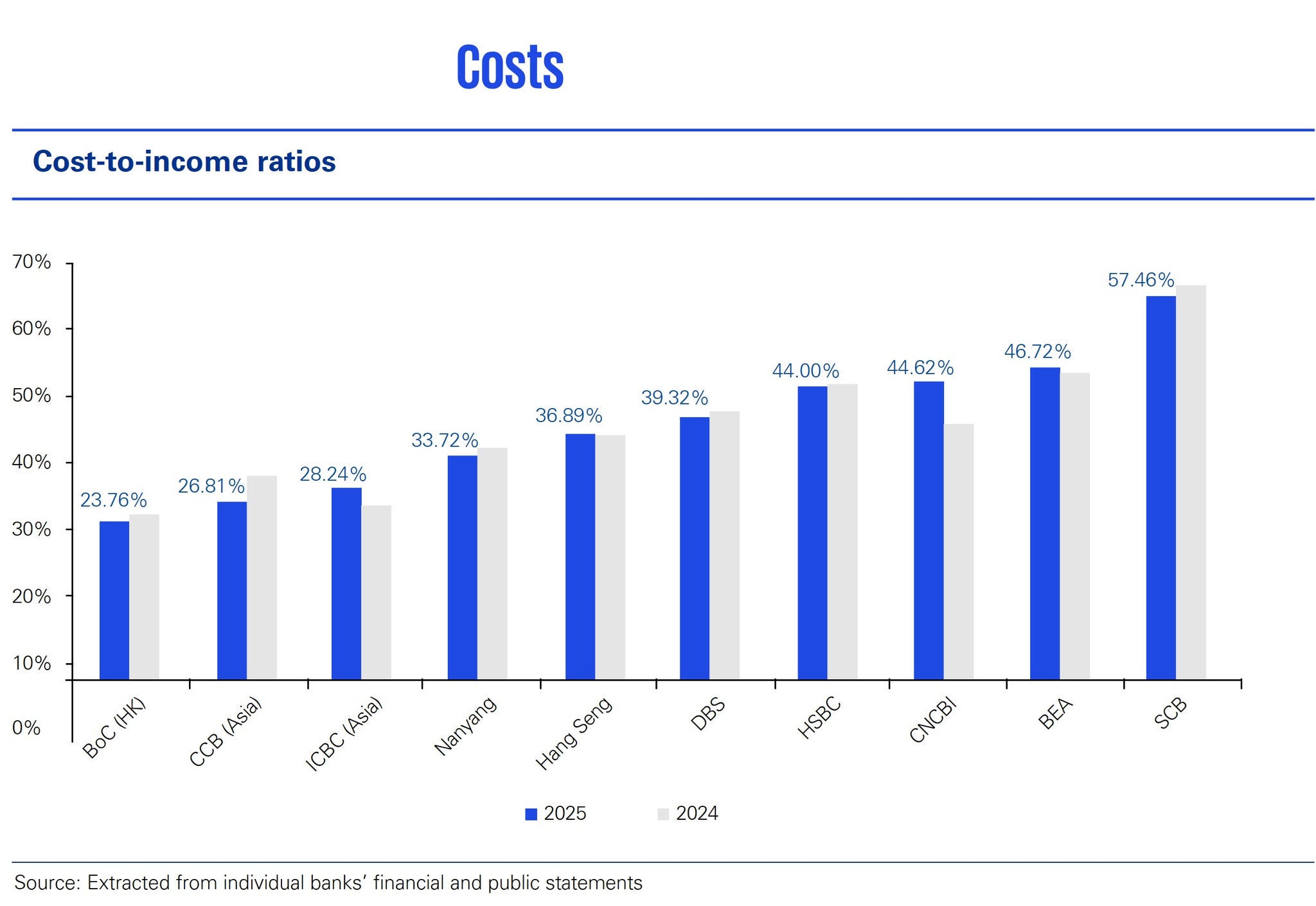
In this article, we analyse key metrics for the top ten locally incorporated licensed banks6 in Hong Kong. While some banks operate a dual entity structure in Hong Kong (e.g. a branch and an incorporated authorised institution), we have not combined their results. The analysis is conducted on a reporting entity basis7.