We asked KPMG’s global infrastructure leaders to use their experience and insight to put themselves in the year 2033. We had them tell us what they saw, pick some winners and losers, and provide insights and ideas to help readers in the mid-2020s prepare for the world of 2033. 

      Be prepared: The trends and topics raised in this report are having a massive impact on the evolution of the infrastructure sector and the global economy. Infrastructure will play a key role in determining the outcomes we achieve as communities, countries and globally. In this report, we argue that it is time for sector leaders to start thinking differently about the future and their role in delivering it. 

      To make this report practical, we focused on three key yet interdependent themes – Cities, Sustainable development and Innovation. Here are some highlights of what our leaders discussed.

      Explore the predictions below and read some of the highlights of what our leaders discussed. Download the full report for a deep dive into some scenario building and visualizations for the future.

      converging-trends-2023-report.pdf

      Converging Trends 2033: The long view

      A 2033 world view for the infrastructure sector


      graphic-city

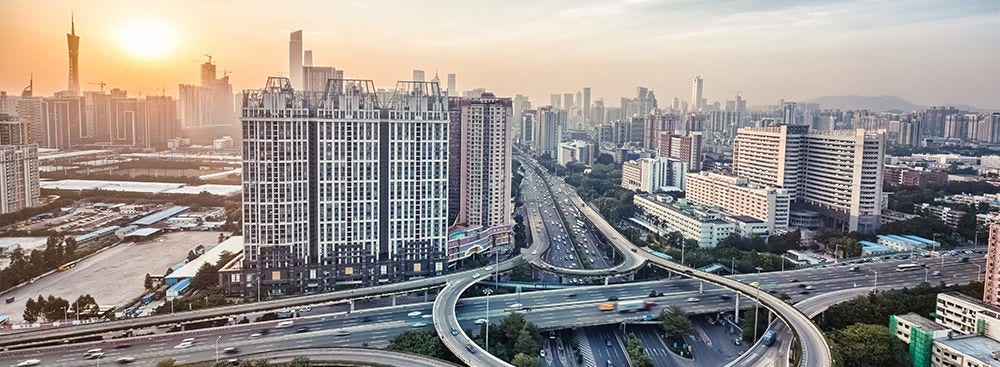
      The late 2020s will likely be seen by future generations as the era of urban revolution. Industrial-age norms will start to fall away. Hives of vibrant, sustainable activity will grow out of the existing concrete. We will start to recognize that we are a part of – not apart from – nature. And new ideas will emerge, thrive and peacefully coexist.

      The risk is that this will lead to a bifurcation between the cities that are rapidly transforming and those that are not. Find out more, including the five key factors that will separate the winners from the losers, in the full report.

      In 2033, we will be in the process of pulling ourselves back from the cliff edge. There won’t have been any ‘silver bullets.’ It will have been an evolution, not a revolution – a triumph of progress over perfection. And while certain targets will have been missed, the world has begun to adapt and embrace a more regenerative, sustainable, and equitable future.

      Yet there will also be many different evolutionary paths to sustainability. Find out what the next 10 years might look like and the potential impact on infrastructure players and providers in the full report.

      solar-panel

      In many ways, the world in 2033 looks a lot like it does today. People still work, they still drive on roads, and they still need electricity. What has changed is the focus. Whereas in the past, infrastructure innovation was often poorly funded, weakly adopted and scattered in its use cases, by 2033, innovation in the infrastructure sector is tightly aligned to a small number of very important priorities.

      Perhaps the most important change is in governments’ ability to accelerate innovation and adoption of new models. Find out how the leading governments can do it in the full report.

      Related content

      Familiar challenges, new approaches

      Read more

      A view into the world in 2033 for the infrastructure sector
      Read more
      car-banner

      Read more

      A view into the world in 2033 for the infrastructure sector
      Read more
      Eiffel-tower

      Our people

      Sharad Somani

      Partner, Head of Infrastructure Advisory, Head of Infrastructure, Asia Pacific and Head of ESG Consulting

      KPMG in Singapore


      Connect with us

      KPMG combines our multi-disciplinary approach with deep, practical industry knowledge to help clients meet challenges and respond to opportunities. Connect with our team to start the conversation.