The pressure on financial institutions (FIs) and retailers to modernise payment systems and infrastructure is immense. The payments environment is evolving rapidly with a range of new payment alternatives and channels competing for market share; new technologies like contactless payments and QR payments are gaining traction (particularly in emerging markets); and new ancillary services like Buy Now, Pay Later (BNPL) are growing in popularity.

      Modernising payments: Global perspectives from financial and retail executives on payment modernisation strategies and trends, presents findings based on a survey of 750 financial institutions and 600 retailers, conducted by KPMG International in September 2024, to assess current payment modernisation programs and progress.

      Explore global perspectives, regional analysis and country spotlights, and the challenges and opportunities shaping payment modernisation around the world.

      Download

      Modernizing payments

      Global perspectives from financial and retail executives on payment modernization strategies and trends

      Findings at a glance

      Financial institutions

      Retailers


      Key takeaways

      • Urgency:

        The vast majority — 93 percent of financial institutions and 87 percent of retailers — are either currently modernising their payments infrastructure or are planning to do so (on average, they will begin within the next six to eight months).

      • Motivation:

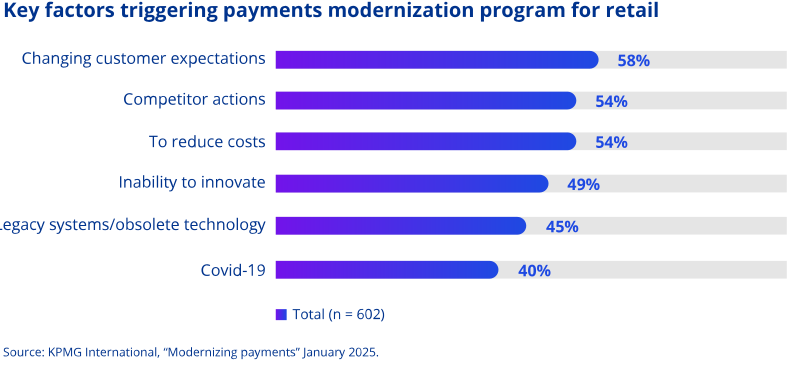
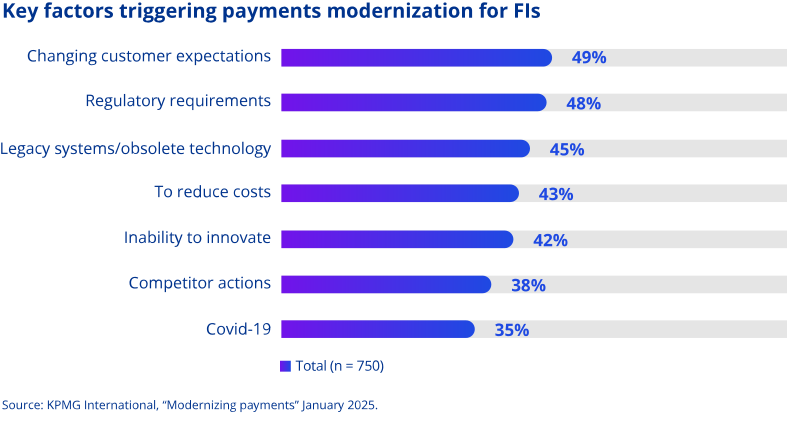
        Changing customer expectations ranks as the top driver for Fis and retail organisations. FIs are motivated by regulatory requirements and the need to update legacy systems, while retailers are motivated by competitive pressures and cost considerations.

      • Resources:

        FIs and retailers are allocating significant resources towards modernisation. Survey respondents indicated that on average, FIs plan to spend around US$18 million and allocate 36 people to their programs. Retailers expect to spend an average of US$4.1 million and allocate 23 people to their programs.

      • Benefits:

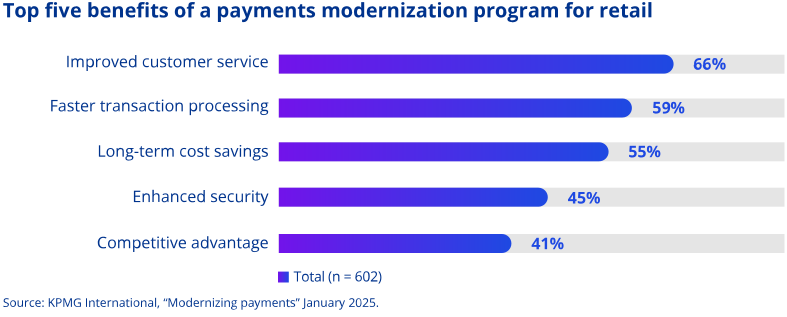
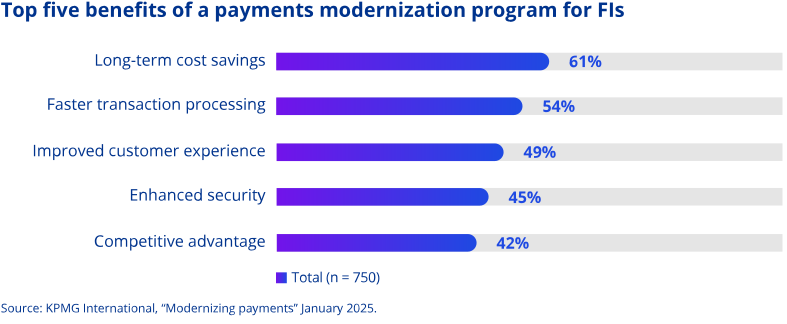
        Respondents (both Fis and retailers) agree that payment modernisation will deliver improved customer experiences, faster transaction processing and long-term cost savings. Retailers’ top expected benefit is customer experience improvements, while FIs are primarily anticipating cost savings.

      • Challenges:

        FIs and retailers are concerned about the cost and potential disruption of implementing new payment systems. Retailers are also worried about training staff to manage the transition, while FIs are concerned about the complexities of integrating new platforms across multiple systems.


      Implementing and integrating new payments platforms can be complex and time-consuming. Despite these challenges, executives recognise the benefits of payment modernisation as a catalyst for growth and innovation.

      Courtney Trimble

      Lead of Global Payments, KPMG International

      Partner, Lead of Payment Capability Banking, KPMG in US


      Our Insights

      Something went wrong

      Oops!! Something went wrong, please try again

      Our People

      Antony Ruddenklau

      Partner, Head of Financial Services, Global Head of Fintech and Innovation, Financial Services, KPMG International and Head of Payments, Asia Pacific

      KPMG in Singapore


      Connect with us

      KPMG combines our multi-disciplinary approach with deep, practical industry knowledge to help clients meet challenges and respond to opportunities. Connect with our team to start the conversation.