Current stage of CBAM implementation
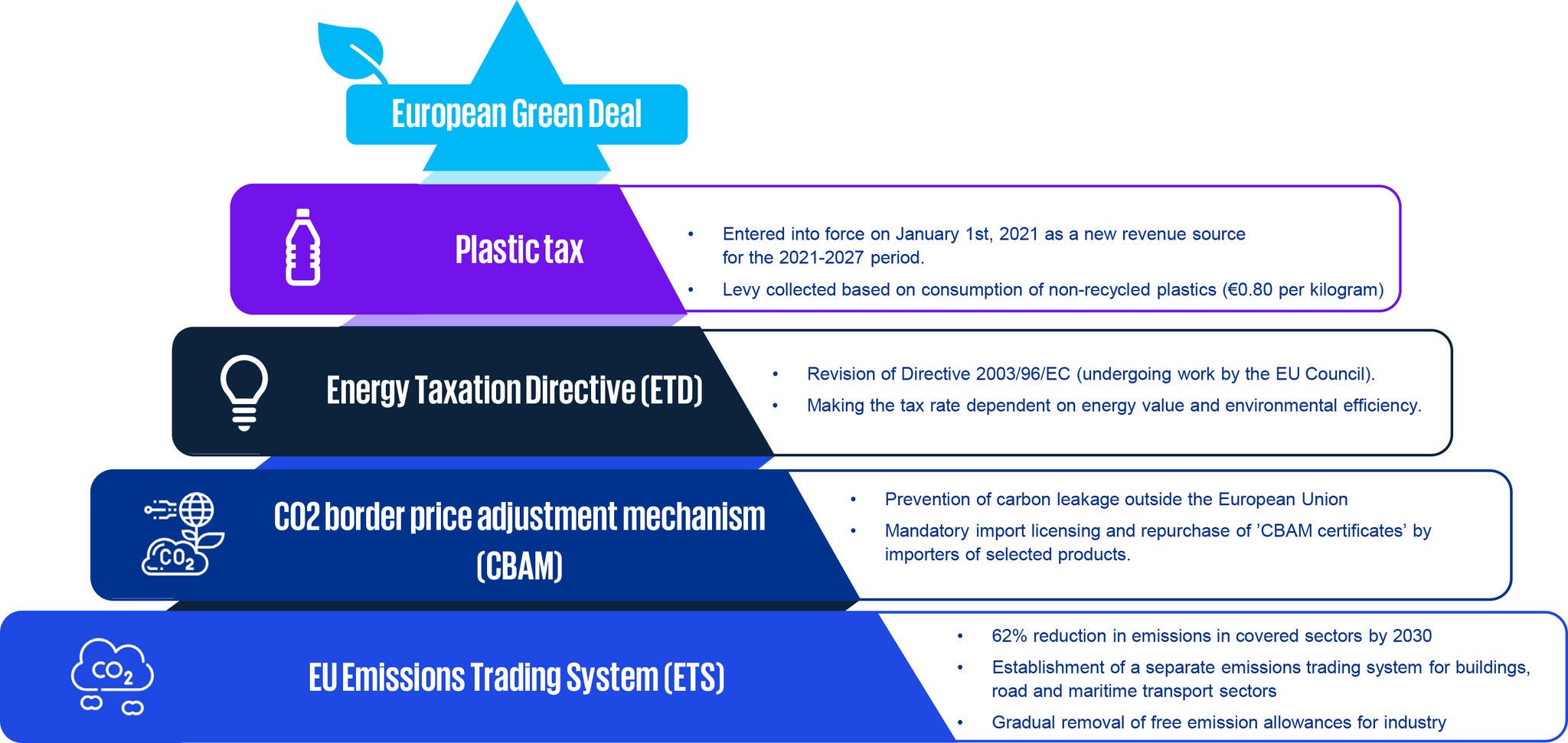
The European Commission, Council and Parliament reached a political agreement in December 2022 stipulating that the CBAM would already enter into force on October 1st, 2023. Following the trialogue, an updated wording of the Border Price Adjustment Mechanism (CBAM) Regulation was published on January 25th, 2023, formally approved by the European Parliament on April 18th and by the Council of the European Union on April 25th.
Products covered by the mechanism
CBAM was originally intended to cover selected product categories deemed to be most carbon intensive and vulnerable to carbon leakage: cement, electricity, fertilisers, iron and steel and aluminium. The latest version of the regulation has expanded and further defined this scope to include:
- hydrogen (CN 2804 10 000),
- screws, bolts, nuts, coach screws, screw hooks, rivets, cotter pins, cotter pins, washers (including spring washers) and similar articles of iron or steel (CN 7318),
- other articles of iron or steel (CN 7326),
- aluminium structures and parts of such structures (CN 7610),
- aluminium tanks, reservoirs, vats and similar containers (CN 7611 - 7613),
- strands, cables, plaited bands and the like, of aluminium, not electrically insulated (CN 7614),
- other aluminium articles classified in CN Chapter 7616.
Due to the transitional period in the functioning of the mechanism, which is expected to last between October 1st, 2023 and December 31st, 2025, the scope of the above-mentioned product categories will not change. However, it is expected that by 2030, the scope of CBAM-regulated commodities will cover all sectors falling within the scope of the EU Emissions Trading Scheme (EU ETS).
How will CBAM work in practice?
An entity that will be preparing to implement this regulation in its day-to-day operations must keep in mind three, important points:
Application for Authorised Declarant status
Applications are open from 2025, need to be authorised before goods can be imported into the EU (from 2026)
The regulation also provides the possibility for an intermediary who represents the importer to apply for the status of authorised declarant. In this case, the services of an intermediary will be available to an importer who does not operate directly in the EU and who cannot himself be registered as an authorised declarant.
Declarations and reporting
According to Article 6 of the CBAM regulation, authorised declarants will be required, by May 31st each year, to prepare declarations to the competent authority showing the total embedded GHG emissions resulting from imported CBAM-regulated goods during the previous calendar year and the corresponding total number of CBAM certificates they will have to purchase and redeem.
Under the aforementioned transitional period, importers will have to submit 'CBAM reports' to the European Commission, containing information on the goods imported each quarter – no later than one month after the end of each quarter. This information will include both the quantity of goods imported (expressed in tonnes) and the volume of embedded emissions (in CO2e equivalent).
In the event of a failure to comply with the obligation to submit a quarterly report, the regulation provides for the imposition of penalties on importers, the amount and type of which have not yet been determined, but are intended to be "effective, proportionate and dissuasive".
Method of calculating emissions, verification and emissions paid in the country of export
Annex III of the CBAM regulations sets out how to calculate the actual direct – and, where applicable, indirect – greenhouse gas emissions of imported products. Declared emissions will have to be verified by an independent, accredited verifier.
Where the declared embedded emissions have been paid in the country of origin of the imported products, the authorised declarant will be able to claim a reduction in the amount of CBAM certificates to be redeemed.
Impact of CBAM on businesses
CBAM, as the new framework for carbon pricing in the EU, will have a significant impact on companies involved in international trade. Important elements of preparing for its introduction – for example with the support of KPMG – will be to assess the impact of the regulation on a company's costs and business model, the scale of its impact on its operations or the monitoring of a company's GHG emissions. It will stimulate reflection on, e.g., the efficient use of regulated materials, changes in supply chains or implementation of alternative solutions.
Some of the direct impacts may include – but are not limited to – potential higher import prices of regulated goods (e.g. imported steel or aluminium), as well as on higher prices of final goods for the production of which CBAM-regulated products are used.
The regulation will also impose new reporting obligations directly on importers, and will have a significant impact on non-EU companies, which will have to implement a system to account for embedded emissions associated with imported products - as well as independently verify them. Information on the emissions of the imported product will have to be provided in an authorised quarterly declarations during the transitional period and annually during the definitive period.
CBAM will also have the potential to result in disruptions to supply chains – for example, where imported goods are stopped at the border due to their failure to declare them to customs by the authorised declarant or the use of incorrect classification of goods by CN codes.
In the longer term, the CBAM mechanism will have a significant impact on the future path of carbon prices and the number of free allowances received by European manufacturers. It is therefore important for companies to understand the impact of these measures on the industry in which they operate.