


Operating responsibly also includes the company’s environmental and social performance.
Social responsibility is not new to family businesses. However, issues related to sustainability, climate risk, poverty and uncertainty in many parts of the world are rising in importance. Leaders are turning their attention to ‘people, planet and profit’ goals to generate value for the environment, create jobs, contribute to community prosperity and deliver long-term value to the family as well as the business.
Focusing on financial performance is no longer enough
Better together: Profitability with responsibility
The old days of ‘corporate social responsibility’ are being replaced by a much broader strategic mindset, and family businesses with the families’ purpose and values embedded in the business have an opportunity to make important contributions to the community of global leaders who are setting out on new paths to do what’s good for their business and for the world.
The impact of the pandemic highlighted something that family businesses have known for decades: that operating in a socially responsible way does, in fact, generate value for the environment, create jobs, contribute to community prosperity and deliver long-term value to the family as well as the business. And so, when it comes to ESG, many family businesses are starting from a position of strength to elevate their social and environmental commitments even further.
More family businesses are adopting this new social responsibility mindset in an effort to get deeper insights into what is most important to their customers, employees and other critical stakeholders and to consider how their actions might also have an impact on their businesses.
Whether they’re privately or publicly owned, businesses of every type no longer have a choice in terms of the sustainability of their operating practices, and senior leadership teams in every industry and sector are turning their attention to environmental and society goals, using strategic value frameworks such as the four Ps of people, planet, prosperity and principles.
All signs point to a new strategic direction
The impact of the pandemic highlighted something that family businesses have known for decades: that operating in a socially responsible way does, in fact, generate value for the environment, create jobs, contribute to community prosperity and deliver long-term value to the family as well as the business. And so, when it comes to ESG, many family businesses are starting from a position of strength to elevate their social and environmental commitments even further.
More family businesses are adopting this new social responsibility mindset in an effort to get deeper insights into what is most important to their customers, employees and other critical stakeholders and to consider how their actions might also have an impact on their businesses.
Whether they’re privately or publicly owned, businesses of every type no longer have a choice in terms of the sustainability of their operating practices, and senior leadership teams in every industry and sector are turning their attention to environmental and society goals, using strategic value frameworks such as the four Ps of people, planet, prosperity and principles.
The four Ps strategic framework: Value for the planet, people, prosperity, and principle
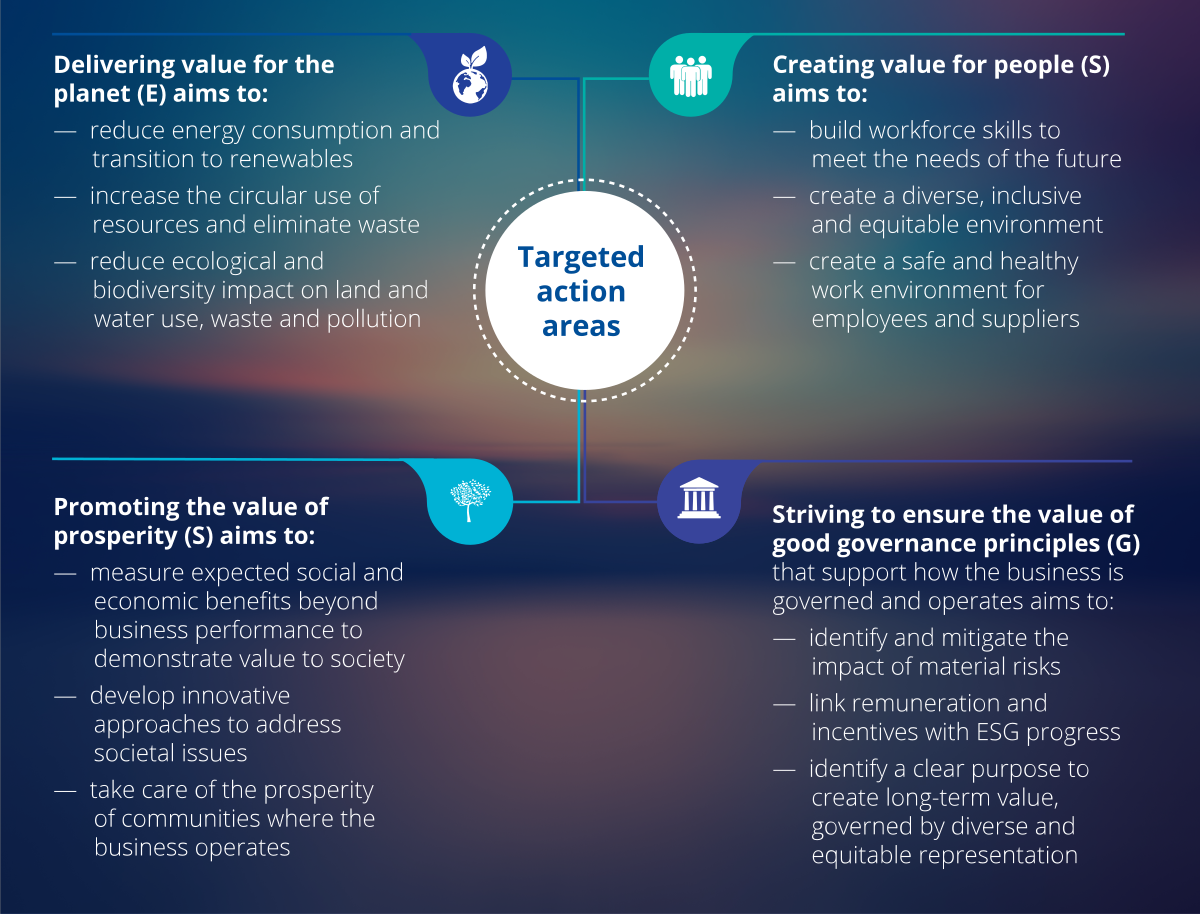
Family businesses are connecting the dots between the four Ps in order to see to see the bigger picture and choosing where to focus the resources of the family and the business.
This is a sweeping agenda that can’t be ignored. It requires a broader strategic mindset, with decision-making elevated from the ‘corporate donations committees’ of old to the leadership level of the business; putting accountability for achieving environmental and societal results in the hands of executive committees and company boards.
Beyond compliance
Measuring impact and success has many potential routes to take, depending on each company’s priorities and strategy, some of which are tangible, publicly visible and driven by a strong mission and sense of purpose.
In our experience, family businesses that think strategically about how their companies operate are increasingly inclined to disclose the social value they’re creating (where they previously might have kept this information to themselves) because of the potential benefits, such as more favorable financing terms related to environmental sustainability.
This goes well beyond compliance or regulatory reporting, and it’s becoming more of a commercial imperative for growth. In fact, there are some indications that within the next 12 months , lenders and investors might increasingly make their financing decisions based on ESG results.
From doing good to creating value
It’s important to think about your access to data, how to protect it and use it to forecast your strategic growth. And to do that, the development of comprehensive data strategies are essential for success.
Many family businesses are understandably in the early stages of their social responsibility strategy development and exploring the various technologies available to track and measure the impact of what’s important.
Companies that have a limited strategic view on sustainability may be at risk of being disrupted by not being sufficiently prepared for a society in which measuring societal impact is expected be as important as financial results and can contribute equally to financial value.
Moving forward, it’s our view that the approach to social responsibility should be deliberate and lend itself to accountability, measurement, review and improvement.
The first step for many family businesses is to get over a psychological hurdle. Because they have historically been brilliant in terms of social welfare by making sure they continue to live the values of their predecessors, they need to recognise the urgency of environmental issues as well.

Good for business, good for the world
This article explores why focusing on financial performance is no longer enough and shares insights from family business leaders on their approach to social responsibility and how it is delivering long-term value to the family as well as the business.
This article is part of a series from KPMG Private Enterprise exploring how family businesses are adopting new ways of thinking and driving innovations that are preparing their businesses and their families for future opportunities in light of the current landscape. The articles provide practical examples of how family businesses are keeping their minds open and turning emerging trends into the drivers of their future growth and success.
This first article ‘Sustaining a culture of continuous transformation in family business’ focuses on the broad topic of business transformation and shares insights from family business leaders on their approach to business transformation and how it sustains their purpose, values and the long-term success of their businesses.
Related content


Contact us


