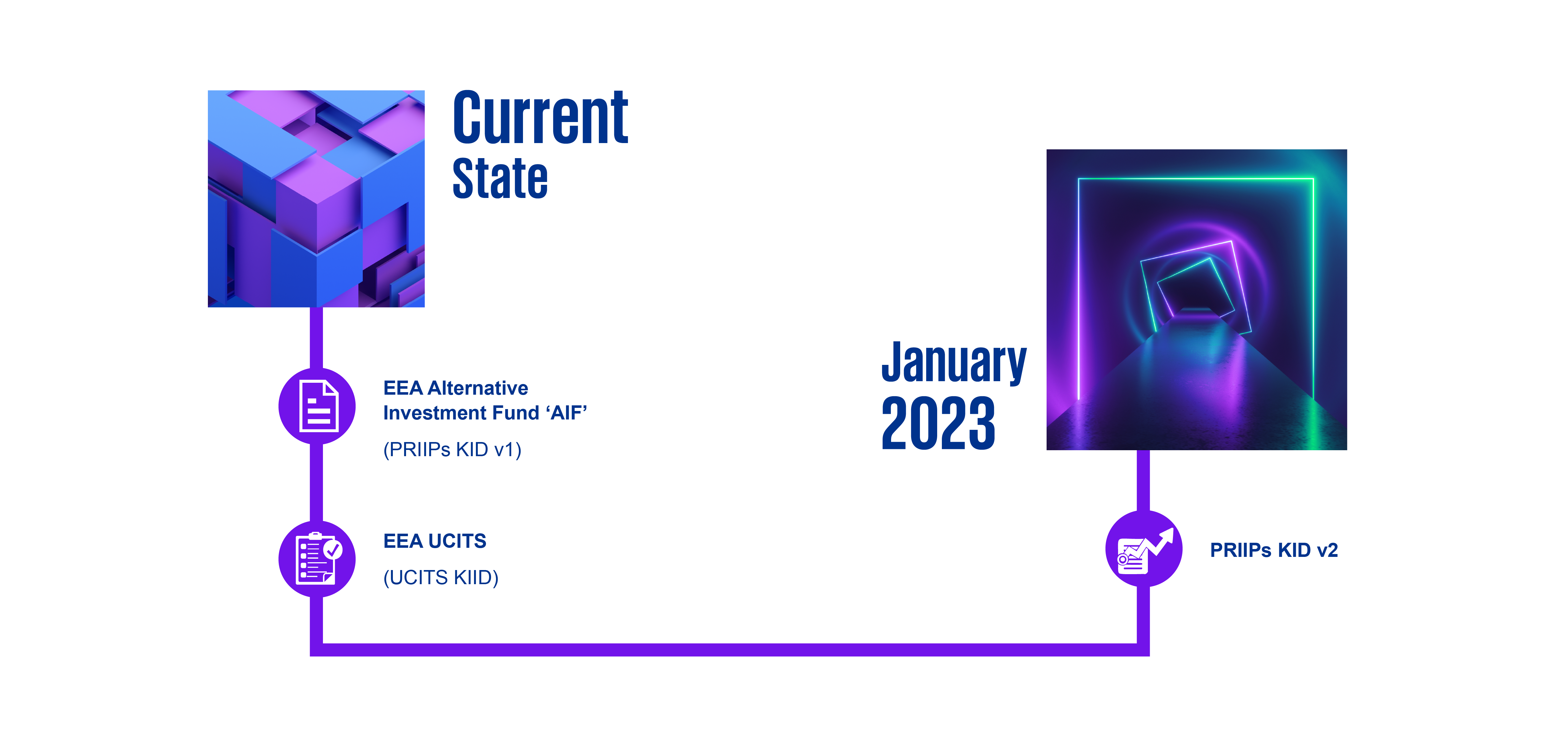
For those manufacturers already producing a PRIIP KID the implication emanating from the new updates can be addressed in the form of a Gap Analysis from the current state to what needs to be achieved to satisfy the updated requirements. The latter include the new outputs such as European PRIIPs Template ‘EPT’ & Comfort European PRIIPs Template ‘CEPT’ 2.0, Past Performance Document ‘PPD’ and Previous Performance Scenario Calculations Report ‘PCR’.
From experience, this is by no means an easy feat and would most probably need to be managed as a ‘mini project’ in itself, if timely and successful outcomes are desired. One key question for product manufacturers in this position to answer is for them to know if they can produce the updated PRIIPs KID and related output documents via the same technology, process and service providers (if any) they currently have. In this regard, it is paramount for manufacturers to consider the ability of their data management systems to allow for both UCITS- and PRIIPs-related data to be stored and co-exist accordingly. This should be coupled with maintaining ongoing reviews of the content and monitoring thresholds to ensure compliance with the respective regulatory requirements.
On the other hand, those manufacturers aiming to switch from UCTIS KIID to PRIIPS KID, hence producing the PRIIP KID for the very first time, would need to be addressing a wider spectrum of implications through their project plan. Knowing the requirements under the new RTS and validating the availability of the required raw data (which would also include a number of historical data points) is of paramount importance to ensure a solution in place that can accommodate all the regulatory requirements.
Another major operational challenge will undoubtedly lie in designing the required process flows to be able to publish past performance scenarios and related data. Whilst the preferred route product manufacturers are taking to satisfy these requirements is not yet clear, they would in essence need to decide whether to use a separate document annexed to the KID or produce a digital publication on their website which could prove to be a more cost effective and environmentally friendly solution.