Sustainability can no longer be regarded as peripheral but is set to become central to credit institutions.
Committed to supporting organisations in achieving this aim, and following from the success of the first KPMG training course on leveraging the opportunities that ESG creates in the gaming industry, KPMG in Malta recently hosted a webinar focusing on ESG in the banking sector.
The ESG in banking webinar brought together over 60 participants from most local banks, the Malta Bankers’ Association (MBA) and the Malta Financial Services Authority (MFSA). Speakers included experts from the KPMG network – particularly Malta, Germany, and Cyprus – as well as the Head of Banking Supervision at the MFSA, David Eacott.
Rachel Decelis, ESG lead for KPMG in Malta, gave an overview of ESG drivers, which include the United Nations Sustainable Development Goals, climate change, changing consumer sentiment, pressures from capital markets, and regulations, including the EU Taxonomy and the proposed Corporate Sustainability Reporting Directive (CSRD). With the expected implementation date now starting in 2024, the CSRD aims to expand the obligations under the Non-Financial Reporting Directive while facilitating access to sustainability information, by requiring large or listed companies to report ESG metrics in their annual report.
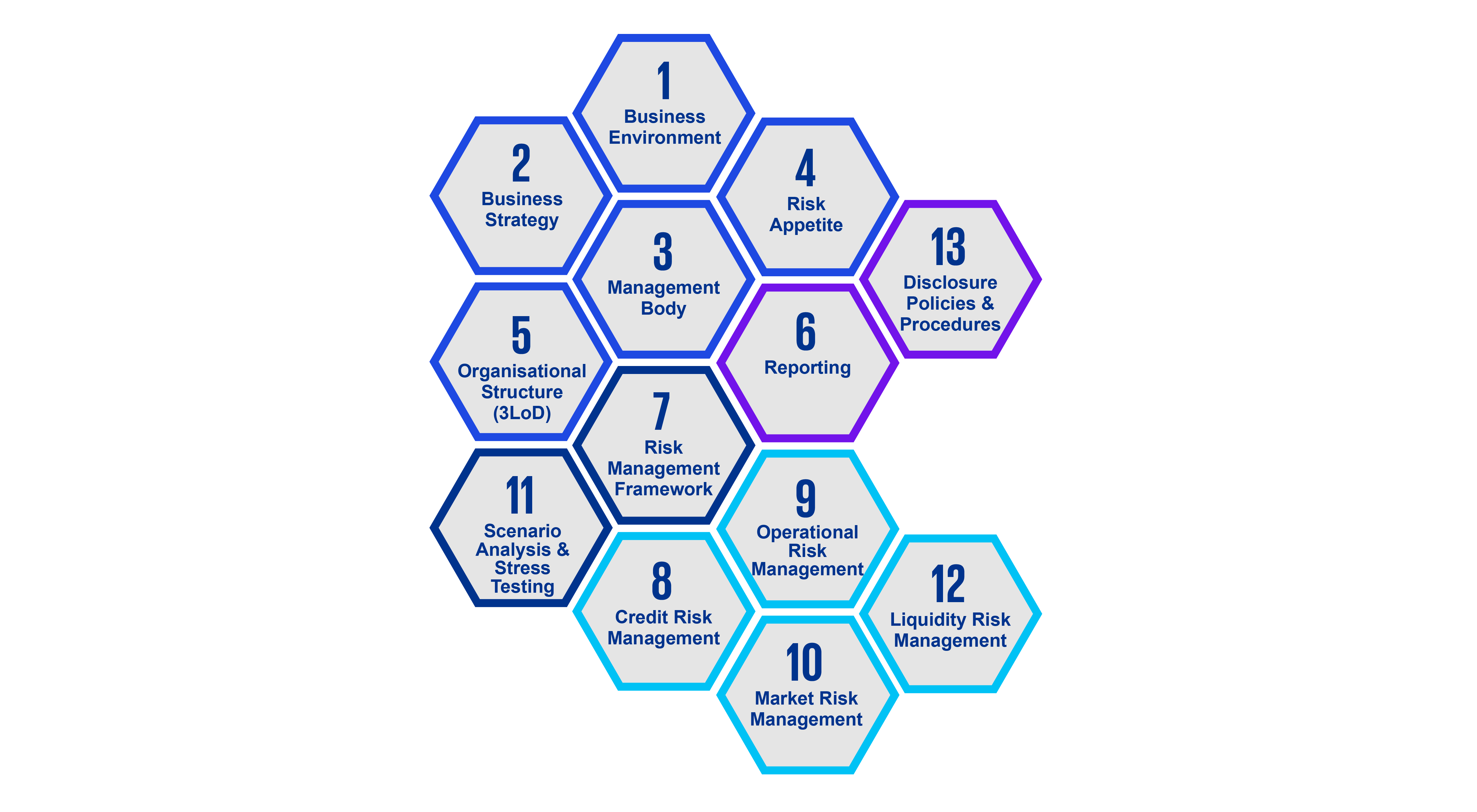
Additionally, in November 2020, the European Central Bank (ECB) published its guide on climate-related and environmental risks, including a list of 13 expectations (outlined in the image below) for the treatment of such risks. As described by Alex Azzopardi and Ilenia Diacono from KPMG in Malta’s Risk Consulting function, the ECB’s high-level expectations span across the entire risk management spectrum, and thus call for a revamp of all components – from strategies, policies and procedures to methodologies and infrastructure. Considering these requirements, earlier this year KPMG Global carried out an international benchmarking survey, which indicates that although significant progress has been registered since 2021, there is still a lot of room for improvement within the Banking sector to fully implement the ECB’s 13 expectations.