Executive Summary 

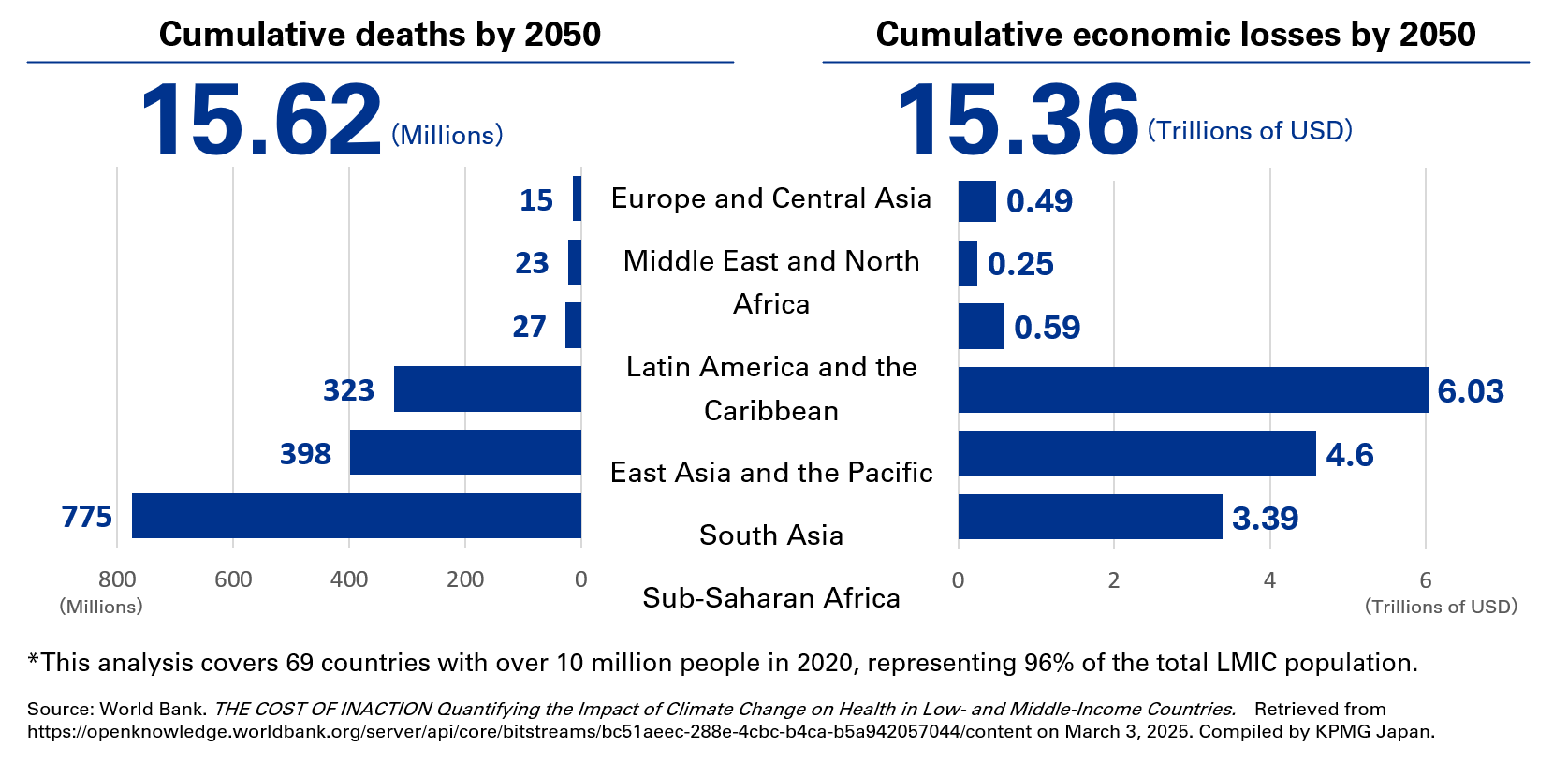
      Health impacts caused by climate change represent "the biggest threat to global public health in the 21st century”. Cities, which face direct and intense challenges from heatwaves, air pollution, extreme weather, and natural disasters, are expected to play a vital frontline role in safeguarding planetary and human health. According to World Bank estimates, by 2050, LMICs are expected to experience approximately 15 million additional deaths due to heat stress, infectious diseases, and nutritional disorders, alongside an economic loss of approximately $15 trillion. Unplanned urban development can exacerbate health and environmental risks, making strategic urban planning essential. 
      health-equity-next-generation-cities 01

      Key Actions for Urban Transformation with Innovative Solutions 

      1. Promoting data infrastructure and integration 

      • Foster collaboration among industry, government, and academia to build robust data infrastructure. 
      • Enable integrated use of climate and health data for effective solutions. 

      2. Adopting the Health in All Policies (HiAP) 

      • Prioritize health across all policies. 
      • Break down siloed governance and strengthen interdepartmental collaboration. 

      3. Promoting Health Equity 

      • Ensure diverse stakeholder participation, including vulnerable groups, in policy development. 
      • Address root causes of health disparities and strengthen resilience. 

      4. Securing Funding through Public-Private Partnerships 

      • Collaborate to secure and efficiently utilize funds for health-focused climate initiatives. 
      • Expand impact investment, especially for adaptation measures. 

      Case Studies of Japanese Innovative Solutions 

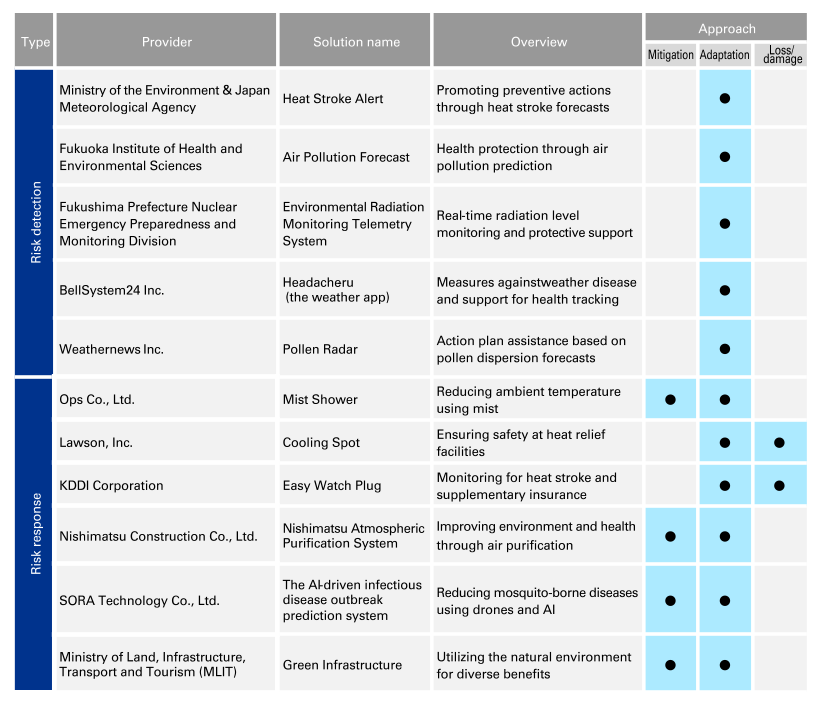
      Japan has developed and implemented diverse solutions to address climate-related challenges and protect public health. These solutions serve as valuable models for rapidly urbanizing regions worldwide. Innovative solutions include: 

      • AI/IoT-based early warning systems for heatstroke and infectious diseases, 
      • Cooling shelters and air purification technologies, 
      • Integrated monitoring and insurance services for vulnerable populations. 
      health-equity-next-generation-cities 02

      Source: KPMG


      Conclusion and Recommendations 

      Future cities must cultivate resilience to intertwined climate and health risks by adopting innovative solutions. To achieve this, collaboration among industry, government, and academia is essential to build robust data infrastructure, establish unified governance, engage vulnerable populations, and secure and utilize funding effectively.  


      Access the files below for the full report and illustrative examples.

      Download

      Next-generation cities: protecting people from climate change and health risks - toward health equity

      Full report


      Download

      Next-generation cities: protecting people from climate change and health risks - toward health equity

      Summary report

      Japanese version: LINK 

      Authors 


      KPMG AZSA LLC Healthcare & Well-being (HC&WB)

      Michikazu Koshiba 
      Director - Healthcare & Well-being
      michikazu.koshiba@jp.kpmg.com

      Ritsuko Yamagata
      Senior Manager
      ritsuko.yamagata@jp.kpmg.com

      Koya Hatakeyama
      Senior Associate
      koya.hatakeyama@jp.kpmg.com