Heritage tourism is entering a new phase of growth and transformation. While conservation remains fundamental, the competitiveness of heritage destinations is increasingly influenced by how effectively they interpret their cultural assets, engage visitors, and deliver meaningful experiences. Evolving traveller preferences, the expansion of the experience economy, and rapid technological advancement are driving a shift from conventional sightseeing towards immersive, participatory, and personalised cultural journeys. The global heritage tourism market, valued at USD624.6 billion in 2025, is projected to reach nearly USD937 billion by 2033, reflecting the growing economic and strategic importance of heritage within the wider tourism ecosystem.
India is well positioned to benefit from this transition, supported by one of the world's richest portfolios of tangible and intangible heritage and a large domestic tourism market. The country recorded 2.948 billion domestic tourist visits and 9.95 million foreign tourist arrivals in 2024. Its heritage landscape includes archaeological sites, museums, protected monuments, numerous world heritage sites, and elements of the intangible cultural heritage of humanity. However, the opportunity extends beyond increasing visitor volumes. By strengthening interpretation, connectivity, visitor services, cultural programming, and experience design, India can encourage longer stays, higher spending, repeat visitation, and wider distribution of tourism benefits among local communities and cultural practitioners.
The report highlights the growing shift from sightseeing to story living, as travellers increasingly seek authentic local encounters, cultural immersion, learning, and active participation. Heritage walks, culinary trails, cultural workshops, festivals, storytelling, and community-led experiences are becoming integral to destination offerings, enabling visitors to connect monuments and historic places with living traditions, local identities, and everyday culture. Supported by technologies such as augmented and virtual reality, digital twins, artificial intelligence, multilingual guides, gamification, and interactive digital storytelling, these experiences can enrich heritage interpretation, improve accessibility, personalise visitor journeys, and strengthen conservation outcomes.
The report advocates an experience-led approach that integrates heritage assets with storytelling, local culture, gastronomy, community participation, and technology to create richer visitor experiences. Layered offerings - including guided interpretation, immersive digital experiences, cultural performances, workshops, and food trails - can encourage longer stays, increase visitor spending, diversify revenue streams, and generate wider economic benefits for local communities.
Ultimately, the report demonstrates that the future of heritage tourism lies in balancing conservation with innovation. Destinations that successfully integrate heritage, culture, community participation, immersive experiences, and technology will be better positioned to enhance competitiveness, create sustainable economic value, and ensure that heritage remains accessible, relevant, and meaningful for future generations.

Key highlights of the report

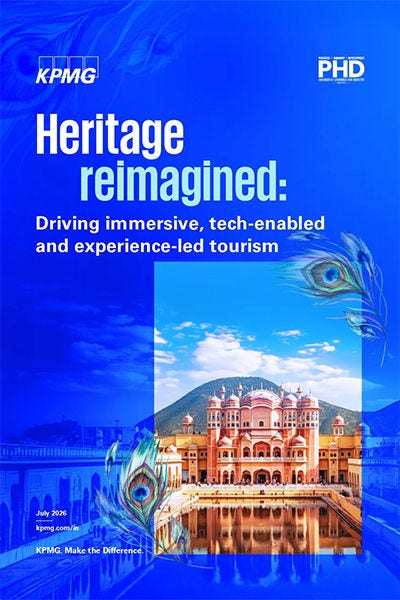
Heritage reimagined: Driving immersive, tech-enabled and experience-led tourism
Heritage tourism is emerging as a catalyst for cultural preservation, economic growth and sustainable destination development
Key Contact

Aalap Bansal
Partner and Chief Sales Officer – G&PS and Lead – Tourism, Sports and Leisure Practice
KPMG in India
How can KPMG in India help


Access our latest insights on Apple or Android devices