Highlights

      • Confidence in organisations’ three-year growth prospects has increased from 79 percent in 2025 to 84 percent, while confidence in the global economy has fallen from 68 percent to 65 percent, the lowest it has been since 2021.
      • CEOs say cyber and data security is the greatest risk to growth (31 percent), closely followed by global economic uncertainty (28 percent), geopolitical instability and regulatory pressures (26 percent), with their investment priorities closely aligned to mitigating the risks they can influence.
      • Despite implementation challenges and economic uncertainty, vast majority of CEOs (79 percent) agree that AI remains a top investment priority over the next three years, up eight percent year-over-year.
      • Over half of CEOs (59 percent) are increasing focus on internal data governance controls as part of their AI and data sovereignty strategies.
      • Skills gaps are the greatest workforce challenge facing CEOs, with 56 percent identifying them as a challenge facing their organisation.

      China highlights

      • 82% of Chinese CEOs are confident in China’s domestic economic growth over the next three years, the highest level of confidence in the domestic economy among business leaders in major economies.
      • 86% of Chinese CEOs are confident in their own company’s growth, up 8 percentage points from last year and the highest since 2020.
      • 76% of Chinese CEOs are confident in keeping pace with AI development and managing AI’s impact on business operations, workflows and the workforce, higher than the global average.
      • 34% of surveyed Chinese CEOs say AI has improved business efficiency, significantly higher than the 18% reported last year.

      HONG KONG SAR, 21 October 2026 – Global CEOs are strengthening organisational resilience as cyber risks, economic uncertainty, geopolitical instability and regulatory pressures converge as the leading risks to growth, according to the KPMG 2026 Global CEO Outlook.

      The survey of 1,400 CEOs finds that the global economy is entering an era of structural growth driven by technology investment and supply chain advantages. The KPMG Global CEO Outlook reveals a widening gap between CEOs’ outlook for their own businesses and for the global economy. Confidence in their organisations’ three-year growth prospects has increased from 79 percent in 2025 to 84 percent, while confidence in the global economy has fallen from 68 percent to 65 percent, the lowest it has been since 2021. Confidence among Chinese respondents in the global economy has rebounded significantly, with 73% of Chinese CEOs confident in global economic growth over the next three years, up 15 percentage points from last year. Meanwhile, 82% of Chinese CEOs are confident in China’s domestic economic growth over the next three years, making China the country with the highest level of confidence in the domestic economy among business leaders in major economies.

      Earnings expectations have also strengthened: 68 percent anticipate annual growth of at least 2.5 percent, compared with 61 percent in 2025. The findings suggest CEOs believe they can continue to deliver growth within their businesses despite a less certain external environment, but 79 percent feel under more pressure to ensure the long-term prosperity of their organisations.

      The easing of deflationary pressures and the emergence of moderate inflation in China have directly improved companies’ pricing power and earnings expectations, supporting a recovery in micro-level confidence. Chinese CEOs’ confidence in the growth of their industries and their own companies has shown more positive changes. The proportion of those confident in their industry’s growth over the next three years remains at a historic high of 86%, while the proportion of respondents confident in their own company’s growth rose 8 percentage points to 86%, the highest since 2020.

      Specifically, the proportion of Chinese CEOs expecting average annual revenue growth of at least 2.5% over the next three years jumped from 55% last year to 74%, a record high and 6 percentage points above the global average. At the same time, 34% of Chinese CEOs expect their total workforce to grow by more than 6% over the next three years, up 5 percentage points from last year.

      31 percent of CEOs identify cyber and data security as the greatest risk to growth over the next three years, closely followed by global economic uncertainty (28 percent), geopolitical instability and regulatory pressures (26 percent).

      CEOs are responding accordingly with investments to mitigate the risks that they can influence. Almost half of CEOs say they have increased investment in cybersecurity and digital risk resilience (45 percent), for example.



      Gary Wingrove Gary Wingrove, Global Chairman and CEO of KPMG International, said:
      开引号

      CEOs face challenges ranging from cybersecurity risks, regulatory change to AI’s impact on how businesses operate. Leaders are responding head-on by investing in technology, strengthening workforce capabilities and positioning their organisations for long-term growth. The pace of change remains significant, but this year’s CEO Outlook shows business leaders are approaching that challenge with confidence and a clear focus on the opportunities ahead.

      关引号

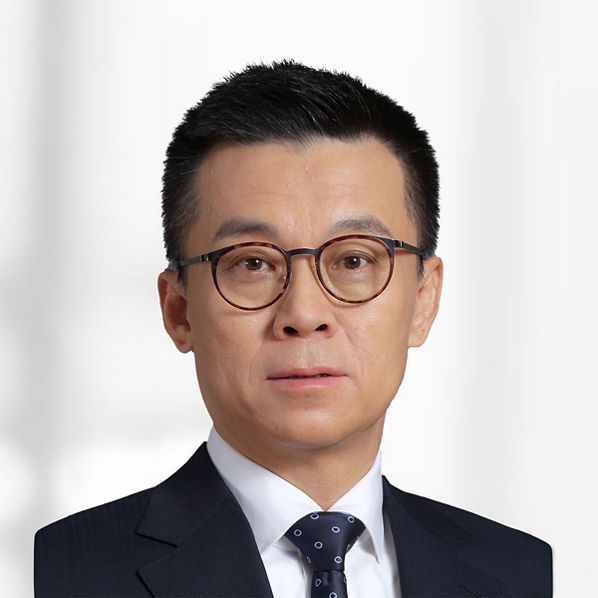
      Jacky Zou Jacky Zou, Chairman of KPMG Asia Pacific and KPMG China, said:
      开引号

      The world is undergoing profound changes not seen in a century, and uncertainties and destabilising factors in the global economy continue to accumulate. We see that CEOs remain cautious about the global economic outlook, but their confidence in their own business growth remains steady. Chinese CEOs’ expectations for China’s economic growth have eased slightly from last year, but the 82% figure remains the highest among this year’s core economies. Their confidence in their own companies’ growth has rebounded from last year. This reflects both the steady release of market vitality and full recognition of policy continuity and predictability.

      AI has remained core topic for CEOs. Its pace of development and social adoption are unprecedented. While reshaping production and lifestyles, it has also brought new challenges regarding ethics, security, etc. China has developed a mature path of ‘parallel development and governance’ in AI development. From the central government’s repeated emphasis on ‘improving AI governance’ to the continuous updating of industry governance frameworks, China has both drawn clear compliance boundaries for companies and left ample space for technological innovation. As a result, Chinese companies have advantages over the global average in terms of perceived value and the pace of AI adoption.

      The pace of technological change will not stop, and a clear development direction and abundant market momentum are the most solid foundation of confidence for Chinese companies. Leaders who can proactively elevate their strategic positioning and turn external pressures into reform momentum will have the opportunity to lead their organisations to seize opportunities in the next competitive cycle, thereby injecting confidence into China’s high-quality economic development.

      关引号

      CEOs respond to regulatory pressures

      CEOs are also making investments in response to regulatory pressures. Just over a quarter (26 percent) said regulatory pressures were the most significant challenge to growth and over a third (36 percent) said they were investing in regulatory and compliance reporting to mitigate business risks over the next three years (36 percent).

      The global AI regulatory landscape continues to be fragmented with wide variations across jurisdictions. 41 percent of CEOs said varying levels of regulation was a barrier to implementing AI within their organisation, and two-thirds of CEOs (66 percent) expect the pace of progress on AI regulation to pose a barrier to their organisation’s success.

      Meanwhile, over half (59 percent) say they are applying a greater focus on internal data governance and controls as part of their AI and data sovereignty strategies.

      AI is increasingly an investment priority and confidence is high, but CEOs say ethical challenges are the main implementation challenge

      The vast majority of CEOs (79 percent) agree that, despite ongoing economic uncertainty, AI remains a top investment priority over the next three years, up eight percent-over-year compared to 2025 (71 percent).

      Yet CEOs are also clear that implementing AI is not without its difficulties. Ethical challenges are the leading challenge to implementing AI, say over half of CEOs (57 percent), with cybersecurity the next greatest challenge (52 percent) and cost (51 percent).

      Regardless of the challenges, sixty-six percent of CEOs say their organisations are moving at the right pace or ahead of the curve on AI, while 29 percent describe themselves as cautiously optimistic and learning as they go. Only five percent say they are struggling to keep pace.

      In China, 76% of CEOs are confident in keeping pace with AI development and managing AI’s impact on business operations, workflows and the workforce, higher than the global average.

      Expectations for returns have seen slight changes from last year and suggest CEOs are taking a longer-term view of AI investment: while only 14 percent expect returns within six to 12 months, down from 19 percent last year, 71 percent expect them within one to three years, up from 67 percent.

      Value realisation in the Chinese market is more pronounced. The survey shows that 34% of surveyed Chinese CEOs say AI has improved business efficiency, significantly higher than the 18% reported last year. Chinese CEOs are also more acutely aware of the impact of agentic AI, with 68% saying that agentic AI currently has a significant or transformative impact on their business operations and management, above the global average.

      Skills gaps present the greatest workforce challenge

      CEOs reported that skills gaps, not exclusively AI-related, were the number one workforce challenge their organisations were currently facing (56 percent), ahead of upskilling and training employees in AI systems (52 percent) and attracting and retaining talent (47 percent).

      CEOs are responding by taking several steps to ensure their organisations are prepared for this future, including having open conversations about what this future looks like (51 percent), proactively investing in reskilling and upskilling programs and providing tailored role-specific training on how AI can support people in role (both at 46 percent).

      Workforce resistance to AI was not a significant concern; 26 percent said it was challenging, placing it bottom of a list of 13 challenges to organisational adoption. This represents increasing acceptance of AI among employees, as last year’s CEO Outlook found that 33 percent of CEOs said employees’ reluctance or ability to adopt or adapt to AI’ was a challenge.

      Sustainability: CEOs embed sustainability more deeply into strategy

      Most CEOs say recent geopolitical developments and internal pressures have brought sustainability closer to core business strategy. Sixty-three percent describe their primary response over the past year as embedding sustainability more deeply.  In China, this figure reached 70%, higher than the global average.

      AI adds a further tension. CEOs see significant potential for the technology to support climate and sustainability priorities, yet 95 percent agree that there is concern across their organisation about the broad environmental impact of increased AI use. This contrast is also evident in China.

      Evolving the CEO skill set

      CEOs feel their capabilities need to change to match the complexities they are facing and are developing their skillset to see around corners to react at pace.

      For the second year in succession: greater agility and faster decision making under pressure’ is the number one leadership capability CEOs believe they need (47 percent) and that percentage has grown almost a quarter (+21 percent) since last year.

      Stronger strategic foresight and scenario planning capabilities were also seen as increasingly important CEO skills, seeing more than 20 percent increase year-over-over (44 percent vs 22 percent) and an ability to identify, prioritise and manage risks seeing a 16 percent increase (39 percent vs 23 percent).

      It is also revealing that, having identified the importance of upskilling and training employees in AI systems, over a third of CEOs (36 percent) say that digital and tech literacy is becoming an essential leadership capability.

      CEOs are divided on the right approach to risk management. While the majority are maintaining their risk appetite (61 percent), a third (33 percent) of CEOs are changing their approach to risk taking, with 16 percent taking more risks to capitalise on opportunities and almost the same number becoming more cautious and reducing risk taking (17 percent). A further six percent are prioritising risk mitigation over pursuing any new opportunities at all.

      i – The definition presented to CEOs for ethical challenges included considerations such as trust, bias in data sets, privacy, accountability, transparency, intellectual property, and misinformation.


      -Ends-

      CEOs strengthen digital resilience amidst economic, geopolitical and regulatory uncertainty

      Media inquiries:

      Faye Yuen
      Direct: +852 2685 7831
      Email: faye.yuen@kpmg.com

      Carrie Wong
      Direct: +852 3927 5636
      Email: cy.wong@kpmg.com

      Tommy Lee
      Direct: +852 6188 0823
      Email: tommy.lee@omc.com


      Find out how KPMG's expertise can help you and your company.


      About KPMG

      KPMG in China has offices located in 31 cities with over 14, 000 partners and staff, in Beijing, Changchun, Changsha, Chengdu, Chongqing, Dalian, Dongguan, Foshan, Fuzhou, Guangzhou, Haikou, Hangzhou, Hefei, Jinan, Nanjing, Nantong, Ningbo, Qingdao, Shanghai, Shenyang, Shenzhen, Suzhou, Taiyuan, Tianjin, Wuhan, Wuxi, Xiamen, Xi'an, Zhengzhou, Hong Kong SAR and Macau SAR. It started operations in Hong Kong in 1945. In 1992, KPMG became the first international accounting network to be granted a joint venture licence in the Chinese Mainland. In 2012, KPMG became the first among the “Big Four” in the Chinese Mainland to convert from a joint venture to a special general partnership.

      KPMG is a global organisation of independent professional services firms providing Audit, Tax and Advisory services. KPMG is the brand under which the member firms of KPMG International Limited ("KPMG International") operate and provide professional services. "KPMG" is used to refer to individual member firms within the KPMG organisation or to one or more member firms collectively.

      KPMG firms operate in 138 countries and territories with more than 276, 000 partners and employees working in member firms around the world. Each KPMG firm is a legally distinct and separate entity and describes itself as such. Each KPMG member firm is responsible for its own obligations and liabilities.