
HONG KONG SAR, 17 September 2026 — KPMG welcomes Hong Kong’s inaugural Five-Year Plan (2026–2030) and the 2026 Policy Address, whose forward-looking measures will help bolster economic drivers and reinforce the city’s standing as a global financial, trade, and innovation hub.
Policy tailwinds and global opportunities: Hong Kong’s role as a ‘super-partner’ to drive growth


Under the framework of the National 15th Five-Year Plan, Hong Kong is evolving from a ‘super-connector’ into an indispensable ‘super-partner’. The city’s first Five-Year Plan and the 2026 Policy Address provide a clear roadmap for strengthening Hong Kong’s competitive edge through the Government’s ‘Four Centres and the Hub for High-calibre Talent’ framework, while reinforcing its position as an international centre for finance, shipping and trade, as well as an international aviation hub. We welcome the mix of agile and innovative policies to attract investment and top talent, which will not only attract high-value enterprises and commercial capital to the city, but also drive the convergence of technology and real-economy sectors to power high-quality economic growth.

Accelerating innovation with the Northern Metropolis: Unlocking synergy across industry, academia and research
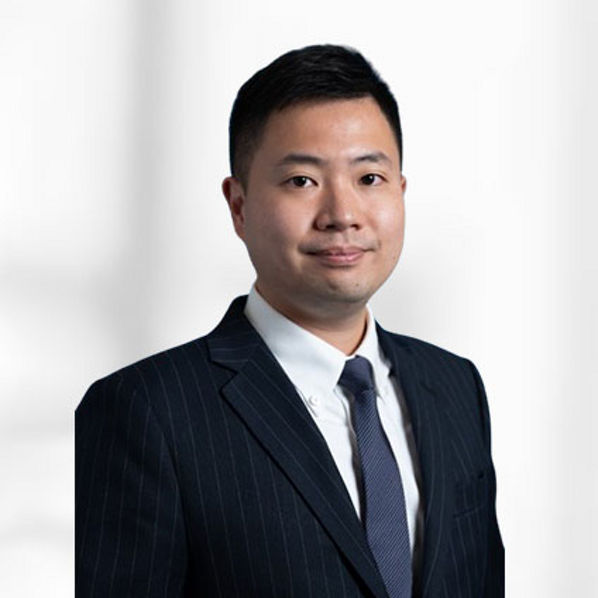
As the main engine driving Hong Kong’s future expansion, the Northern Metropolis is now moving from strategic planning to a decisive phase of accelerated development. The Government’s blueprint to construct three University Towns in San Tin, Hung Shui Kiu, and Ta Kwu Ling, working in tandem with the San Tin Technopole and the Hetao Hong Kong Park, will be vital in pooling resources across industry, academia, and research to fast-track the commercialisation of R&D breakthroughs. KPMG fully endorses the Government’s agility in adopting flexible land pricing, as well as a ‘two-envelope approach’ for tendering to help mobilise private capital. At the same time, KPMG supports innovation and technology collaboration across the Greater Bay Area (GBA), particularly in aligning the Hetao Hong Kong Park with Shenzhen’s industrial clusters. We recommend further refining mechanisms for cross-boundary flows of research resources across Shenzhen and Hong Kong, ultimately turning the GBA into a flagship model for high-quality innovation and development.
Fintech and digital transformation: Harnessing AI and quantum technology to drive technology innovation
In emerging technologies, KPMG supports the Government’s efforts to cultivate a flourishing quantum technology ecosystem and welcomes accelerated quantum applications across financial services. KPMG also commends the Hong Kong Monetary Authority (HKMA) on launching the ‘Quantum Preparedness Index’ (QPI), enabling financial institutions to get ahead of the curve across technical upgrades, talent development, and cryptographic migration. In addition, KPMG supports the Government’s push to encourage widespread artificial intelligence (AI) adoption across industries. Setting the pace through public sector AI transformation will spur private sector investment, while also raising overall digital literacy across the community.
Enhancing tax concessions: Securing investments via pre-approval mechanisms and agile policies
To solidify Hong Kong’s standing as a trade and financial hub, KPMG supports advancing the integrated ‘Finance + Trade’ strategy alongside enhanced tax concession measures. In particular, the proposal to explore a pre-approval mechanism for Corporate Treasury Centres (CTCs) represents a breakthrough in Hong Kong’s tax system, giving prospective corporate investors greater certainty over their tax position. Regarding the 5% or half-rate tax concession for regional headquarters established by high-value-added enterprises, KPMG suggests that authorities clarify eligibility benchmarks such as investment scale and headcount, while closely monitoring global minimum tax developments to design complementary measures.
Furthermore, on the half-rate tax concession for physical commodity trading, KPMG expects this policy to stimulate demand across high-value sectors such as ship leasing and maritime insurance. KPMG recommends that during early implementation, authorities maintain operational flexibility regarding the engagement of local service providers to accommodate businesses' early-stage budgets and cross-boundary commercial realities.
Harnessing connectivity: Welcoming National support to solidify Hong Kong’s international hub status
As global dynamics evolve at speed, the National 15th Five-Year Plan offers Hong Kong a pipeline of strategic opportunities. Leveraging the GBA’s vast industrial opportunities alongside Hong Kong’s world-class international status, businesses will be well-positioned to bridge domestic and overseas resources, further solidifying Hong Kong’s irreplaceable position as a premier global financial and business hub.
-Ends-
Media inquiries:
Isis Wong
Direct: +852 3927 5810
Email: iw.wong@kpmg.com
Carrie Wong
Direct: +852 3927 5636
Email: cy.wong@kpmg.com
Zoey Zhang
Direct: +852 2978 8284
Email: zoey.q.zhang@kpmg.com
Francis Lee / Jessica Lee
Direct: +852 9631 7010 / +852 9027 3908
Email: hkg.kpmg@fleishman.com

Connect with us
About KPMG
KPMG in China has offices located in 31 cities with over 14, 000 partners and staff, in Beijing, Changchun, Changsha, Chengdu, Chongqing, Dalian, Dongguan, Foshan, Fuzhou, Guangzhou, Haikou, Hangzhou, Hefei, Jinan, Nanjing, Nantong, Ningbo, Qingdao, Shanghai, Shenyang, Shenzhen, Suzhou, Taiyuan, Tianjin, Wuhan, Wuxi, Xiamen, Xi'an, Zhengzhou, Hong Kong SAR and Macau SAR. It started operations in Hong Kong in 1945. In 1992, KPMG became the first international accounting network to be granted a joint venture licence in the Chinese Mainland. In 2012, KPMG became the first among the “Big Four” in the Chinese Mainland to convert from a joint venture to a special general partnership.
KPMG is a global organisation of independent professional services firms providing Audit, Tax and Advisory services. KPMG is the brand under which the member firms of KPMG International Limited ("KPMG International") operate and provide professional services. "KPMG" is used to refer to individual member firms within the KPMG organisation or to one or more member firms collectively.
KPMG firms operate in 138 countries and territories with more than 276, 000 partners and employees working in member firms around the world. Each KPMG firm is a legally distinct and separate entity and describes itself as such. Each KPMG member firm is responsible for its own obligations and liabilities.