Skip to navigation

      Swiss real estate investment market: Geneva between wait-and-see and sustainable recovery

      With approximately CHF 2.7 billion invested in 2025, the Geneva real estate investment market is entering a critical phase following a two-year correction period. While the recorded transaction volumes reflect a certain economic slowdown, several leading indicators point to a gradual return of transaction momentum.

      In an environment marked by ongoing economic and geopolitical uncertainty, falling interest rates and solid local fundamentals in Geneva are leading to a realignment of investors’ investment strategies.

      Looking ahead to 2026, three key trends are shaping this new cycle:

      • Increased selectivity among investors when acquiring investment properties
      • Persistent pressure on yields, exacerbated by the SNB’s easing of its key interest rate
      • Growing and sustained investor interest in ESG-compliant residential real estate, driven by robust tenant demand

      The study analyzes the development of the market for direct real estate investments in the Canton of Geneva, including investment volumes, returns, investor structures, and outlook for 2026.

      Beat Seger

      Partner, Real Estate Advisory, Chief Digital Officer

      KPMG Switzerland

      Eric Delé

      Director, Real Estate Advisory

      KPMG Switzerland

      Declining investment volume reflects a period of adjustment

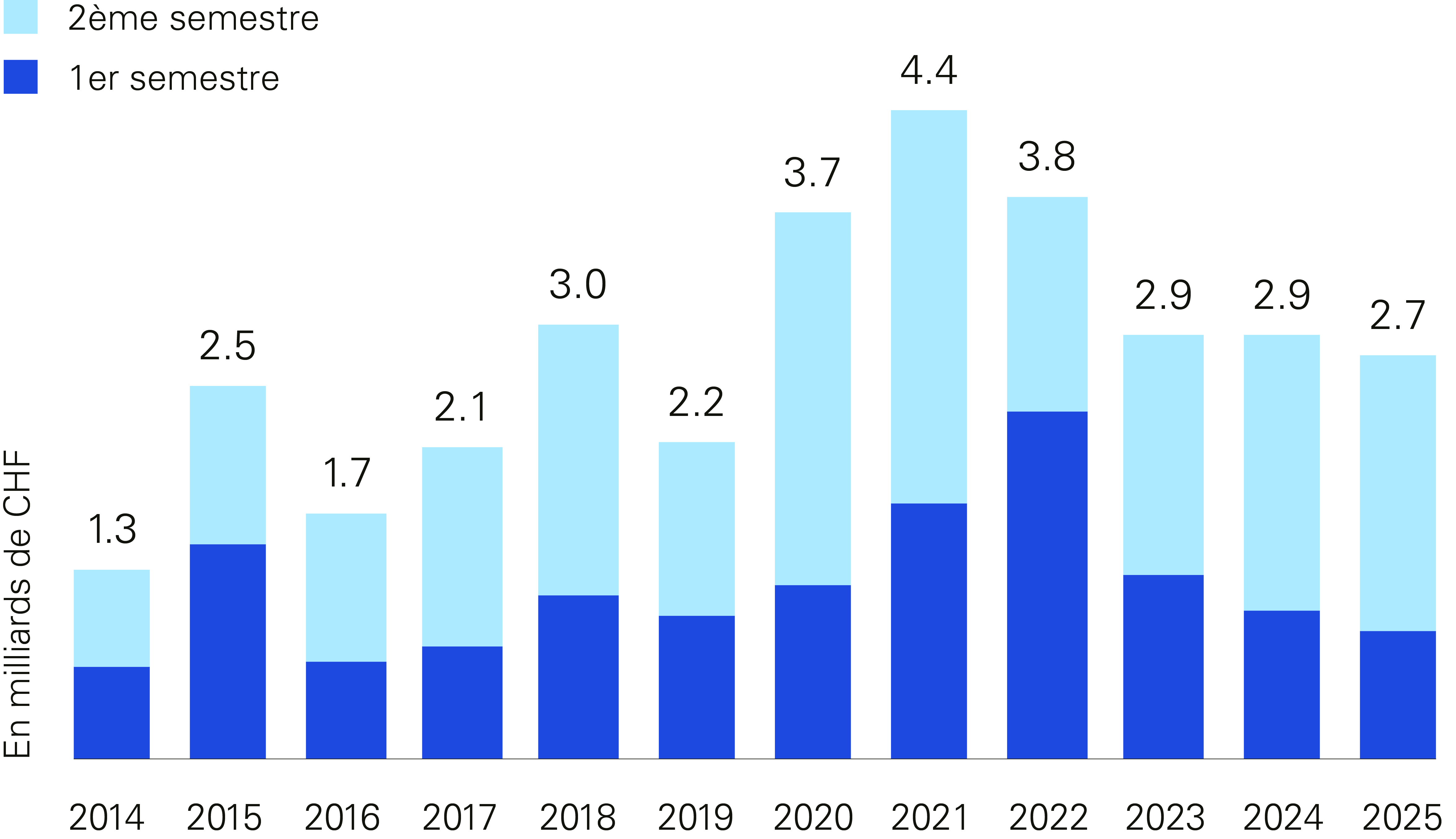
      In 2025, the volume of direct real estate investments in the Canton of Geneva amounted to approximately CHF 2.7 billion (excluding share deals), representing a decline of about 5% compared to 2024. This was the lowest level in the past six years, following annual volumes that had stabilized at around CHF 2.9 billion in the two preceding years.

      This decline reflects a general wait-and-see attitude that is now coming to an end. Despite initial relief from rising interest rates, investors remained cautious in light of financial market volatility and geopolitical instability. Geographically, the city of Geneva continues to account for the majority of funds invested in the canton, with approximately 56% of the annual volume, or about CHF 1.6 billion.

      Development of direct real estate investments in the canton of Geneva

      Evolution du marché de l'investissement direct genevois > Click on the image to enlarge it

      Interest rate cuts: A delayed stimulating effect

      The cycle of interest rate cuts initiated by the Swiss National Bank (SNB) in 2024 continued in 2025 with the reduction of the key interest rate to 0.00%. In practice, however, this monetary easing did not lead to an immediate recovery in transaction volumes. Institutional investors postponed their decisions, waiting for greater clarity on the evolution of the global macroeconomic environment, and ongoing geopolitical tensions and increased market volatility prolonged this wait-and-see attitude.

      In the short term, the decline in interest rates has increased yield pressure on real estate, while its impact on investment volumes is following a more gradual trajectory, a lag that is frequently observed between monetary policy adjustments and their concrete impact on real estate markets.

      A significantly more dynamic end to 2025

      Despite a first half of the year marked by caution, the Geneva real estate investment market showed signs of recovery in the second half. Q4 2025 alone accounted for around 50% of the annual investment volume, driven by eight transactions, each with a volume exceeding CHF 50 million.

      This surge in activity toward the end of the year reflects a gradual convergence between sellers’ asking prices and buyers’ investment strategies.

      Shift in investor profiles

      An analysis of the investor structure reveals a notable shift in the balance between sellers and buyers. In 2025, private investors dominated the sell side, accounting for approximately 66% of the volume sold, or about CHF 1.8 billion.

      Conversely, institutional investors significantly increased their activity on the buy side. This continues a shift in trends that stands in contrast to 2023, when institutional investors accounted for only 39% of purchase volume, significantly below their long-term average of 57% for the period from 2014 to 2022. This development reinforces the institutional character of the Geneva market, particularly in the core and core-plus segments.

      Asset classes: balanced diversification

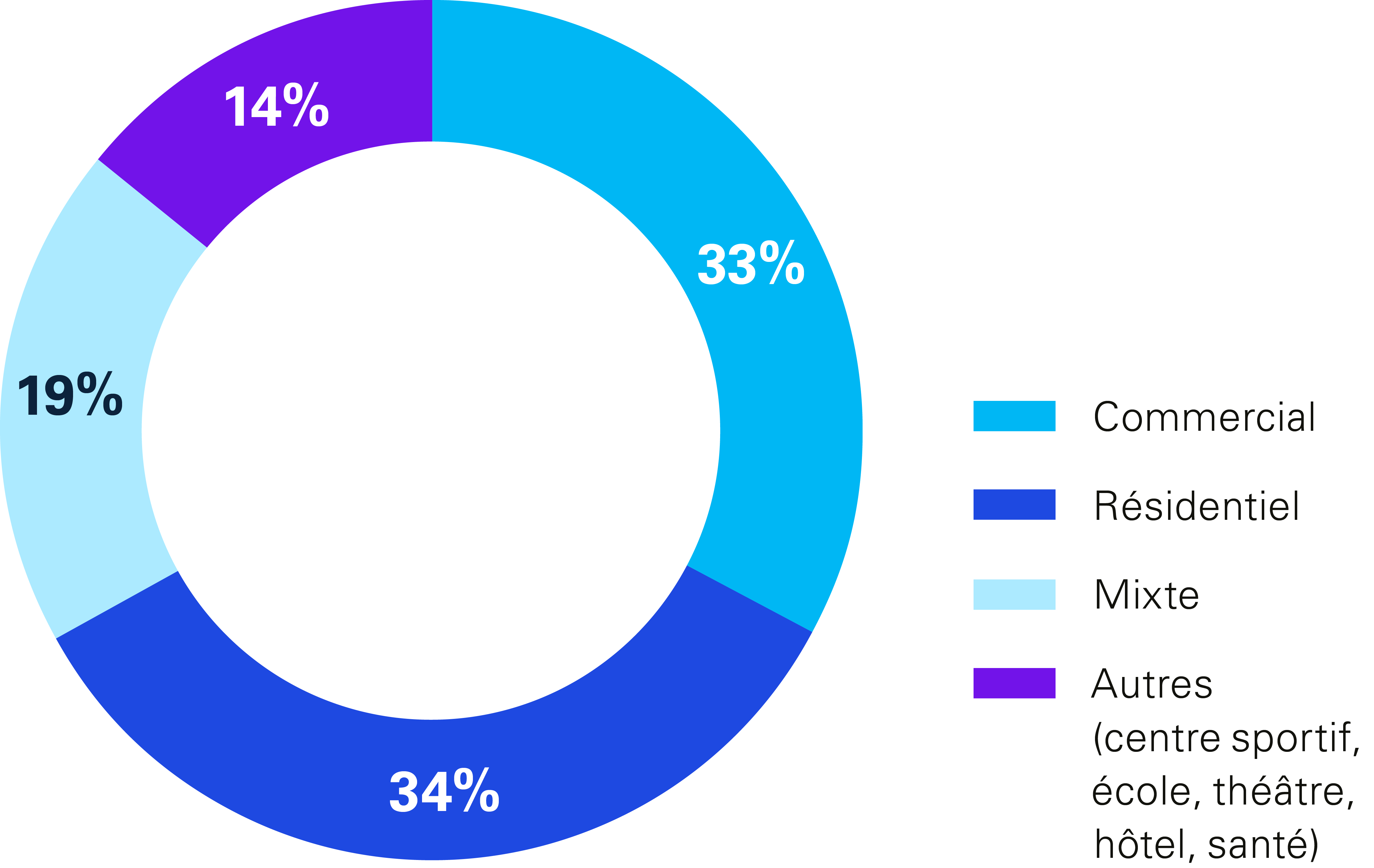
      The sector breakdown of investments in 2025 reflects a broadly balanced allocation of capital, with residential and commercial assets each accounting for 33% of total volumes. Mixed-use properties represent 19%, while specialized assets (such as healthcare, education and cultural facilities) make up the remaining 14%.

      Within these segments, residential real estate continues to benefit from robust fundamentals, including strong rental demand, low vacancy rates, and structural population growth in the canton. ESG-compliant residential prop are particularly sought after by institutional investors seeking to align portfolios with sustainability objectives.

      In the commercial segment, location and lease duration remain the primary drivers of attractiveness, against a backdrop of macroeconomic challenges (geopolitical tensions, tariffs) and structural shifts such as remote working and the anticipated impact of artificial intelligence.

      Breakdown of investment volume in 2025 by property type

      Ventilation du volume investi en 2025 par typologie > Click on the image to enlarge it

      Real estate yields in Geneva: ongoing pressure

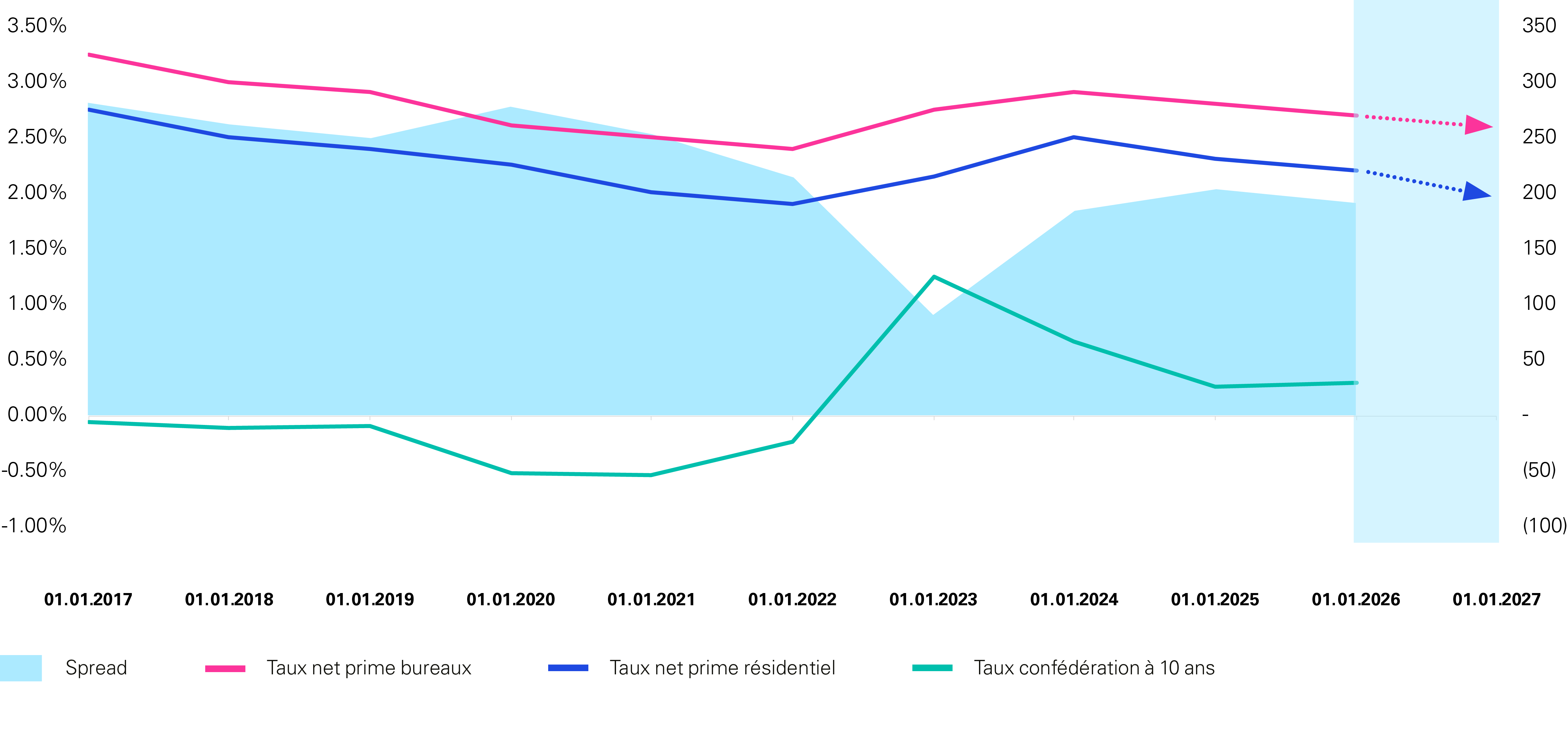
      At the end of 2025, prime net yields in Geneva ranged between 2.20% and 2.70% for residential assets and between 2.70% and 3.20% for office assets. These levels are below those observed in early 2024 (2.50%–3.00% and 2.90%–3.40%, respectively), reflecting yield compression driven by lower interest rates.

      The spread between prime real estate yields and 10-year government bonds, which had widened in 2023 and 2024 (exceeding 200 basis points for residential assets), has begun to narrow again. 

      The spread between residential and commercial yields may increase slightly, reflecting institutional investors’ stronger preference for residential assets.

      For high-quality, well-located, ESG-compliant assets, competition among investors remains intense.

      Change in the net prime yield and change in the spread between net prime yields for residential real estate and the interest rate on 10-year confederation bonds

      Evolution des taux de rendement net prime et évolution du spread entre le taux net prime résidentiel et le taux obligataire à 10 ans > Click on the image to enlarge it

      Outlook 2026

      Looking ahead, market conditions in Geneva appear broadly favorable: accommodative SNB monetary policy, gradual normalization of the yield curve, and high liquidity among institutional investors. In the residential segment, strong fundamentals (high rental demand, low vacancy rates, population growth) are expected to continue supporting asset attractiveness, particularly for ESG-compliant properties. 

      Uncertainty surrounding the global environment and its potential impact on the Swiss economy could, however, limit the attractiveness of the office segment in the eyes of institutional investors.

      In this context, investors are expected to remain selective, prioritizing assets that offer stable, long-term income visibility.

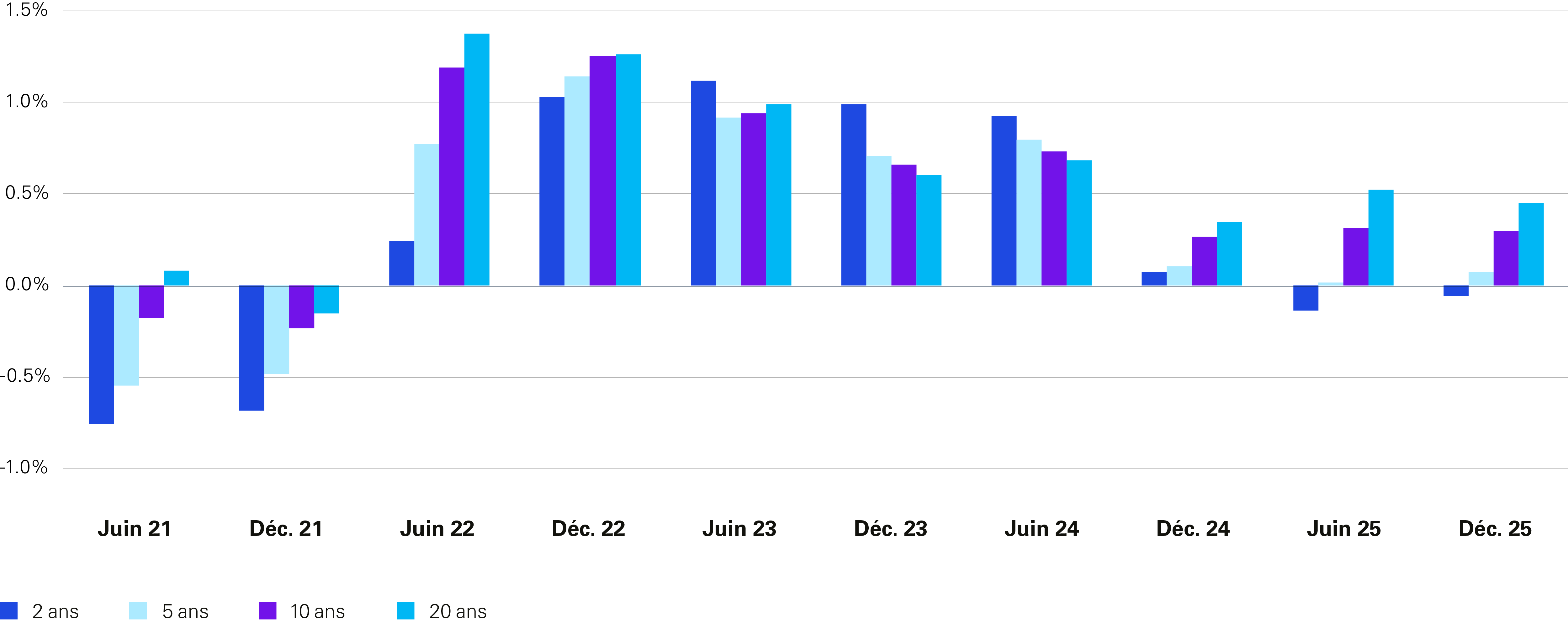
      Interest rate developments of confederation bonds

      Evolution de la courbe des taux des obligations de la BNS  > Click on the image to enlarge it

      Do you need support or solutions related to the Swiss real estate market?

      Learn more about our Swiss real estate market expertise and services.

      Find out how we can support you on your journey and how collaborating with us can benefit you.

      Meet our experts

      Beat Seger

      Partner, Real Estate Advisory, Chief Digital Officer

      KPMG Switzerland

      Eric Delé

      Director, Real Estate Advisory

      KPMG Switzerland

      Laurent Aillard

      Senior Manager, Real Estate Advisory

      KPMG Switzerland

      Related articles and more information

      Selling, valuing, managing and optimizing real estate. We provide holistic advice on financial, tax, legal and procedural real estate topics.

      The leading indicator for developments in the Swiss real estate investment market.

      Challenges in comparing environmental metrics of real estate funds according to AMAS and using data as the foundation of a sustainability strategy (in German).

      Developing and defining your decarbonization strategy to meet regulatory requirements and strategic sustainability goals.