CEOs of life sciences, research, and pharmaceutical companies are entering a period of significant change with growing optimism. As many as 83% expect a positive outlook for the sector, marking a 16-percentage-point increase year-on-year. At the same time, 80% of executives have already adjusted their growth strategies to respond to changing market conditions. These findings come from the global KPMG Life Sciences CEO Outlook survey, which gathered insights from 110 CEOs worldwide.

      The research sector is at a critical juncture where the need for innovation meets with mounting pressure for efficiency. While CEOs see increasing opportunities in new therapeutic areas and technological advancements, they also face complex challenges that require swift adaptation.


      Leaders remain confident in growth, but transformation is essential

      The sector’s growth potential remains strong – more than half of respondents (55%) expect profit growth exceeding 2.5% in the coming years. At the same time, transformation is no longer optional but essential. This is reflected in the 80% of executives who say they are revising their strategies in response to market challenges. 


      We are seeing that life sciences companies are no longer focused solely on growth itself, but on how to achieve it. They are reassessing their portfolios, divesting less critical activities, and reallocating capital to areas with higher added value.
      Edward Norman Davies

      Edward Norman Davies

      KPMG CEE Advisory Life Science Lead


      Interest in mergers and acquisitions is also increasing, particularly in acquiring new technological capabilities that can support long-term competitiveness.


      x

      Technology is reshaping business operations, but effective use remains a key challenge

      Technology and digitalization are playing an increasingly important role in transforming the sector. Companies are gradually moving from pilot projects to the real deployment of AI solutions and are looking to unlock tangible value.

      Despite significant investment, however, only 25% of CEOs say that new technologies have significantly improved decision-making and analytical capabilities within their organizations. Integrating these technologies into existing processes remains one of the biggest challenges – alongside the pace of technological change and the need to strengthen supply chain resilience.

      “Technology alone is no longer a competitive advantage,” adds Edward Norman Davies. “What matters is how quickly and effectively companies can integrate it into day-to-day operations and translate it into real business value.”

      People will determine the success of transformation

      Workforce readiness for new technologies was another key theme of the survey. As many as 85% of CEOs believe it will have a critical impact on achieving growth objectives. While nearly three-quarters (74%) of leaders say their employees already possess the necessary skills, the reality is more complex. Companies are rethinking requirements for graduate roles, investing in reskilling, and addressing generational differences in expectations and work habits.

      In response, organizations plan to expand learning and development programs, support hybrid working models, and invest more systematically in upskilling and reskilling initiatives.


      graf

      ESG remains a priority, but the approach is evolving

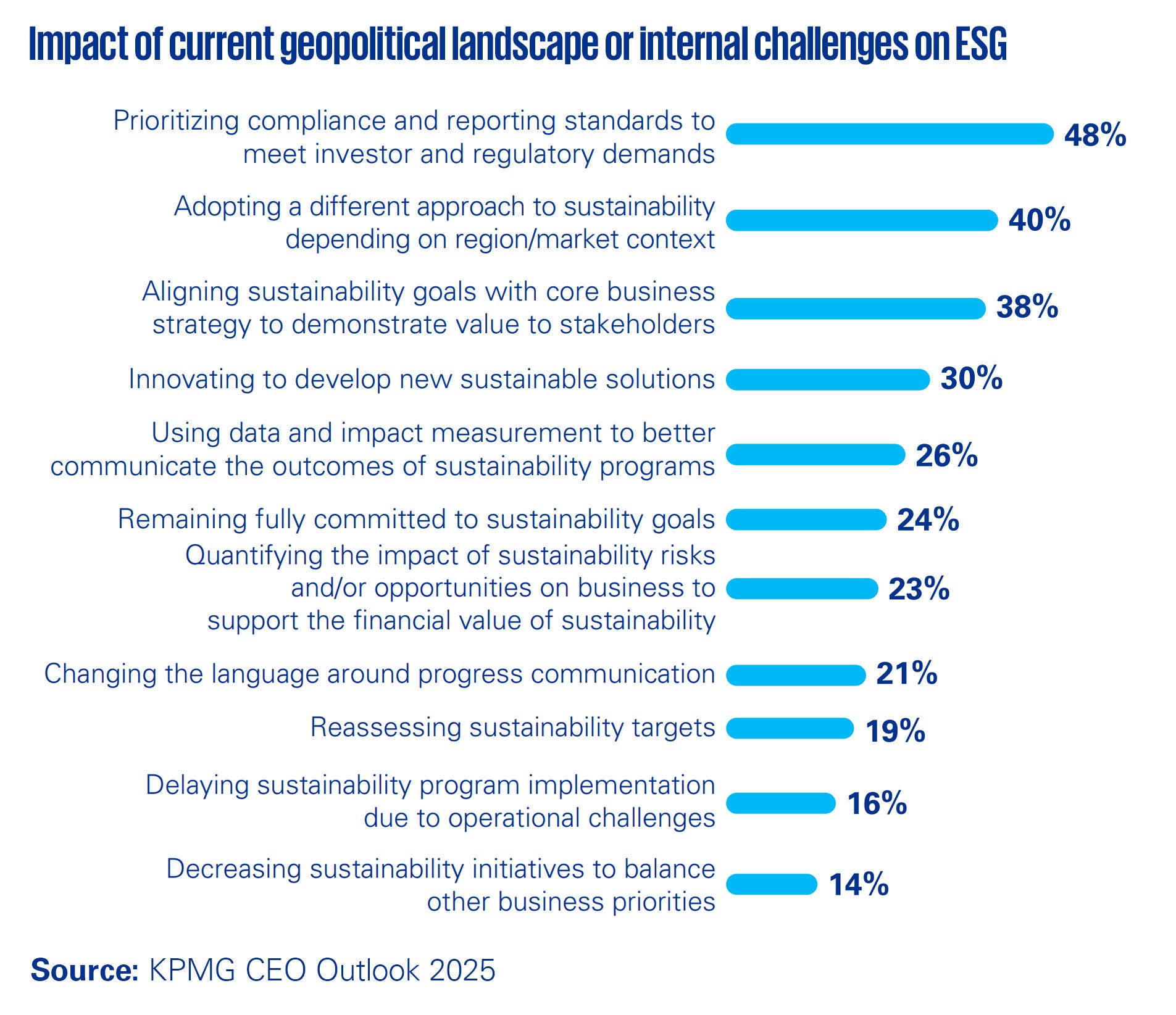
      Sustainability and ESG continue to be among the top priorities for sector leaders, but their approach is evolving. CEOs are increasingly focused on aligning ESG initiatives with core business strategies and demonstrating their tangible value to stakeholders.

      Nearly 40% of respondents say they tailor their sustainability approach based on region or market, while 38% already systematically integrate ESG goals into their core business strategy. As a result, the sustainability agenda is shifting from ambition to pragmatic implementation, with greater emphasis on measurable outcomes and return on investment.

      Growth will depend on balancing innovation and efficiency

      The survey findings show that future growth in the research sector will depend on companies’ ability to strike the right balance between innovation and operational efficiency. Investments in areas such as personalized medicine and data-driven research are going hand in hand with pressure to optimize processes and operations. 


      Successful organizations will be those that can respond quickly to changing conditions, leverage technology effectively, and prepare their people for new challenges.
      Edward Norman Davies

      Edward Norman Davies

      KPMG CEE Advisory Life Science Lead


      About the Survey

      The KPMG Life Sciences CEO Outlook 2025 study is based on a global survey of 110 CEOs from companies operating in the life sciences, research, and pharmaceutical sectors. It provides insights into the key trends, challenges, and opportunities shaping the future of the industry in a period of heightened uncertainty and transformation.


      pdf report

      KPMG 2025 Global Life Sciences CEO Outlook

      More information is available in the full study


      Book a free consultation

      Submit your enquiry and connect with KPMG professionals.

      NEW JERSEY - MARCH 20: Empty Sky Memorial with sunshine on March 20, 2014 in New Jersey. It is the official New Jersey September 11 memorial to the victims of the September 11 attacks.