Investment rising fast, but value realization remains a challenge
Healthcare organizations are making substantial investments in digital technologies. Forty percent of respondents invest between $50–100 million per annum, with most of this spend directed toward foundational platforms such as electronic health records (EHRs), ERP systems and cloud solutions.
Artificial intelligence is also beginning to deliver tangible results. Nearly half of executives (45%) report that AI already makes a significant financial contribution, accounting for 31–40% of the total value generated by technology investments.
The level of spend is an important dimension — but more crucially still, what return on investment (ROI) is being achieved? The data suggests there is still room for improvement: the majority of organizations (57%) report ROI at 91–100%, meaning below breakeven. On a positive note, most organizations reach breakeven after 12 months, and 30% are already exceeding their initial investment.
AI moving from experimentation to enterprise scale
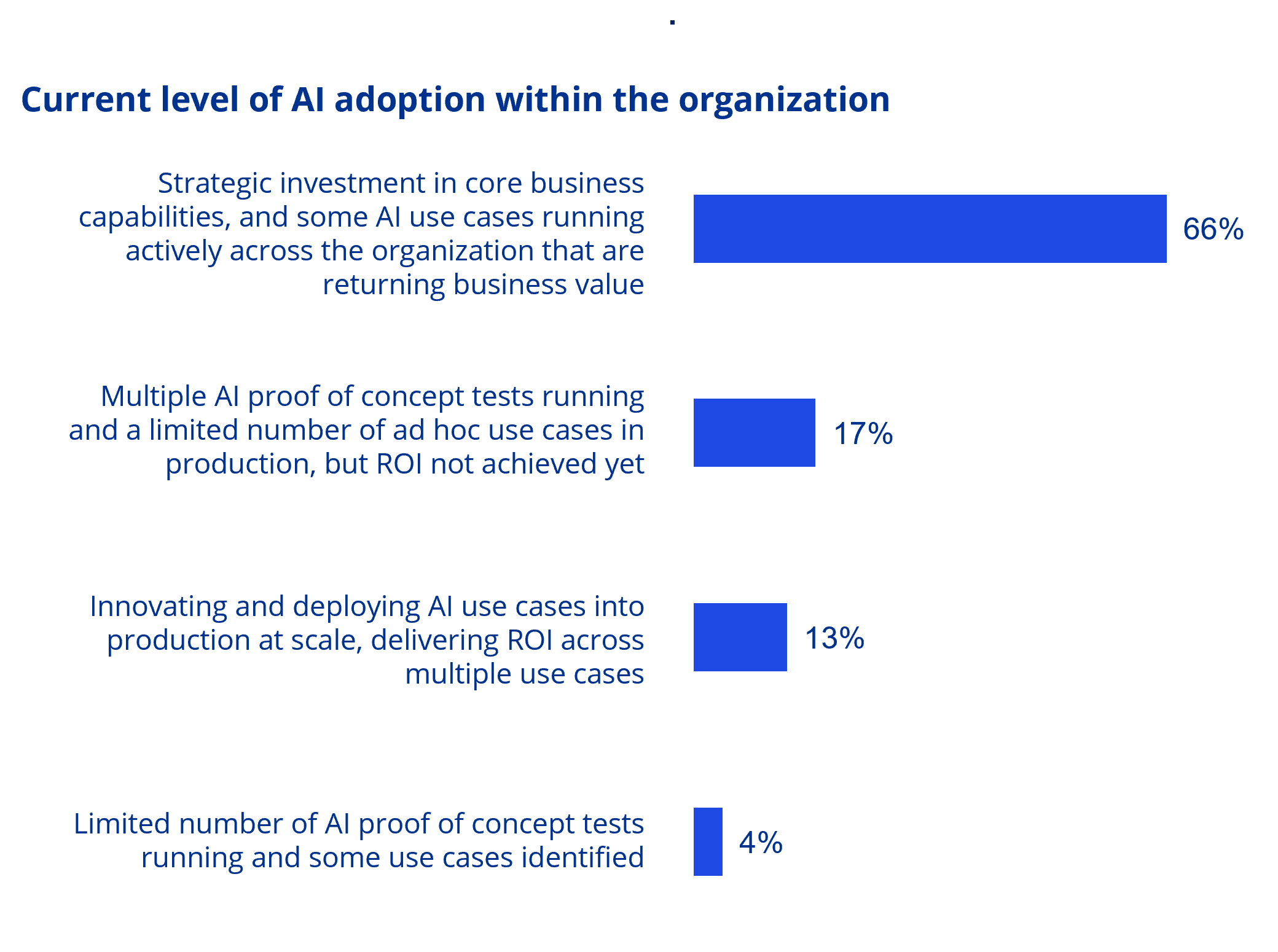
In healthcare, AI is moving from pilot projects towards broader adoption. Today, 66% of organizations are using AI solutions — up from 32% the year before. More than three‑quarters of respondents expect to be deploying AI at scale within the next 12 months, and 86% are already embedding AI into workflows, services and value streams.
AI adoption is progressing fastest in administrative and support functions, where automation delivers immediate time and cost savings. At the same time, the potential of AI is gradually expanding into clinical care, particularly in areas such as diagnostics, treatment planning and post‑care support.

Without strong foundations, the full value of technology cannot be realized
Although healthcare organizations are investing heavily in digital technologies, many have yet to align their data foundations, governance and operating practices to fully unlock value. Healthcare leaders face a clear choice: continue with incremental changes that deliver limited impact, or pursue deliberate, system‑wide transformation that enables technology to deliver measurable and sustainable improvements across care delivery and system performance.
The survey shows that most organizations remain cautious. Forty‑four percent prefer to wait for proven technologies, while only 23% are prepared to adopt disruptive solutions at scale. Long‑term value, however, is most likely to be achieved through coordinated, enterprise‑level transformation that connects technology, data and the way organizations operate.
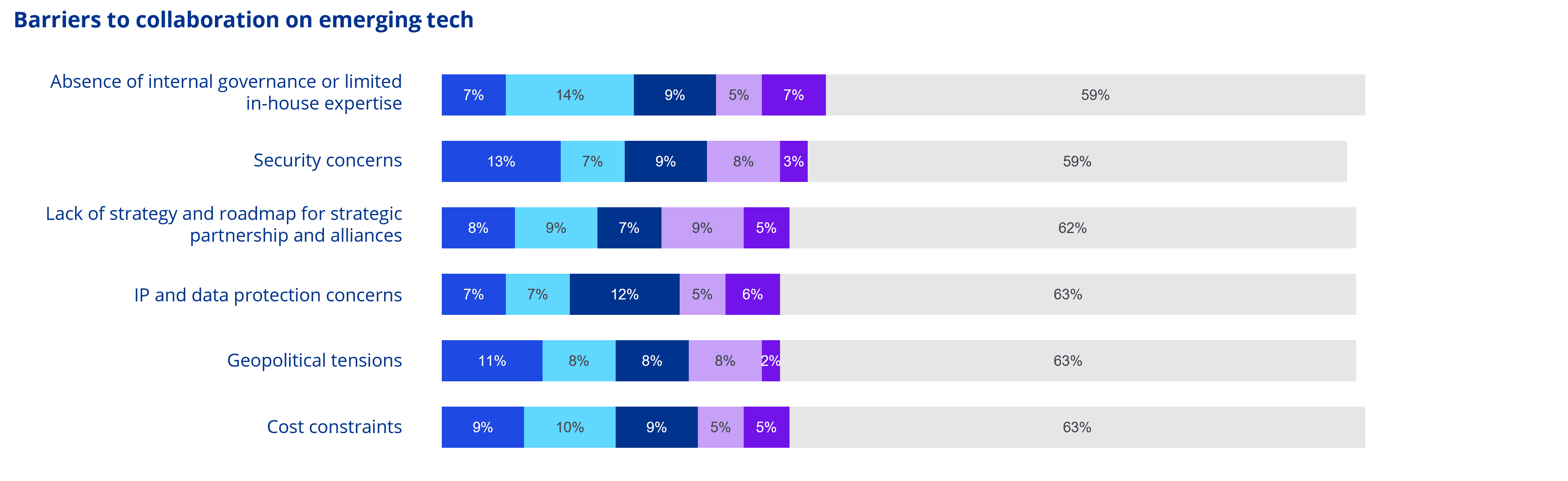
Significant gaps also remain in governance and capability. Forty‑two percent of respondents identify weak governance and limited expertise as the most significant challenge, leading to fragmented decision‑making and slow execution.
Barriers: data, security and regulation
One of the main barriers to deploying AI in healthcare is access to high‑quality data. Many organizations continue to rely on disconnected legacy systems, which makes broader and more reliable use of AI difficult. This contributes to concerns around unreliable or inaccurate AI outputs, cited as one of the most significant issues after cybersecurity.
Cybersecurity itself is becoming an increasingly strategic priority. More than four in ten healthcare leaders plan to increase spending on cybersecurity by over 10% in the coming year.
Regulatory and legislative requirements also remain a significant challenge. Compliance with data sovereignty rules adds complexity to AI adoption, while strict licensing requirements in healthcare can deter some solution providers.
The future of care delivery
Healthcare is entering a period of accelerated change. The use of digital twins, remote patient monitoring, command centres and robotic surgery is expected to expand significantly in the years ahead.
Success, however, will depend not only on technology itself, but on healthcare organizations’ ability to combine it with strong data foundations, clear governance and a future‑ready workforce.
About the Survey
The KPMG Global Tech Report 2026: Healthcare captures the views of 128 senior healthcare leaders from around the world. Respondents represent organizations with annual revenues above USD 1 billion and span multiple regions and segments of the healthcare ecosystem, including care providers and public health systems.