
KPMG Africa CEO Outlook 2026 finds that while 86% of African CEOs reported revenue growth in their latest financial year, a significant gap remains between AI ambition and organisational readiness, highlighting the need to turn investment into sustainable growth.
Highlights
- 66% of African CEOs are confident in the global economy, broadly in line with the global benchmark of 65%, while 72% are confident in their domestic economies and 79% in their own organisations.
- 86% reported revenue growth in their latest financial year, but only 58% expect annual earnings growth of at least 2.5% over the next three years, compared with 68% globally.
- Cybersecurity and data security, alongside supply-chain resilience, are the leading threats to growth, each cited by 31% of African CEOs.
- While 72% identify AI as a top investment priority, only 14% believe their organisations are keeping pace with or moving ahead of AI developments, compared with 66% globally.
- 84% expect headcount to increase over the next three years, while 86% intend to retain and retrain high-potential employees.
- Sustainability reporting readiness has improved, with 65% saying their organisations can meet new reporting requirements, up from 55% in the previous year.
Lagos, Thursday, 22 October 2026: African business leaders remain confident about growth, but converting that confidence into sustained performance will depend on how effectively organisations navigate economic uncertainty, geopolitical disruption, technological change and structural constraints, according to the 2026 KPMG Africa CEO Outlook.
The third edition of the KPMG Africa CEO Outlook examines the priorities shaping business leadership across the continent, from investment and growth expectations to emerging risks, artificial intelligence (AI), talent and sustainability.
The findings point to a business environment in which ambition remains strong, but execution is becoming increasingly important. While 66% of African CEOs are confident in the global economy, broadly in line with the global benchmark of 65%, confidence in their domestic economies stands at 72%. A further 79% are confident in the growth prospects of their own organisations.
This confidence is supported by recent performance, with 86% of African CEOs reporting revenue growth in their latest financial year. However, only 58% expect annual earnings growth of at least 2.5% over the next three years, compared with 68% globally, suggesting that translating revenue gains into sustained profitability remains a priority.
Economic uncertainty reinforces the need for resilience
African businesses operate in an increasingly interconnected global environment, where geopolitical tensions, energy-market volatility, supply-chain disruptions, and shifting trade relationships can influence investment decisions and operating costs.
For African economies, these pressures coexist with significant opportunities. The continent’s energy resources, critical minerals, expanding consumer markets and potential to develop local manufacturing and value chains position it to benefit from changes in global investment and supply-chain strategies. Realising this potential, however, will depend on infrastructure, reliable energy, skills, connectivity and predictable regulatory environments.
Resilience moves to the centre of the growth agenda
Cybersecurity and data security, alongside supply-chain resilience, are the leading threats to growth among African CEOs, each cited by 31% of respondents. The integration of AI into operating models and workflows follows at 27%.
Investment priorities reflect the need to strengthen operational resilience. Some 45% of African CEOs are increasing investment in cybersecurity and digital-risk resilience, 36% in regulatory compliance and reporting, and 31% in AI integration.
The findings suggest that resilience is no longer simply about protecting organisations against disruption. It is increasingly a condition for growth, enabling businesses to adapt to changing market conditions, protect critical operations and make investment decisions with greater confidence.
For businesses operating across diverse African markets, this requires balancing immediate operational pressures with longer-term investment in infrastructure, technology, governance and capabilities.
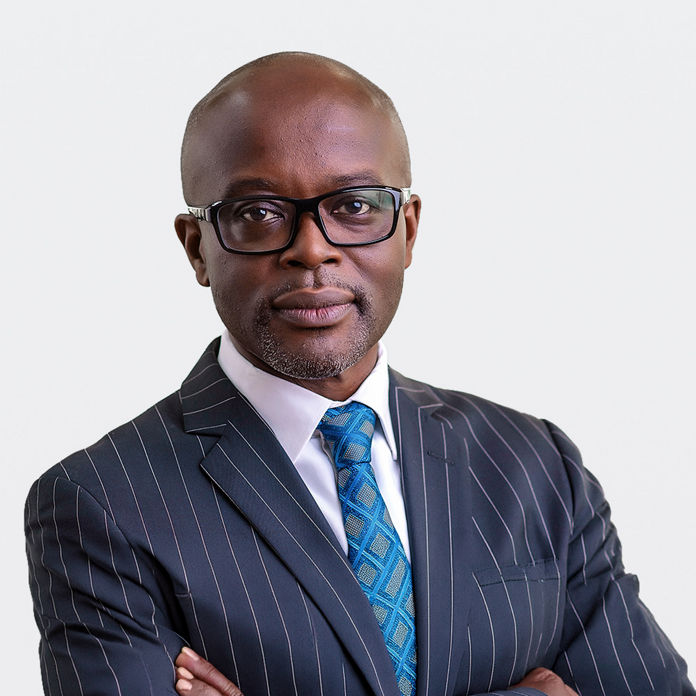
Tola Adeyemi, CEO of KPMG One Africa, said:
AI ambition is outpacing organisational readiness
AI remains a strategic investment priority for African business leaders, with 72% of CEOs identifying it as a top investment priority, compared with 79% globally. Yet only 14% believe their organisations are moving at the right pace or ahead of AI developments, against 66% of global CEOs.
This 52-percentage-point gap highlights a central challenge: African businesses recognise AI’s potential, but many are still working to develop the capabilities required to deploy it effectively and at scale.
Expectations around returns also differ. While 48% of African CEOs expect AI investments to deliver returns within one to three years, compared with 71% globally, 42% expect returns after three years, against 12% globally.
The longer investment horizon may reflect the work required to strengthen underlying data capabilities, integrate AI into existing systems, establish appropriate governance and develop the skills needed to realise value. It also reinforces the importance of evaluating AI against tangible business outcomes rather than adoption alone.
The opportunity for African businesses is not simply to adopt new technology, but to use it to improve productivity, strengthen competitiveness and develop new products and services suited to local and regional markets.
Workforce transformation becomes a growth imperative
Technology investment is also reshaping workforce strategies. Despite the growing role of AI in business operations, 84% of African CEOs expect headcount to increase over the next three years, compared with 89% globally.
At the same time, 86% intend to retain and retrain high-potential employees, 82% are redesigning roles, career paths and team structures for human-AI collaboration, and 74% are hiring AI and technology talent.
Skills remain a significant constraint, with 59% identifying workforce skills gaps, 58% citing AI upskilling and training, and 52% pointing to challenges in attracting and retaining talent.
These findings underline the relationship between technology adoption and workforce development. Businesses will need to invest in both if they are to translate digital ambition into productivity gains. For African economies, developing relevant skills and expanding access to technology capabilities will also be important to ensuring that digital transformation supports broader economic participation.
Sustainability shifts towards measurable business value
African CEOs are increasingly approaching sustainability through the lens of commercial performance, operational resilience and reporting readiness.
Almost half, or 48%, report embedding sustainability more deeply into core business strategy, compared with 63% globally. Meanwhile, 40% are narrowing their focus to sustainability issues most critical to business performance, against 21% globally.
Energy choices reflect the practical realities of operating across African markets. Some 41% of African CEOs prioritise energy demand optimisation, compared with 37% globally; 40% plan to diversify towards renewable or lower-carbon external energy supply, compared with 49% globally; and 15% plan to add dedicated generation or storage capacity, against 13% globally.
Reporting readiness provides one of the clearest year-on-year indicators in the findings. The proportion of African CEOs who say their organisations have the capability to meet new sustainability reporting requirements has risen from 55% in the previous year to 65% in 2026.
The improvement points to progress in organisational preparedness, although the broader challenge remains embedding sustainability into business decisions in ways that support resilience, efficiency and long-term value creation.
From confidence to execution
Taken together, the findings present a picture of African business leaders who remain optimistic but face increasingly complex decisions about where and how to invest. Economic and geopolitical uncertainty is reinforcing the importance of resilience, while AI adoption, skills development and sustainability are placing new demands on organisational capabilities.
For Africa, the challenge extends beyond individual business performance. Converting the continent’s resources, demographic potential and expanding markets into sustained growth will require investment in infrastructure, local value chains, skills and competitive business environments.
Adeyemi added: “Africa’s growth opportunity will depend on how effectively businesses work across markets, develop talent and build the capabilities needed to compete in a changing global economy. The priority is to move from recognising the opportunity to executing against it, with investment decisions that strengthen resilience today while building capacity for long-term growth.”
The 2026 KPMG Africa CEO Outlook suggests that confidence remains an important foundation, but it does not guarantee future performance. The next phase of growth will depend on African businesses' ability to turn investment into measurable outcomes, manage uncertainty, and build the capabilities required to compete in an increasingly technology-driven, interconnected global economy.
Access the 2O26 KPMG Africa CEO Outlook here: KPMG 2026 Africa CEO Outlook
ENDS.
For media queries, please contact:
Dudu Ndlovu,
One Africa Head of Corporate Affairs
KPMG South Africa
E: dudu.ndlovu@kpmg.co.za
About KPMG One Africa
KPMG One Africa refers to the KPMG firms in the Southern, East, and West Africa regions. These are comprised of 13 countries from the 3 regional clusters, i.e. Southern Africa: Botswana, Mauritius, Mozambique, Namibia, South Africa, Zambia, and Zimbabwe; East Africa: Kenya, Rwanda, Tanzania, and Uganda; West Africa: Ghana, and Nigeria, who in 2025 have established a formal One Africa Cluster called KPMG One Africa.
The KPMG firms in these countries are member firms of the KPMG global organization of independent member firms affiliated with KPMG International Limited, a private English company limited by guarantee.
About KPMG Francophone Africa
KPMG Francophone Africa brings together KPMG member firms operating across North, West and Central Africa.
Its regional footprint covers 20 countries: Algeria, Morocco, Tunisia, Mauritania and Libya in North Africa; Benin, Burkina Faso, Ivory Coast, Guinea, Mali, Niger, Senegal and Togo in West Africa; and Cameroon, Gabon, Equatorial Guinea, the Republic of Congo, the Democratic Republic of the Congo and Chad in Central Africa. The KPMG firms in these countries are member firms of the KPMG global organization of independent member firms affiliated with KPMG International Limited, a private English company limited by guarantee.
