The report highlights the growing importance of food safety, regulatory compliance, warehousing, cold chain management, logistics, storage, and distribution in India's food supply chain. With increasing consumer awareness, stricter regulatory oversight, and rapid growth in the food processing and e-commerce sectors, maintaining the safety and quality of food products has become a critical priority. It emphasises the role of the Food Safety and Standards Authority of India (FSSAI) in establishing regulations that govern food storage, handling, transportation, and delivery. It also underscores the importance of expanding cold chain infrastructure to reduce post-harvest losses and preserve the quality of perishable products. 

      The key regulatory requirements for warehousing and distribution, including hygiene and sanitation standards, temperature-controlled storage, pest management, traceability, inventory management, food-grade packaging, vehicle hygiene, and employee training. It stresses that effective cold chain management, temperature monitoring systems, proper handling practices, and comprehensive record-keeping are essential to maintaining food safety across the supply chain. It also discusses maintenance, quality control, and fire safety measures that help reduce contamination, spoilage, and operational risks. 

      Additionally, the major compliance challenges such as infrastructure gaps, workforce training deficiencies, high compliance costs, regulatory complexity, limited digital adoption, and supply chain coordination issues. To overcome these barriers, it recommends investments in infrastructure, digital transformation, training programs, regulatory streamlining, risk-based inspections, and stronger collaboration between industry stakeholders and government agencies. 
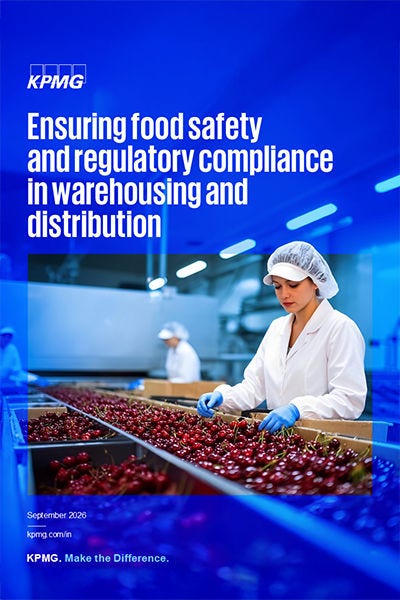

      Key highlights of the report

      • Growing focus on food safety and FSSAI compliance across the food supply chain
      • Importance of cold chain infrastructure, warehousing, and temperature-controlled logistics
      • Need for strong hygiene, traceability, pest control, and quality management practices
      • Rising adoption of digital solutions and risk-based compliance approaches

      The report concludes that a risk-based, technology-enabled approach to food safety and regulatory compliance is essential for building a resilient warehousing and distribution ecosystem. Strengthening infrastructure, improving cold chain efficiency, enhancing compliance processes, and fostering collaboration among stakeholders will be critical to maintaining food quality, consumer trust, and sustainable growth in the food sector.


      Ensuring food safety and regulatory compliance in warehousing and distribution

      An in-depth analysis of food safety, FSSAI compliance, cold chain management, and regulatory best practices in warehousing and distribution

      Key Contacts

      Suveer Khanna

      Partner and Head, Forensic Services

      KPMG in India

      Mohit Bhasin

      Global Head - Economic Growth, Government and Public Services

      KPMG in India

      Mustafa Surka

      Partner, Forensic Services, Risk Advisory Consumer Markets & Retail Leader

      KPMG in India

      How can KPMG in India help

      Helping businesses build trust, enhance compliance, and respond confidently to evolving risk landscapes

      Helping clients protect their business from fraud, misconduct and non-compliance

      Supporting jobs, industry growth, and prosperity through improved economic competitiveness, innovative policy and improved investment opportunities
      KPMG Insights Edge

      KPMG Insights Edge

      On the go access to KPMG in India’s insights and publications