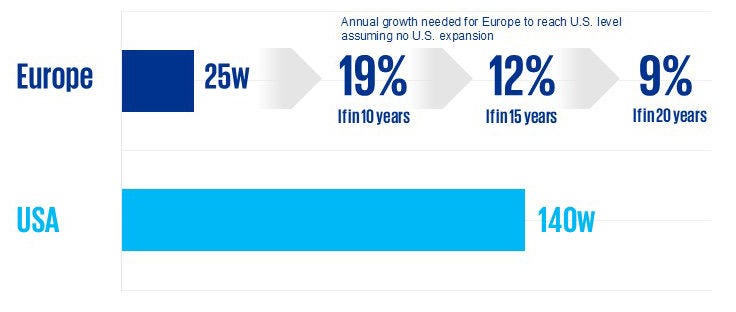
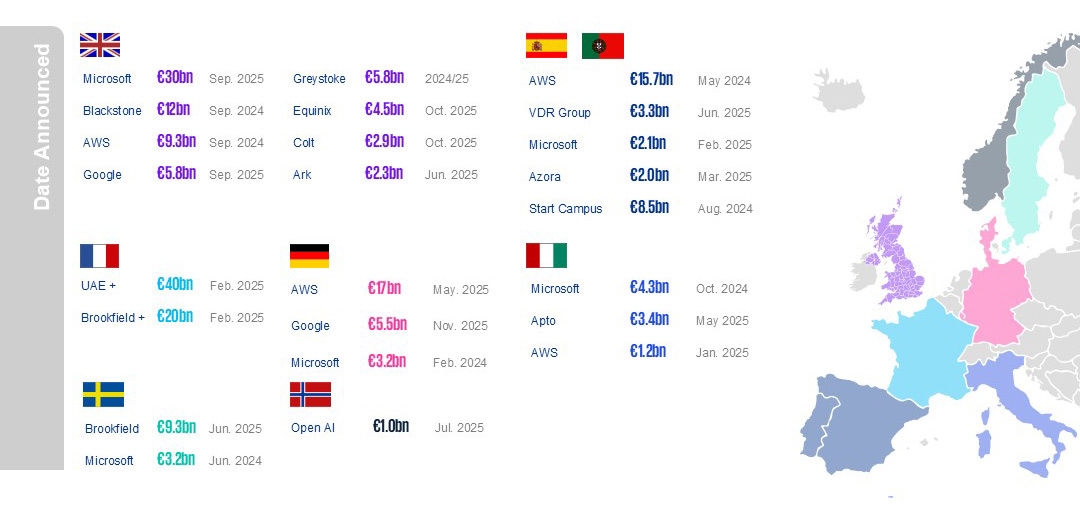
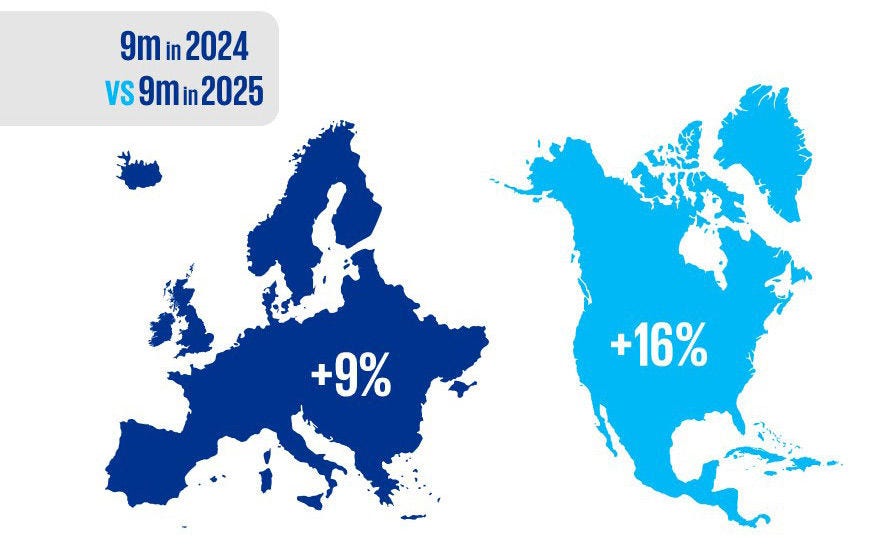
The global data centre sector is in the midst of an significant build-out, but the story isn’t simply about catching up; it’s about a widening gap. North America has long led the charge, and while Europe continues to grow, the pace of expansion is increasingly constrained by structural bottlenecks.
Demand remains robust worldwide, fuelled by cloud adoption, AI workloads, and the relentless growth of digital services. Developers are racing to add capacity, and in the U.S., this has triggered a frenzy of construction in hubs like Northern Virginia, Dallas, and Phoenix.
Yet questions linger over how sustainable this surge will be, with some warning that future share price corrections or another “DeepSeek moment” could temper the exuberance. This is a sector where supply-side constraints such as power availability, grid access, and skilled labour shortages, ultimately keep a lid on how frothy things can get.
Europe, by contrast, faces deeper structural challenges. Growth is healthy in the Nordics, and secondary hubs such as Berlin, Lisbon, and Zaragoza are emerging, but overall progress is slower and fragmented. Regulatory hurdles, energy constraints, and planning delays have made scalability difficult.
In the UK, for example, the grid connection queue has swelled beyond 700 GW, prompting milestone-based reforms to prioritize viable projects. In many European markets, securing a grid connection can take seven to ten years, making power access the single most critical factor in site selection and investment timing.
Developers are increasingly looking beyond the traditional FLAP-D markets (Frankfurt, London, Amsterdam, Paris, Dublin) to regions where grid access is more attainable.