error
Subscriptions are not available for this site while you are logged into your current account.
close
Skip to main content

      From residential to mission-critical:
      a sectoral pivot 

      Surging demand for mission-critical assets (especially data centres and grid infrastructure but also life-sciences facilities, etc.) is reshaping the construction and engineering landscape.

      With growth in these asset classes outpacing the capacity of their specialist supply chain, a wide range of contractors, from general builders to specialist engineering firms, now have a pathway to pivot towards this unmet demand.

      This pivot, already well underway, is not a market blip, but the manifestation of a structural rebalancing within the built environment sector as traditional construction demands are supplemented by resilient novel trends such as:


      • Digital demand

        The surge in AI, cloud, and digital services means more data needs to be stored and processed, generating huge demand for new, modern data centres.

      • Policy

        Supportive EU policies further encourage investments with examples like the multibillion euro InvestAI initiative, Connecting Europe Facility (CEF) Digital grants, tax incentives or simplified permitting.

      • Supply chain bottlenecks

        As growing latent demand continues to outpace the market’s ability to scale supply, both supply chain bottlenecks and grid infrastructure constraints are acting as natural breaks on a potential boom and bust cycle. This increases confidence in data centre construction’s long-term growth, in the face of a potential bubble in AI company valuations.


        For many legacy players, entering mission-critical markets offers a path to higher-value work, more stable revenue streams and deeper partnerships with multinational operators and infrastructure investors.


        While the fundamentals of the UK and Irish residential markets remain strong, they are characterised by low barriers to entry and fragmented competition. Commercial and public-sector building also tends towards tighter margins, with end customers regionally fragmented. In contrast, the mission-critical sector is served by a relatively small group of global developers and operators who are active across Ireland, the UK, and Europe.


        These clients typically offer higher margins and greater repeat business – key features driving the pivot toward mission-critical markets evidenced by players like Suir Engineering or Designer Group. 

      Christopher Brown

      Partner, Head of Strategy

      KPMG in Ireland


      Mission-critical is outgrowing its traditional supply chain

      The specialist, mission-critical supply chain has struggled to keep pace with exploding demand. There are a number of factors at play here. The sheer scale of AI-driven demand for digital resources has taken much of the world by surprise, with a range of knock-on effects on grid capacity, renewables integration, and large-scale retrofitting.

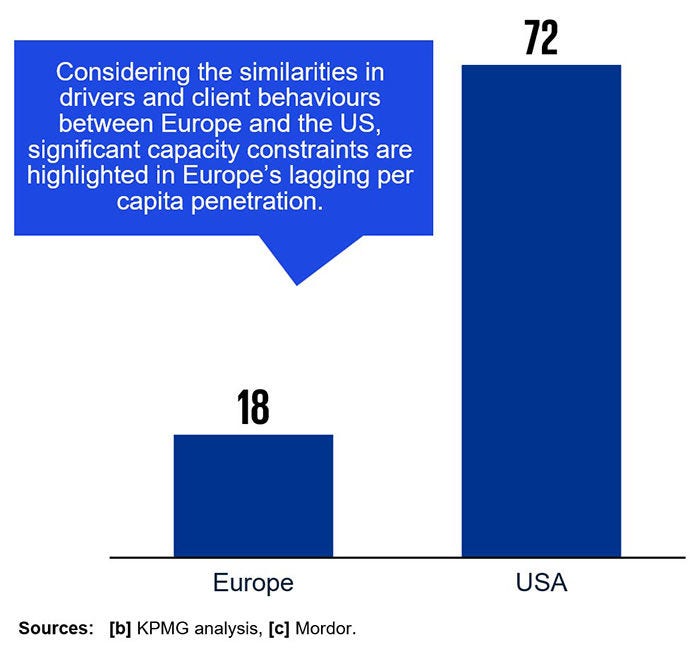
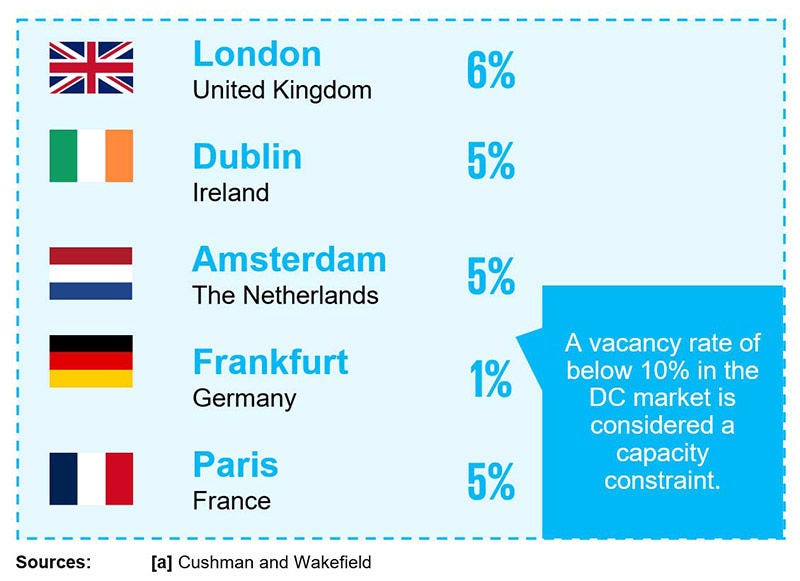
      Lagging European data centre capacity compared to the US, and low vacancy rates, create strong pressure for new builds in Ireland and elsewhere. Ireland’s life-sciences ecosystem, though chastened by recent US tariff changes, remains strong, and regulatory standards around safety, decarbonisation, performance, and operational resilience continue to rise.

      All of these factors drive rising demand for specialist build and engineering skill sets beyond core residential and commercial delivery, opening pathways for new entrants who can demonstrate the readiness, ability, and will, to scale.


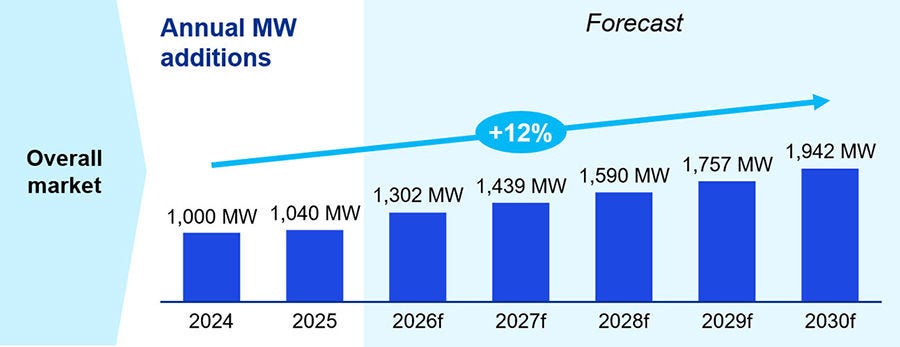
      Data centres capital expenditure in Europe forecast

      Data centres capital expenditure in Europe forecast

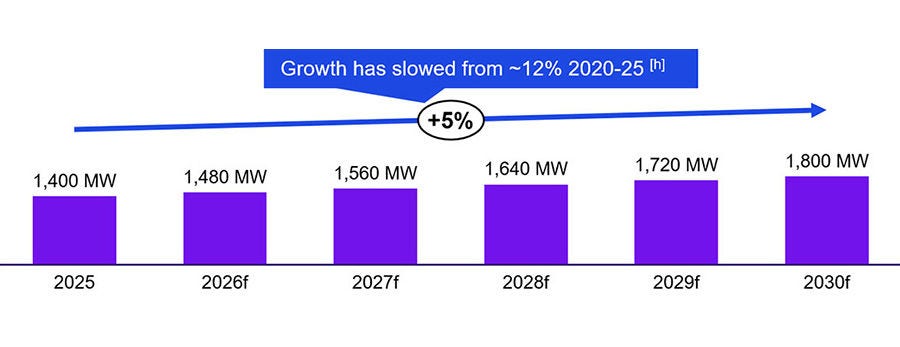
      RoI data centre capacity

      RoI data centre capacity

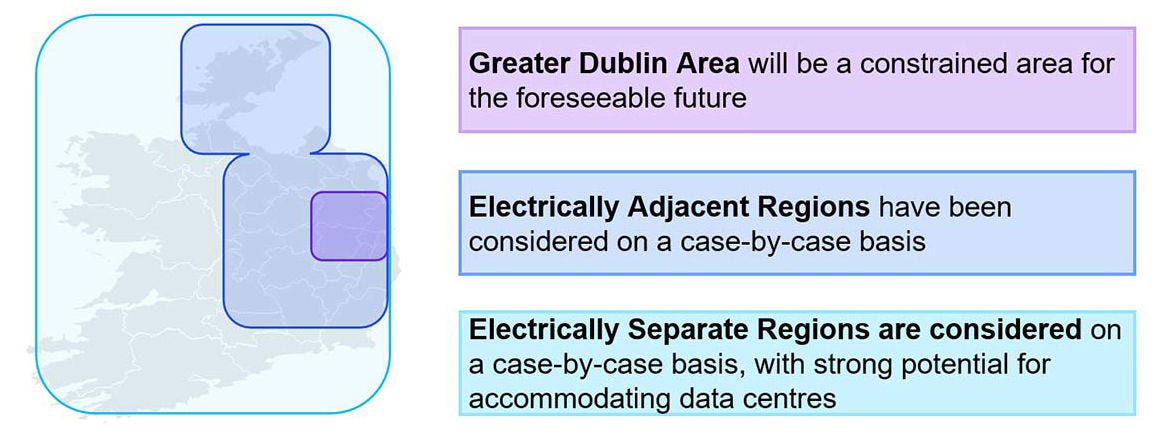
      EirGrid's view of constrained areas for data centres

      EirGrid’s view of constrained areas for data centres

      Concentration of Europe's DC capacity

      Concentration of Europe’s DC capacity

      Estimated installed watts per capita

      Estimated Installed watts per capita

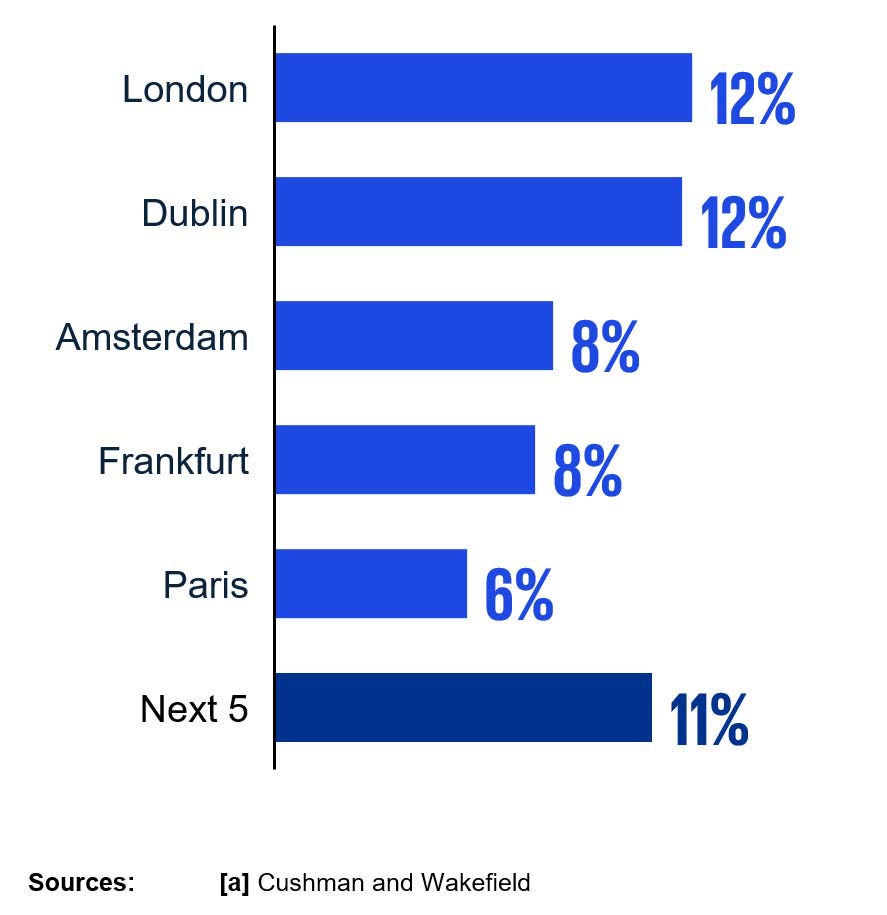
      Colocator vacancy rates

      Colocator vacancy rates

      Investor pull: mission-critical as a premium asset class

      Mission-critical assets have evolved into an attractive, distinct asset class for investors. Long-term, utility-like revenue models, high barriers to entry, and strong demand rooted in digitalisation and decarbonisation megatrends make these sectors both profitable and resilient.

      Operators and investors alike are seeking delivery partners capable of building, commissioning and maintaining such assets, creating a clear incentive for established construction players to diversify into this faster-growing segment.

      Firms that can demonstrate technical competency, digital maturity and robust governance are naturally preferred partners.

      For residential contractors, this creates an opportunity to reposition their businesses, access new capital pools, and move into more specialised and higher-margin parts of the value chain.


      Retrofit has definitely grown and will keep growing. While so far it has been done in phases with projects like Meta in Clonee and Odense (where retrofitting started in both as soon as the facilities were brought online), we're anticipating larger, more comprehensive tear-out projects in the next few years when there are more 15-20 year old DCs. Those projects will likely include full UPS redistributions and significant control system upgrades, so the retrofit opportunity will transition from minor updates to full-scale overhauls.

      Head of Commercial, Irish M&E Contractor


      Transitions and acquisitions

      Unsurprisingly, a number of Irish companies are looking to move up the value chain. General contractors such as Sisk and Collen began this pivot over a decade ago as they deepened their exposure to high-tech and mission-critical projects.

      Specialists like Ardmac and H&MV have followed suit, while Cunningham Contracts has successfully expanded from residential and civils work into recurring life science and data centre accounts.

      In the UK, JSM Group has moved from telecoms and utilities civils into high-voltage connections, substations and DC utilities, a trend mirrored by general contractors such as Skanska and McLaren as they target higher-complexity work.

      Mercury and Winthrop represent further strong examples of Irish engineering contractors that have built dominant market positions in mission-critical delivery across Europe and beyond, each now exceeding €1bn in annual turnover. Beyond Europe, ambitious players such as Sisk, Mercury, CEL, and LPI are making the move into US mission critical.

      Expansion is often driven by acquisition or partnership with mission-critical specialists, enabling companies to shorten learning curves, enhance margins, and compete for long-term, programme-based work rather than one-off developments.

      Key patterns here would include:

      • Targeted acquisitions of M&E, commissioning, and offsite manufacturing firms (e.g. Suir Engineering’s acquisition of Taylor & Fraser).
      • Strategic recruitment of specialist project teams, often with data centre or pharma experience, to build credibility with global clients.
      • Pivot projects, where residential firms win initial mission critical retrofitting or maintenance contracts before gradually expanding in-house capability.
      • Investment in digital tools such as BIM, digital twins, and modular fabrication.
      • Expansion into energy and utilities as mission-critical work becomes increasingly intertwined with power availability, grid upgrades and sustainable energy integration.

      Barriers to entry

      Managing this pivot from traditional construction into mission-critical is a challenge, since it generally requires operators to acquire new technical expertise as well as meet more rigorous client governance, supply-chain transparency and compliance demands, often whilst achieving faster delivery cycles.

      All of this needs to be managed in a context of intense competition from established global engineering majors. Those players managing the pivot successfully will be characterised by investment in capability building, digital integration, balance-sheet strength, and partnership models with technology vendors, engineering specialists and energy providers.

      For firms that do manage the transition successfully, the rewards are well worth the effort, including access to premium sectors, revenue predictability, strengthened resilience to cyclical downturns, and enhanced attractiveness as acquisition targets or partners.

      As mission-critical investment continues to expand, those firms that scale capability now will be best positioned to capture these benefits.


      Get in touch

      The evolution of today’s built environment landscape is faster than ever before, and sector players need to think about how they are going to respond in real time to capitalise on these changes. Connect with us today to explore how our strategic services can empower your organisation.    

      Ireland's leading strategy team; articulating your vision through insights and evidence
      Christopher Brown

      Partner, Head of Strategy

      KPMG in Ireland

      Scott Davison

      Associate Director

      KPMG in Ireland

      Morgan Mullooly

      Associate Director

      KPMG in Ireland

      Byron Smith

      Associate Director, Strategy

      KPMG in Ireland


      Discover more in Data Centres

      Something went wrong

      Oops!! Something went wrong, please try again