Pricing with foresight

      KPMG Multiples supports buyers and sellers in determining the right purchase price in the transaction process. The tool provides access to relevant benchmark data, such as trading multiples from over 21,000 companies and transaction multiples from over 65,000 transactions. Users can integrate these key metrics into a comprehensive multiple company valuation, thereby facilitating an initial assessment of the target company based on Sales, Earnings, EBIT, or EBITDA multiples. After entering the key financial figures and selecting a suitable peer group, an AI-supported qualitative analysis of the valuation result is conducted. The Quality Assistant evaluates the plausibility and quality of the valuation using defined quality criteria, offering insights on potential optimizations to enhance the validity and comprehensiveness of the result.

       

      All the benefits at a glance

      • Relevant

        The most important trading and transaction multiples in one place

      • Reliable

        All data is derived using consistent KPMG valuation standards

      • Up to date

        Monthly updates ensure the data is up to date

      • Concise

        All important values at your fingertips at a glance

      • Practical

        Results can be exported to Excel for further processing

      Trading and transaction multiples

      • Sales multiples

      • EBITDA multiples

      • EBIT multiples

      • Earnings multiples

      • Book value to market value of equity multiples

      Product Presentation

      Learn more about determining the purchase price with KPMG Multiples.

      Bird

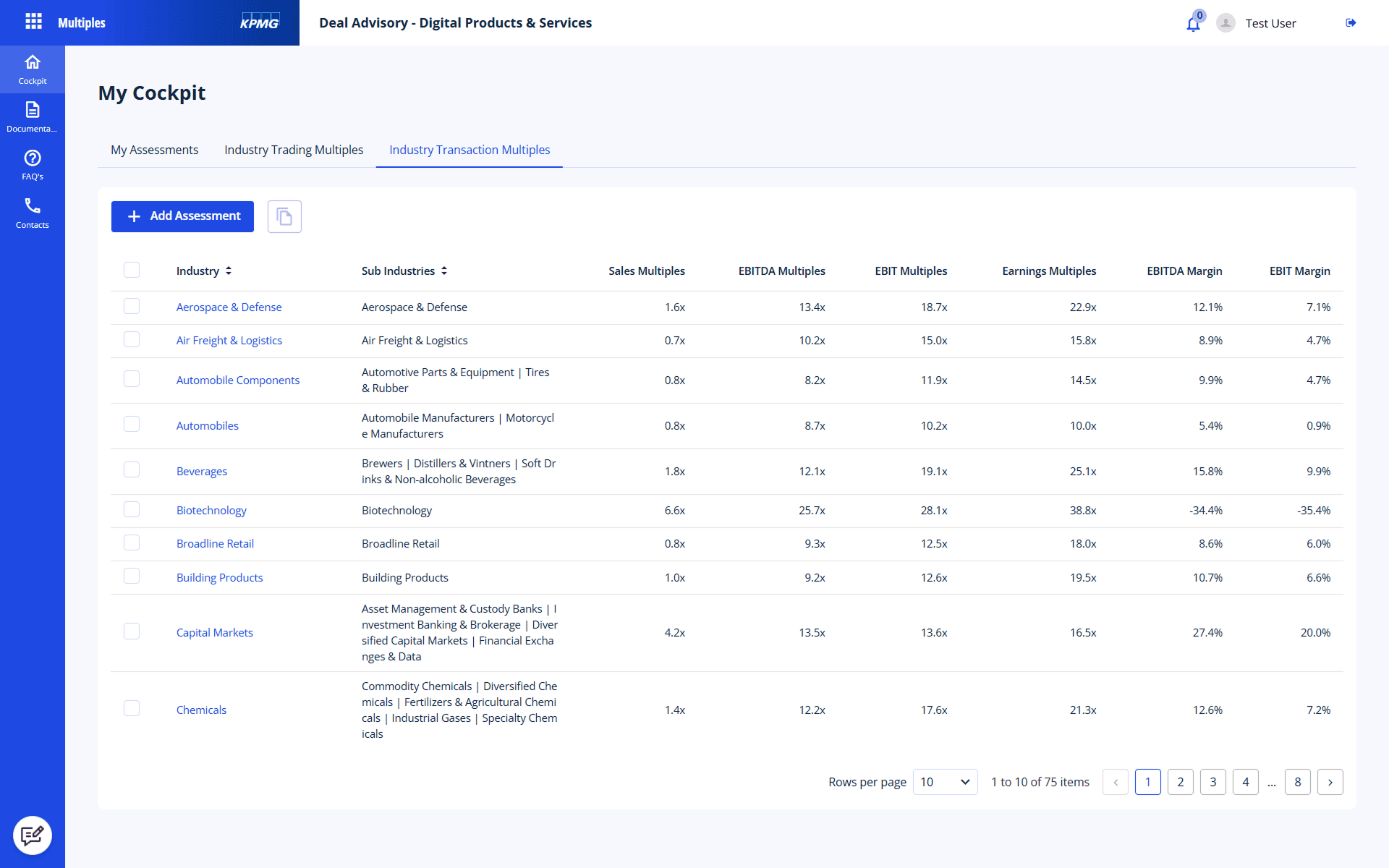
      Insights into the dashboard

      Option to select from predefined sector peer groups and transactions Option to select from predefined sector peer groups and transactions

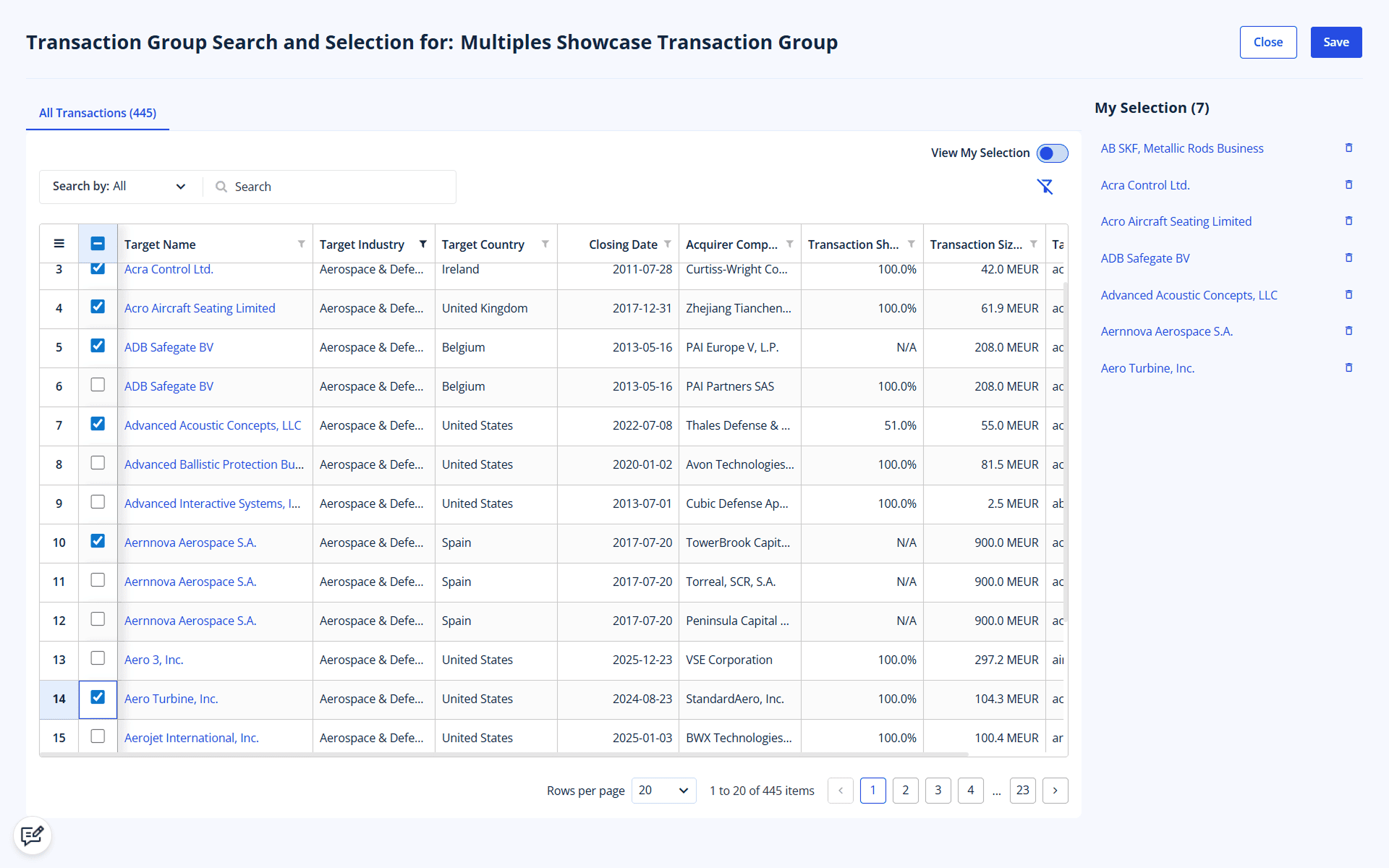
      Transaction group search and selection using precise filters Transaction group search and selection using precise filters

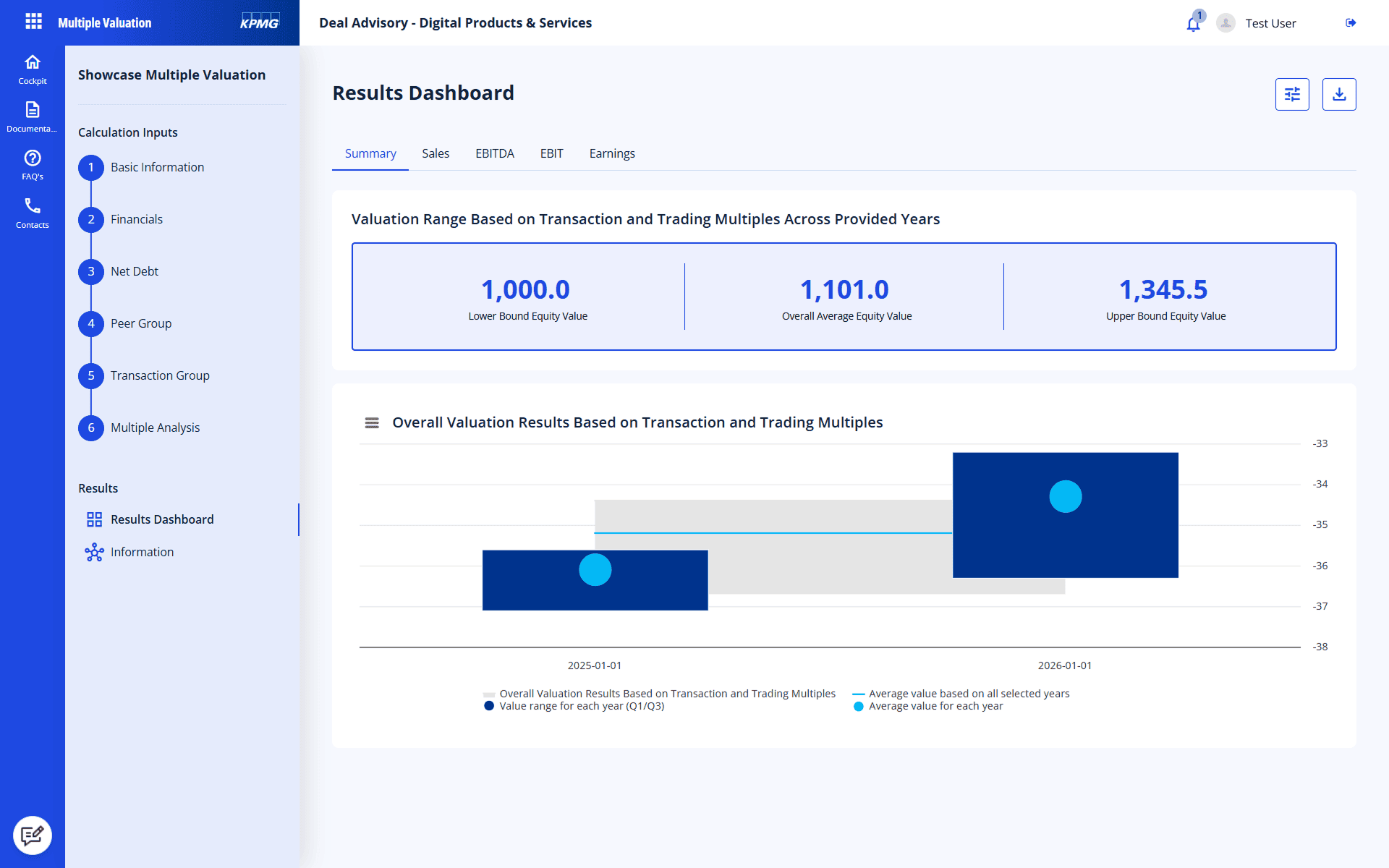
      Display of the multiplier valuation results Display of the multiplier valuation results

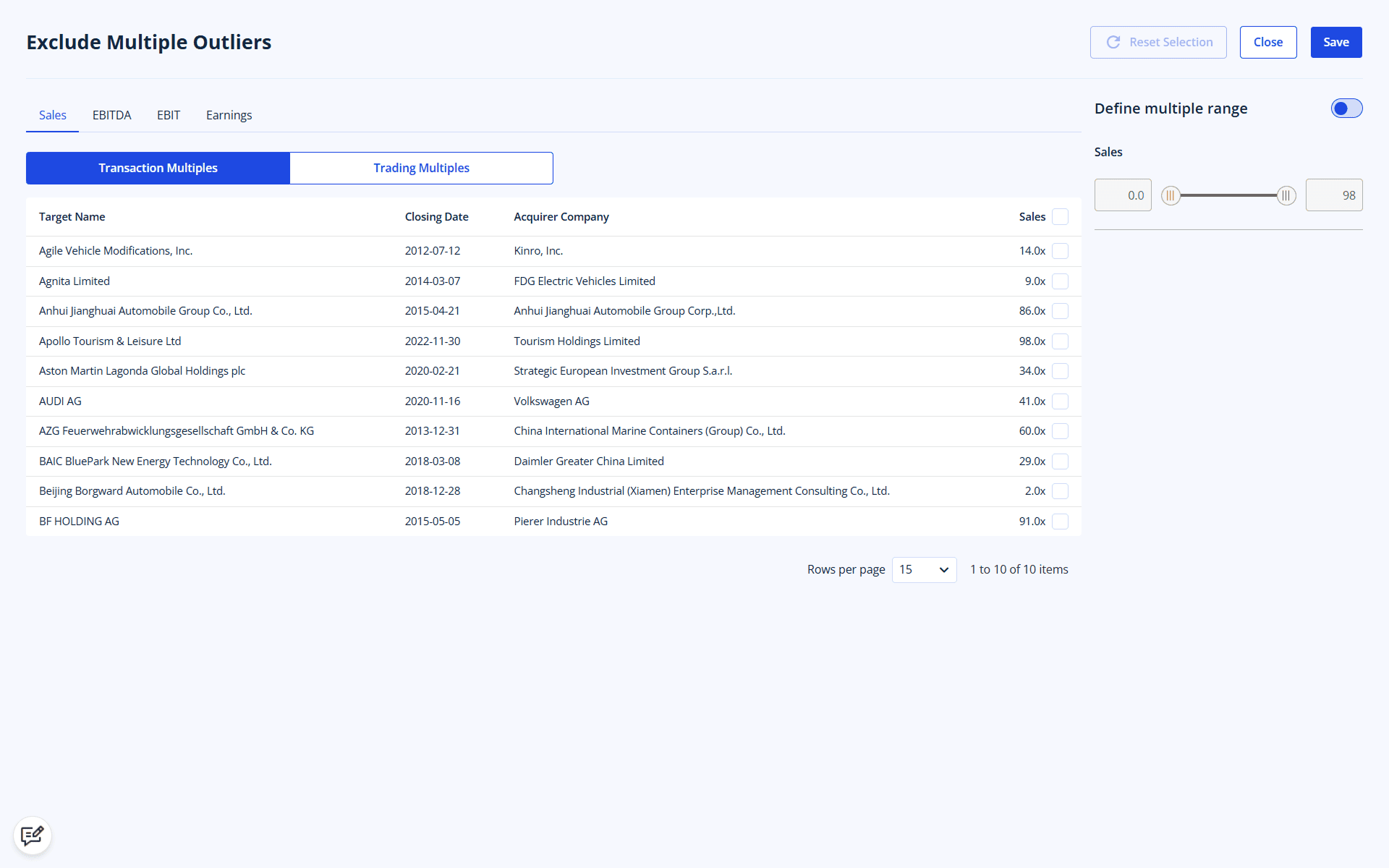
      Option to exclude outliers from trading and transaction multiples Option to exclude outliers from trading and transaction multiples

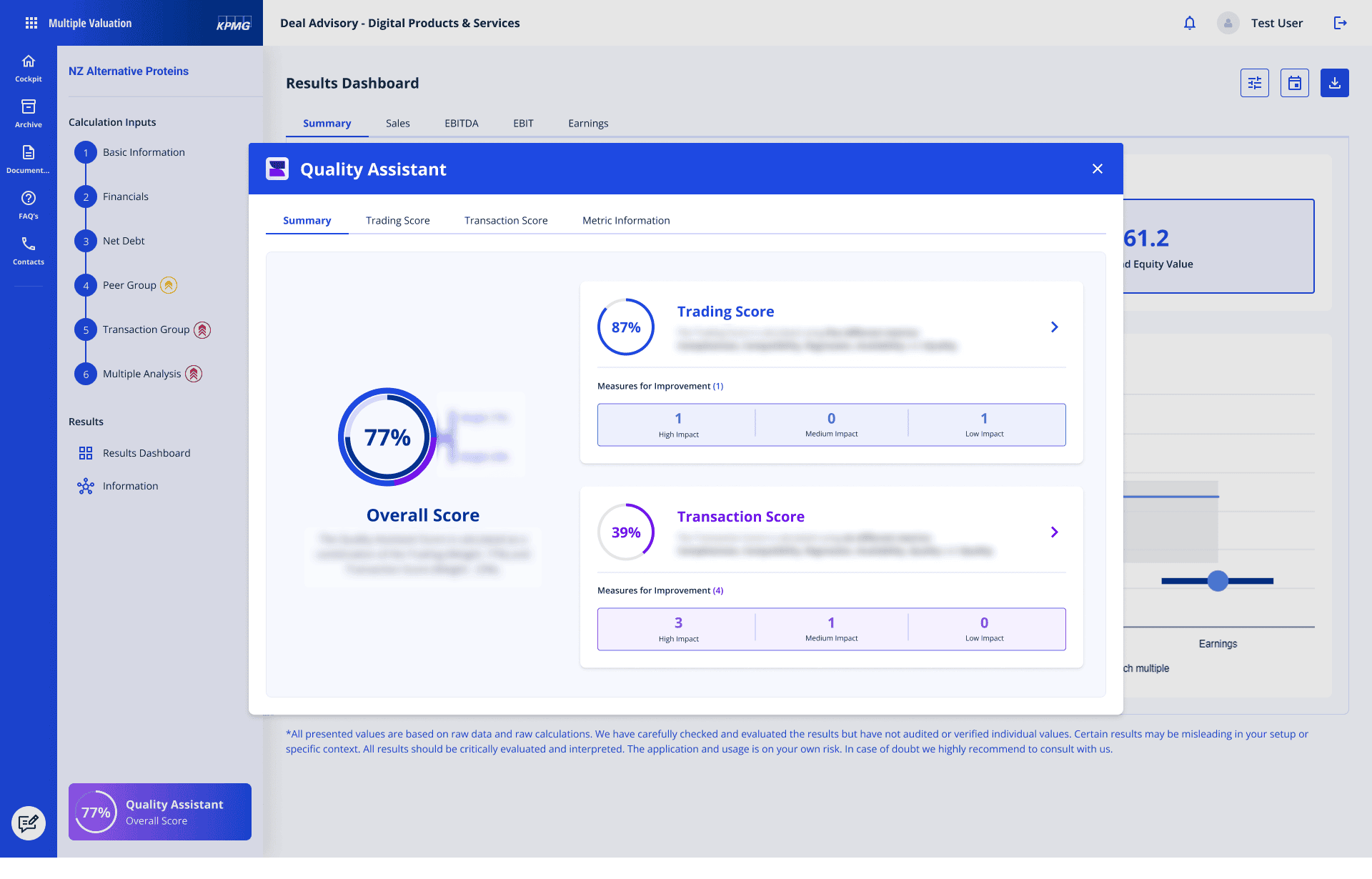
      Suggestions for improving the valuation results Suggestions for improving the valuation results

      Available multiples

      Sales Multiples

      Sales multiples relate enterprise value to revenue and are commonly used for indicative company valuations. As they do not reflect a company’s profitability, results can be distorted by differences in operating margins across peer companies. KPMG Multiples addresses this through proprietary, peer group-specific regression analyses, resulting in profitability-adjusted, company-specific sales multiples.

      EBITDA Multiples

      EBITDA multiples relate enterprise value to earnings before interest, taxes, depreciation and amortization (EBITDA). As EBITDA is largely independent of capital structure and accounting policies, it is widely used for company comparisons. KPMG Multiples provides EBITDA multiples across more than 74 sectors and industries, complemented by benchmark data from over 65,000 M&A transactions for enhanced valuation analysis.

      EBIT Multiples

      EBIT multiples relate enterprise value to earnings before interest and taxes (EBIT) and are commonly used for indicative company valuations. Under stable capital expenditure and working capital conditions, EBIT can serve as a useful proxy for operating cash flow. KPMG Multiples provides EBIT multiples for listed companies across more than 74 sectors as well as benchmark data from over 65,000 M&A transactions.

      Earnings Multiples

      Earnings multiples relate market capitalization to net income and are used to derive equity value directly. Reliable results require peer companies with comparable capital structures, as earnings are influenced by leverage. KPMG Multiples incorporates this relationship through proprietary regression analyses and provides benchmark data from over 21,000 listed companies together with transaction multiples from more than 65,000 deals.

      Book-to-Market Value of Equity Multiples

      The book-to-market multiple compares the market value of equity to its book value and is particularly relevant for capital-intensive industries such as financial institutions and industrial groups. It provides insight into the relationship between a company’s market valuation and net asset value. KPMG Multiples offers these ratios based on reported financial data and analyst forecasts for selected valuation dates.

      Frequently Asked Questions

      A multiple is a financial metric derived by dividing the entity or equity value of a company by a financial KPI (e.g., the equity value divided by the net income results in a scope of a net income multiple). A multiple can be used to estimate the price of a comparable company based on the underlying KPI. Hence, if someone is interested in a market price of a company, peer group multiples can serve as an indication of how much a typified investor would be willing to pay for a company. In order to derive an indicative range for the market price of the valuation object, the resulting multiple range can be applied to the respective KPI. The selection of appropriate multiples for valuation depends on the nature of the business of the valuation object. Our App offers Sales Trading Multiples, EBITDA Trading Multiples, EBIT Trading Multiples, Earnings Trading Multiples as well as Book Value to Market Value of Equity Trading Multiples (book-to-market ratio).

      Due to the special characteristics of companies operating in the financial industry (such as high leverage, high dependency on the interest level, etc.), net debt, the enterprise value and thus the corresponding trading multiples may be of limited relevance.

      Trading multiples can be calculated for any time in history where a company was publicly listed. They can change from one day to the next, as price points become available and fluctuate daily. In contrast, transaction multiples can only be calculated for the particular date of a transaction, as no other data points are available. Also, transaction multiples aren’t always publicly available.

      Yes, the extensive database of the KPMG Multiples App contains monthly updated trading multiples from more than 21,000 companies worldwide as well as transaction multiples from over 65,000 transactions. Users can identify a suitable peer group of comparable companies or transactions using customized filter options such as industry, region and profitability filters (e.g. margins or growth). Predefined industry multiples serve as an initial orientation for peer group creation. Based on the peer group-specific multiples provided, the individual company value is then calculated, whereby both the entity value and the equity value are shown.

      In the KPMG Multiples App, users can flexibly determine which multiples are used to calculate the company value: Sales, EBITDA, EBIT and/or earnings multiples. With the help of these quality-assured multiples and the methodological approach, the solution helps to obtain a reliable valuation result.

      The multiples to be included in the evaluation can be defined according to individual ranges or adjusted for outliers if required. For additional validation, the tool provides the number of underlying analyst estimates for determining the multiples. With the Excel download function, users can export both the valuation results and the raw data and then process them as required.

      The KPMG Multiples App ensures the quality of the multiples by comprehensively evaluating and cleansing the data. The transparent evaluation process and the comprehensible presentation of results enable the evaluation result to be derived efficiently in five steps. This includes the key financial figures, current multiples and the generation of valuation results at the touch of a button. The structured presentation of data and calculations as well as the clear dashboard with KPIs and value range ensure transparent and comprehensible documentation of the underlying data and methods. The Quality Assistant also supports users in analyzing the selected multiples and provides a guide to increase the quality of the valuation result.

      Contact us

      Contact us for a personal appointment:

      Further Interesting Insights

      Your contact