Geopolitical uncertainties are now one of the biggest challenges facing the economy. The effects of disruptions such as supply chain disruptions, customs duties or attacks on digital infrastructure are part of everyday life for globally active companies. Those who recognise early on which developments will become relevant can ensure stability and take advantage of room for manoeuvre.
The four maturity levels of geopolitical management
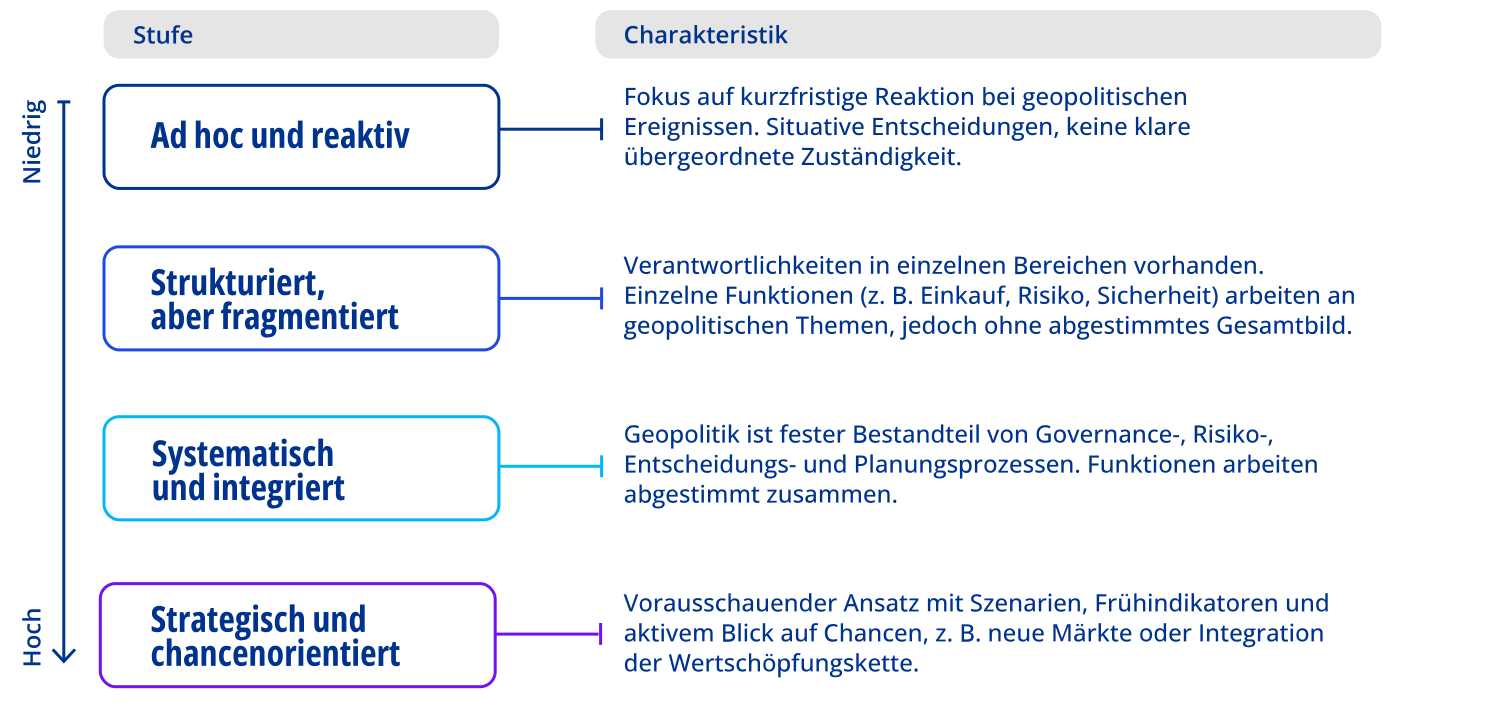
Companies differ significantly in how systematically they take geopolitical factors into account. KPMG's maturity model describes four stages of development. It serves as a guide to determine your own position and derive concrete steps for the further expansion of your capabilities.
Central fields of action
With increasing maturity, not only structures and decision-making channels change. The focus in terms of content also expands: from securing ongoing value creation to actively shaping new market and innovation fields.
The following fields of action show how companies are gradually anchoring geopolitical aspects - operationally, organisationally and strategically.
1. Ensuring operational agility
Supply chains, physical assets and digital infrastructure are increasingly under threat and are subject to geopolitical dynamics. Companies that are aware of critical dependencies and secure essential processes remain functional even under pressure.
Our experts identify weak points in the areas of operations, plant security, cyber defence and business continuity management. Together with you, they develop suitable measures to strengthen operational security and resilience. This creates a clearer picture of vulnerabilities and options for action in critical areas.
Relevant content on the topic:
Resilient supply chains & security of supply in the manufacturing industry
2. Clarifying responsibilities and decision-making channels
Geopolitical factors affect a large number of specialist departments, including Strategy, Purchasing, Production, Finance, HR and Corporate Security. Clear responsibilities as well as defined processes and information channels in geopolitical risk management ensure that decisions can be made quickly and consistently.
In order to strengthen decision-making capabilities, our experts help to create role models, structure information channels and integrate geopolitical aspects into existing governance and risk architectures. This creates a coordinated approach across individual functions.
3. Using scenarios and creating orientation
Scenarios and leading indicators help company management to categorise developments and evaluate room for manoeuvre. This makes strategic decisions more comprehensible and easier to plan.
Our experts develop geopolitical scenarios, create situation reports and analyse possible effects on value chains, markets or regulation to provide more orientation in uncertain situations. In interactive management and wargaming workshops, we create geopolitical awareness among your organisation's decision-makers.
Relevant content on the topic:
Geopolitical Risks 2025: Acting strategically in turbulent times
4. Review global positioning
Locations, supply chains and technology access routes need to be reassessed in terms of robustness, costs and regulatory requirements. The aim is to create operational and strategic structures that are both resilient and competitive.
KPMG supports companies in comprehensively analysing international value networks, classifying geopolitical and regulatory developments and comparing possible alternatives in a well-founded manner. On this basis, global structures can be developed step by step and strategic dependencies reduced in a targeted manner.
5. Recognising growth areas
Security, energy and technology policy create new markets and opportunities for cooperation. Those who evaluate trends at an early stage can identify investment areas and take advantage of innovation opportunities.
Our experts analyse geopolitical market and technology developments, evaluate potential growth areas and help to carefully prepare strategic investments and market entries. On this basis, opportunities can be categorised in a structured manner and informed decisions can be made.
Relevant content on the topic:
More KPMG insights for you
Your contact
Dr. Benedikt Herles
Director, Co-Lead Competence Center Geopolitics & Defence, Head of Country Practice Africa
KPMG AG Wirtschaftsprüfungsgesellschaft