

Legislative and Tax Scrutiny Intensifies on German Cash Pool Participants
We are observing a rapid increase in the amount and intensity of German tax audits focusing on German companies being a cash pool participant in cross-border cash pools. German tax authorities have not only built up their personnel expertise in this area but are also expanding their technological capabilities by utilizing public financial market data. These developments are accompanied by new legislation (Section 1 (3e) of the German Foreign Tax Act (Außensteuergesetz, AStG)), applicable since 2024, which generally classifies many cash pool leader activities—such as liquidity management, financial risk management, or foreign exchange risk management—as mere routine services. This constitutes the basis for German tax auditors to perform income adjustments for German cash pool participants, assuming that all benefits and profits realized through the cash pool operation are to be almost exclusively allocated to the cash pool participants, including the respective German entity.
Transfer Pricing Guidance on the Arm’s Length Pricing of Cash Pooling is Exotic
While all intra-group transactions are generally priced based on the classic transfer pricing methods, the Organisation for Economic Co-operation and Development (OECD) Transfer Pricing Guidelines particularly stipulate the following two rules for pricing cash pool transactions, i.e., setting interest according to the arm’s length principle:
Rule 1: No cash pool party (participants and cash pool leader) should be worse off from its participation in the cash pool compared to its next best alternative1, i.e. it should benefit from its participation or achieve a financially neutral position
Rule 2: Synergy and coordination gains realized through the cash pool operation must be allocated according to the functions performed and risks assumed by the parties2
Additionally, long-term structural cash pool balances (generally defined as balances outstanding for more than twelve months) may need to be treated like longer-term deposits or term loans with respect to the determination of arm’s length interest rates3. The pragmatic consideration of long-term structural cash pool balances will be covered in a future edition of the TP Newsletter.
The German Ministry of Finance issued new administrative principles on transfer pricing last year and generally takes the same view as the OECD.
Quick Self-Assessment Guidance from a German Transfer Pricing Perspective
A quick indicative cash-pool self-assessment regarding the arm’s length nature of interest rates applied for German cash pool participants can be performed on the basis of the two OECD rules described above, depending on whether the German cash pool participant is in a borrowing or a deposit position.
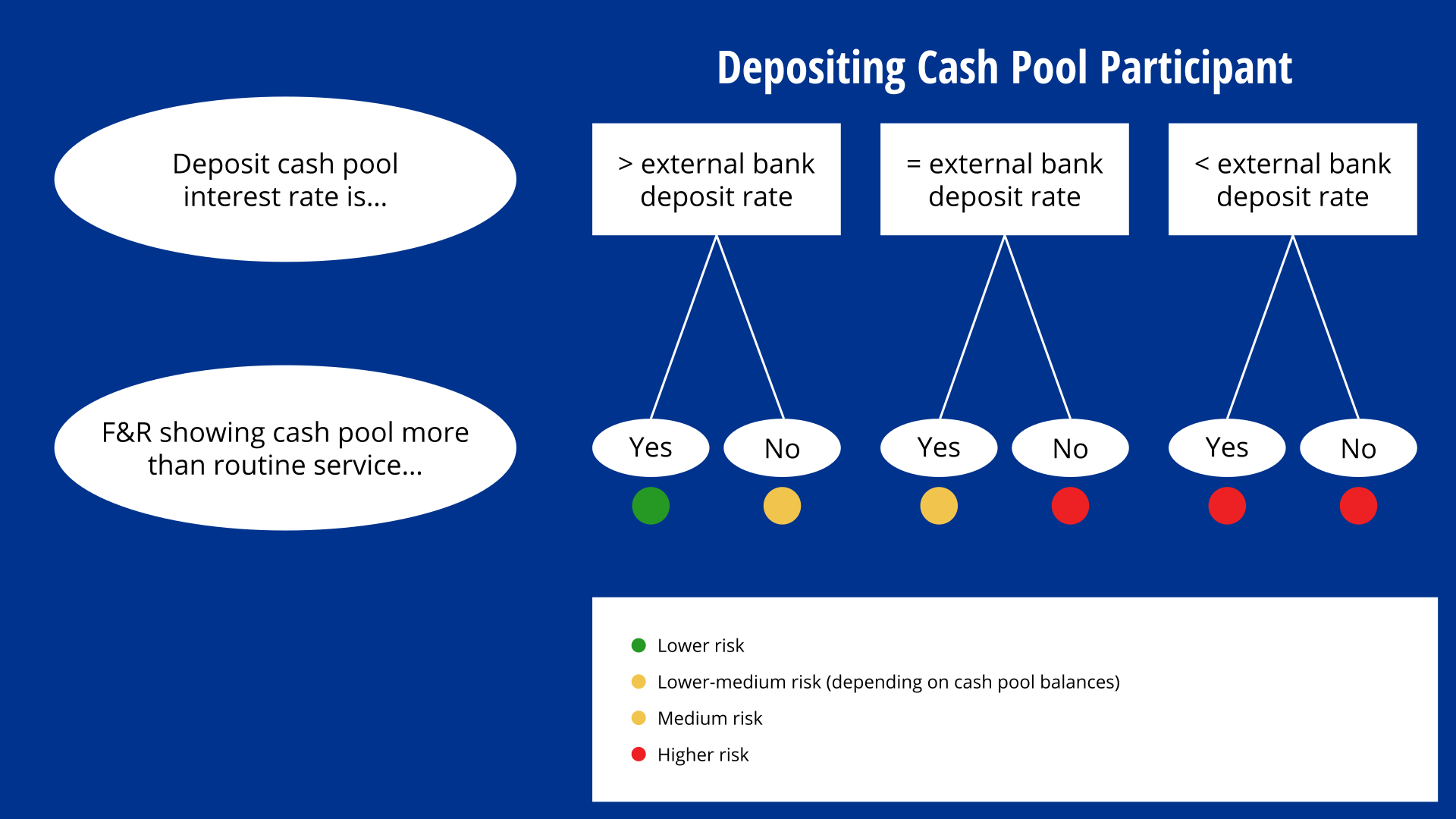
Figure 1: Deposit Position
Regarding Rule 1, benefiting from cash pool participation can be interpreted as being in a better position compared to depositing excess cash with a bank. This typically needs to be demonstrated by showing that cash pool deposit rates exceed the external deposit rates of the German cash pool participant or the group, or alternatively by a comparison with publicly available information on bank deposit rates. It should also be considered whether the cash pool leader has a similar counterparty risk as an external bank.
Regarding Rule 2, German tax authorities regularly argue that, based on the German law delineated above, cash pool leaders are generally considered routine service providers and that potential group-wide benefits or profits resulting from the cash pool operation—so-called synergy and coordination gains—should be fully allocated to the cash pool participants (in particular to the depositing affiliates providing liquidity to the cash pool). According to the new German law, this does not apply if a functional and risk analysis demonstrates that the cash pool activities do not constitute a mere low-function, low-risk routine service. In this case, a more limited or partial allocation of benefits should suffice.
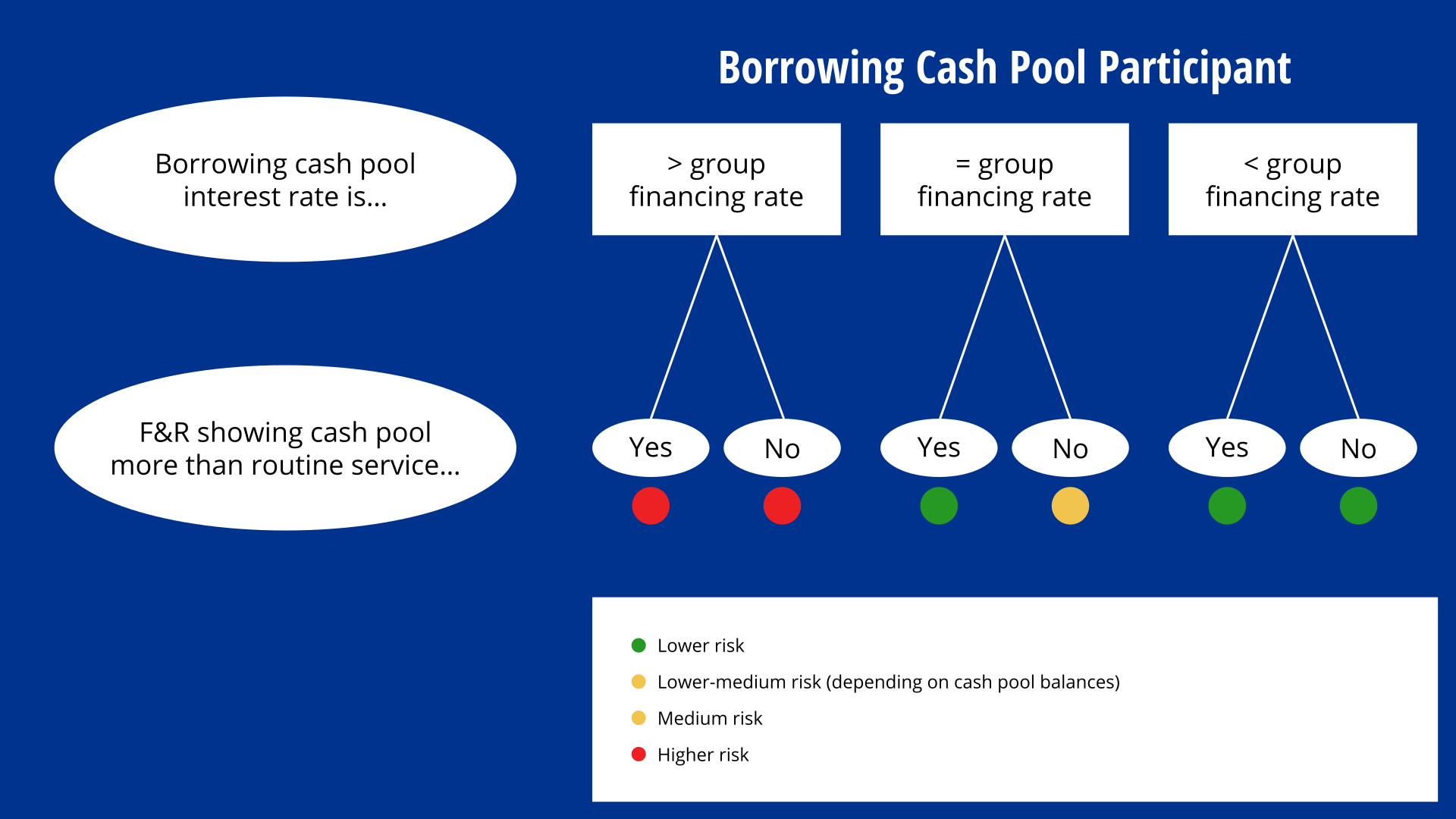
Figure 2: Borrowing Position
Regarding Rule 1, benefiting from the cash pool participation can be interpreted as being in a better position compared to acquiring own external financing, for example from a local bank. This can typically be demonstrated by showing that cash pool borrowing rates do not exceed external group financing conditions, respectively the conditions the company could secure on an individual basis.
Regarding Rule 2, generally the same applies as for the deposit position; however, as potential synergy and coordination gains are typically allocated to depositing cash pool participants in many transfer pricing models with shared benefits, we have experienced less scrutiny of the functional and risk profile of the cash pool leader during German tax audits in such cases.
How to Be Ready for Your German Tax Audit?
In order to be ready for a tax audit of your German affiliate as a participant in a cross-border cash pool, it is recommended to ensure the following:
- Preparation of a transfer pricing analysis based on the summarized regulatory guidance for the interest rate applied as well as a thorough functional and risk analysis
- Preparation of legally required transfer pricing documentation5
- Review of cash pool agreements from a German transfer pricing perspective (e.g., regarding wording referencing the functional and risk profile of the cash pool leader)
- If relevant, maintaining a calculation showing synergy and coordination gains realized through the cash pool operations, including their allocation
Both the audit focus of German tax authorities as well as recent regulatory changes in Germany strengthen cash pooling as being a priority key topic in German tax audits. However, careful consideration of German regulatory specifics in both price setting and transfer pricing documentation enables you to be well prepared for the next German tax audit.
[1] OECD GL 10.118
[2] OECD GL 10.120 / 10.121
[3] OECD GL 10.122
[4] Section 90 (3) German Fiscal Code.
Publication Date:
28 November 2025