
Loading

Please wait a moment

Page is Loading...

      A new era of Private Credit

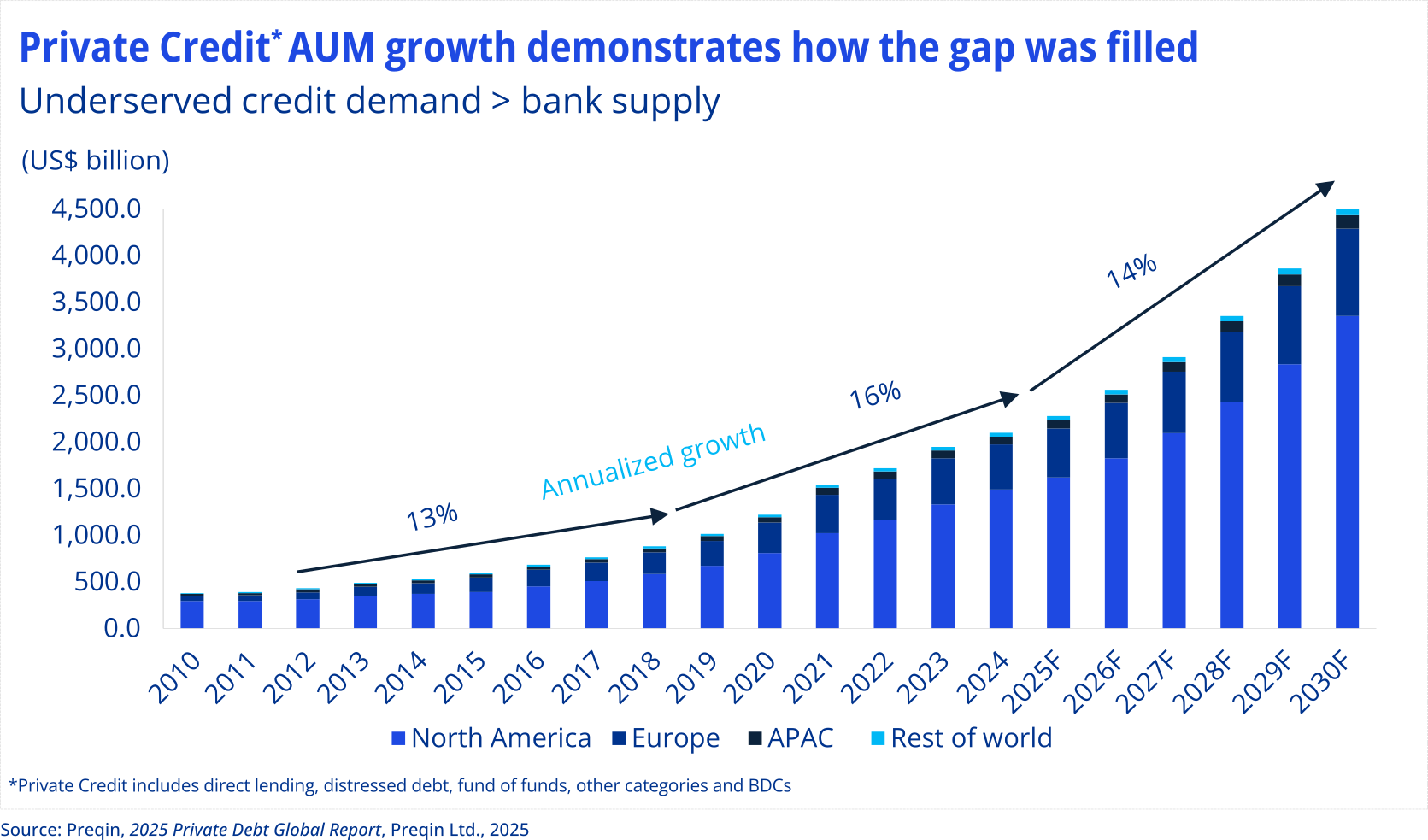
      As post-2008 structural bank constraints created a persistent supply–demand gap in corporate credit, Private Credit has stepped up to fill the gap and has become a permanent part of the financing ecosystem—leading banks to shift from competing with Private Credit to partnering with them.

      With global Private Credit AUM having increased from ~US$400 billion in 2010 to over US$2.0 trillion by 2024[1], Private Credit’s global scale shows that it has become a lasting part of corporate finance rather than a temporary substitute for bank lending.
      private credit graph

      Download the report

      Banking and Private Credit: Balancing strategy and control

      How banks are redefining their role across the credit value chain 

      Five strategic end-state models for banks

      In response, banks are reshaping their role in the market — shifting toward originate‑and‑share models, distributing exposures to Private Credit funds, and providing fund‑level leverage and NAV financing. These approaches allow banks to stay central to deal origination while participating in Private Credit growth within regulatory constraints.

      Note: Based on KPMG analysis


      Success requires strategic evolution, not just market entry

      To participate in Private Credit deals and models, banks should evolve talent models, technology capabilities and governance frameworks to compete sustainably alongside Private Credit funds. Here are three key pillars to focus on.

      Dynamic talent and collaboration

      Innovative Partnerships: Design partnerships as learning engines beyond mere protection

      Talent Integration: Rotate real bank talent into active Private Credit roles

      Cross-Functional Teams: Build diverse teams to enhance creativity and efficiency


      Technology and data utilization

      Leverage AI for speed: Use AI to narrow the operational speed gap with Private Credit firms

      Expand data capabilities: Build data-driven strategies to enhance competitiveness beyond capital

      Predictive analytics: Use data to anticipate market trends and adjust strategies

      Strategic governance & financial agility

      Agile governance: Redesign governance to manage exceptions efficiently

      Set clear exit strategies: Pre-decide terms for ending partnerships before cyclical downturns

      Short-term ROE dilution: Embrace temporary dilution for sustained long-term success

      Three key takeaways for banks and Private Credit

      1. Strategic entry: Banks are entering Private Credit to stay in the game, not to win it
      2. Evolving roles: Private Credit won’t replace banks, but it will likely redefine them
      3. Essential adaptation: Adaptation is the key to survival in the Private Credit space 

      1 Preqin, 2025 Private Debt Global Report, Preqin Ltd., 2025. 


      Our services

      We help leading organisations create and protect sustainable value through insight and technology.

      Financial statement audits give assurance over information used by investors and the capital markets.

      Our insights

      Location considerations in shoring and sourcing

      The 2026 KPMG Global Tax Readiness Dividend explores how leading tax functions use AI, modern tax operating models and tax readiness to drive performance, resilience and enterprise value.

      Our people

      Panayiotis Peleties

      Board Member, Chairman of the Audit Committee Institute (ACI)

      KPMG in Cyprus

      Christoforos Evlavis

      Board Member

      KPMG in Cyprus