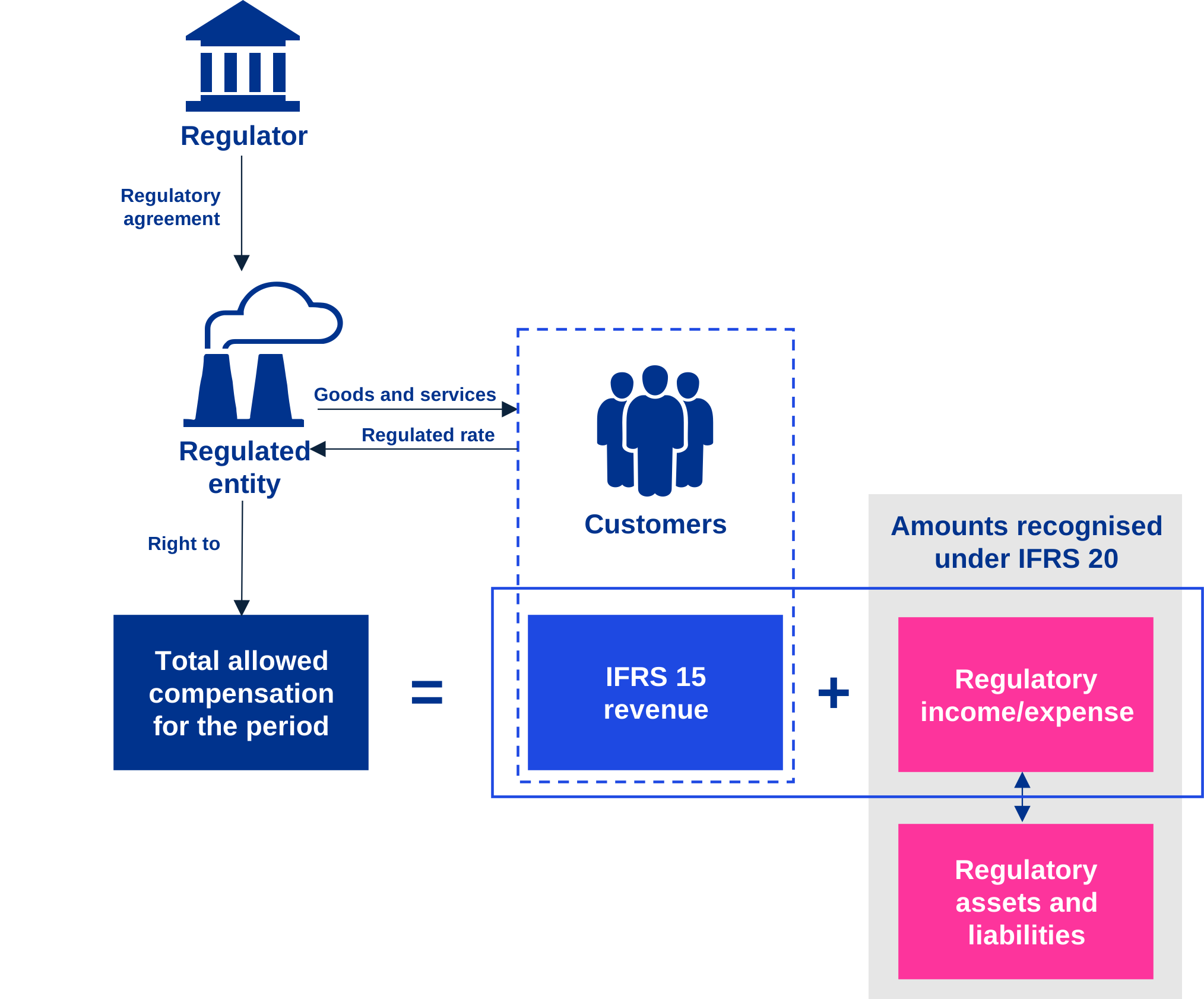
Source: KPMG in Canada, based on IFRS 20 Regulatory assets and regulatory liabilities
Rate regulation, common in the utility and transport sectors, can have a significant effect on a company’s long-term financial performance. However, until now, IFRS® Accounting Standards – unlike U.S. GAAP – have not included comprehensive guidance on the accounting impacts of rate regulation.
This gap is now addressed by IFRS 20 Regulatory Assets and Regulatory Liabilities, which replaces IFRS 14 Regulatory Deferral Accounts.
IFRS 20 introduces a new accounting model under which a company subject to rate regulation that meets the scope criteria recognizes regulatory assets and regulatory liabilities.
The new model aligns the total income recognized in a period under IFRS Accounting Standards with the total allowed compensation the company is entitled to earn for regulatory goods or services supplied in the period. As a result, the model is expected to provide users with more complete financial information about companies subject to rate regulation.
IFRS 20 overview: regulatory assets, liabilities, and revenue alignment

Who is affected?
A company applies IFRS 20 if:
- The company and a regulator are parties to an agreement which prescribes the regulated rate the company can charge customers; and
- Part of the total allowed compensation for goods or services delivered in one period is charged to customers in a different period – i.e. the agreement creates timing differences.
IFRS 20 is not sector-specific and, unlike IFRS 14, is not optional. Therefore, any company that meets its scope criteria is required to apply it.
What will the impact be?
Companies will recognize new assets and liabilities, as well as new items of income and expense. Although the impact on financial performance will depend on the company’s facts and circumstances, common cases will include the following:
- If recognition of income under IFRS 15 Revenue from Contracts with Customers previously lagged total allowed compensation, then a company will see an increase in net assets on transition to IFRS 20 because it will recognize regulatory assets for those timing differences.
- If a company previously experienced material short-term timing differences between recognition of revenue under IFRS 15 and total allowed compensation for the period – e.g. because of cost or volume variances – then volatility in reported earnings from these differences will be reduced.
Recognizing regulatory assets and regulatory liabilities
IFRS 20 requires a company to report in its financial statements the total allowed compensation it is entitled to earn for regulatory goods and services supplied in the period. It does this through an ‘overlay’ approach under which a company first applies the requirements of existing IFRS Accounting Standards (e.g. recognizing and measuring revenue in accordance with IFRS 15) and then recognizes:
- A regulatory asset: when it has an enforceable present right to add an amount to be charged to customers in future periods to determine the regulated rate; and
- A regulatory liability: when it has an enforceable present obligation to deduct an amount to be charged to customers in future periods to determine the regulated rate.
Movements in regulatory assets and regulatory liabilities give rise to regulatory income and regulatory expense.
Companies generally need to measure their regulatory assets and regulatory liabilities using a cash flow measurement technique which:
- Estimates expected future cash flows; and
- Discounts the cash flows using the regulatory interest rate.
Regulatory income minus regulatory expense is presented separately in the statement of financial performance, immediately below revenue, whereas regulatory assets and regulatory liabilities are presented separately from other assets and liabilities in the statement of financial position.
Effective date and transition
Companies are required to apply IFRS 20 for reporting periods beginning on or after January 1, 2029. Earlier application is permitted, subject to the endorsement of the Accounting Standards Board of Canada (AcSB).
A company can choose between applying IFRS 20 retrospectively or using a modified retrospective approach.
IFRS 20 supersedes IFRS 14. Companies that applied IFRS 14 will transition to the new requirements like any other company – there is no option to automatically carry forward existing IFRS 14 accounting.
Now is the time to prepare. Explore our materials to learn more about IFRS 20 and contact our team to discuss the potential impact on your organization and understand the evolving proposals.
Find out how KPMG's expertise can help you and your company
Subscribe now to receive KPMG Canada's IFRS Breaking News
How we can help
KPMG Canada’s professionals are ready to support your organization with the transition to IFRS 20. Our team of industry specialists, technical accountants, financial reporting specialists and systems transformation professionals bring deep experience in accounting standard changes and knowledge applicable at each stage of the transition process.
Our professionals can assist organizations throughout their IFRS 20 implementation journey, including: