KPMG International recently released their global report, AI's dual promise: Enabling positive climate outcomes and powering the energy transition which explores how organizations are using AI to advance sustainability and identify​ where progress must accelerate. As part of this research, one hundred and nine Canadian executives—from utilities, renewables, infrastructure developers and major energy consumers (hyperscalers, data center operators, and technology firms)—were surveyed. The study examines current AI applications in sustainability and identifies the priority areas leaders see for accelerating impact and unlocking AI’s full potential.

AI’s dual promise for Canada is compelling: it is simultaneously enabling tangible climate outcomes and supporting the energy transition, even as it raises new demands on traditional power sources, green power and evolving clean power and grid resilience.

Canadian executives broadly share global optimism, with 68% believing AI will have a net positive impact on climate over the next three years, driven by concrete use cases already delivering results. At the same time, the energy footprint of AI is rising, intensifying the need to modernize grids and scale clean energy supply, as energy used for AI and computing is expected to increase.

This dual dynamic—AI as both a climate enabler and a catalyst for clean power investment—defines Canada’s execution challenge.

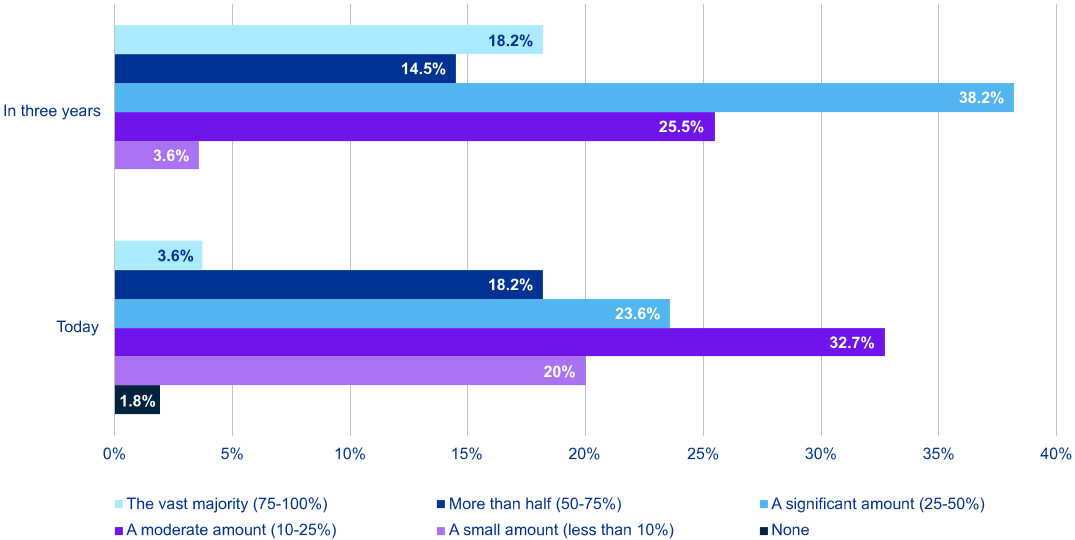
Current vs. projected energy allocation for AI and computer processing​

Current vs. projected energy allocation for AI and computer processing​

Source: AI's dual promise: Enabling positive climate outcomes and powering the energy transition, KPMG International, 2025

Canadian organizations are not waiting for a perfect policy landscape to act. Sustainability is a high or top priority for 94% of respondents, and 68% see growth and sustainability as compatible—embedding AI applications that drive efficiency, transparency, and resilience into core operation. These deployments are not pilots on the periphery; they are reshaping cost structures, operational reliability, and compliance readiness.

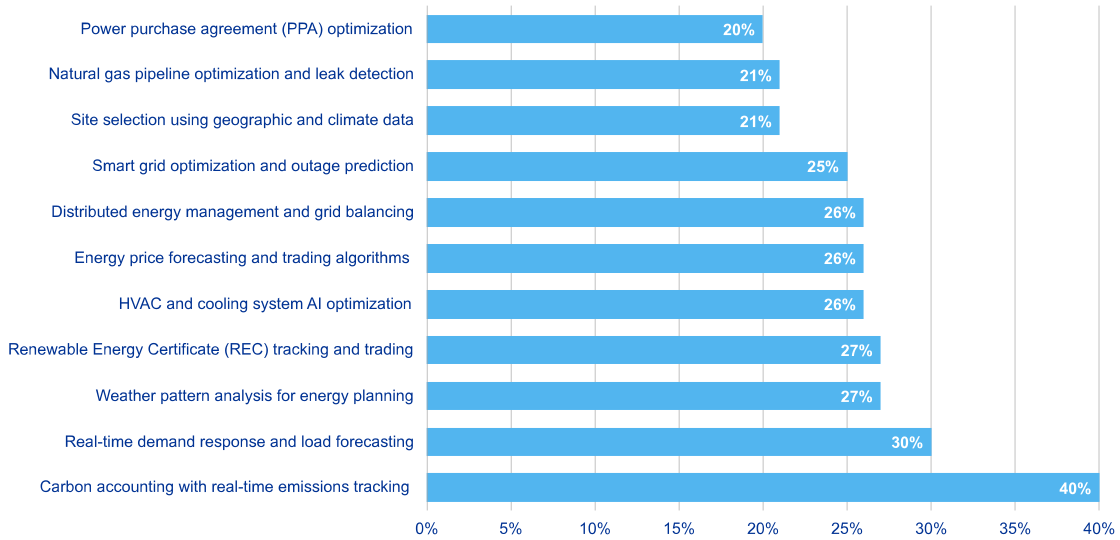
Role AI can play to deliver positive climate outcomes​

Role AI can play to deliver positive climate outcomes​

Source: AI's dual promise: Enabling positive climate outcomes and powering the energy transition, KPMG International, 2025

What’s distinctively Canadian in this story is the interplay between national strengths and regional constraints. Canada’s abundant hydro, growing wind and solar base, and strong engineering talent create a foundation for AI-enabled decarbonization. However, permitting timelines, interprovincial coordination, and regional grid challenges can dilute these advantages.

The private sector is already demonstrating how AI can turn sustainability into a growth lever. With 68% of respondents seeing growth and sustainability as compatible, operational AI delivers measurable returns: predictive maintenance reduces downtime and energy waste; carbon analytics improve market access and capital cost through better ESG signals; and demand optimization lowers bills and emissions intensity. In data centers, AI orchestration can optimize workloads, cooling setpoints, and time‑of‑use strategies, contributing to lower power usage effectiveness.

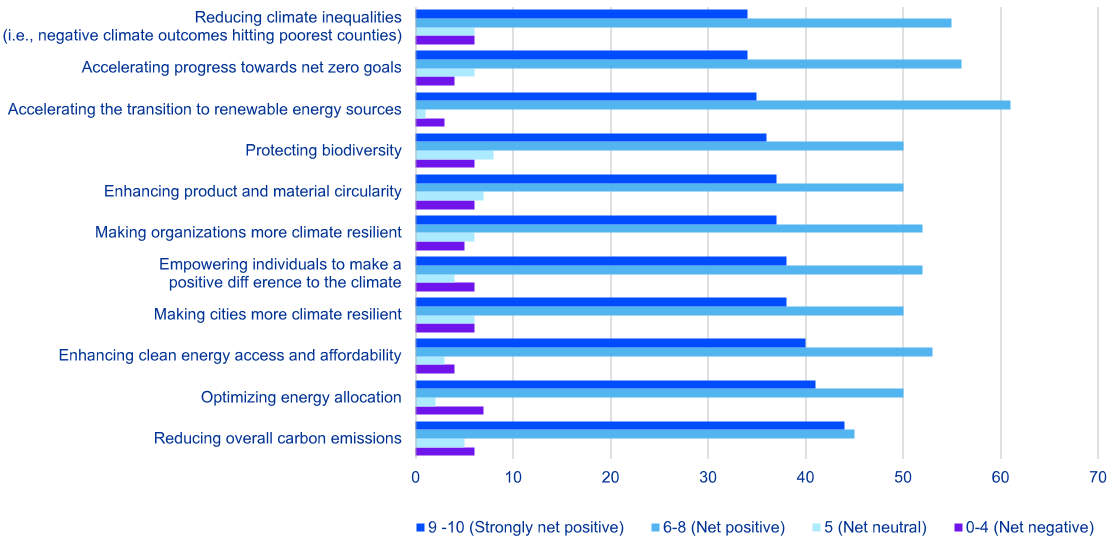
Impact of AI on different aspects of the climate agenda​

Chart: Impact of AI on different aspects of the climate agenda​​

Source: AI's dual promise: Enabling positive climate outcomes and powering the energy transition, KPMG International, 2025

Operational guidance for Canadian leaders

To unlock full value, Canada must close the execution gap rapidly. The takeaway from executives is clear: AI’s climate benefits far outweigh its energy footprint, but realizing full value requires closing the execution gap - through bold policy reform, faster permitting, grid modernization, scaled clean energy incentives, and public‑private collaboration—so sustainability becomes a durable source of competitive advantage and growth, not a cost center.

To translate this into operational guidance for Canadian leaders:

  • Prioritize AI use cases with dual value: Emissions reduction and cost savings, focus on real-time energy monitoring and predictive maintenance to provide near-term payback while strengthening climate performance.
  • Invest in data architecture and integration: Address technical integration challenges by standardizing data pipelines, interoperability frameworks, and cybersecurity, ensuring AI models have reliable inputs and can scale across sites.
  • Align power procurement with AI load growth: Plan for renewable PPAs, storage integration, and demand flexibility, recognizing that insufficient renewable energy capacity is a key constraint to Canada being a leader in AI.
  • Engage proactively on permitting and interconnection: Work with provincial utilities and regulators to accelerate faster approvals for renewable projects and grid upgrades that support AI-driven operations.
  • Build public‑private coalitions:  Help close the policy understanding gap - since 65% believe the potential of AI for climate is not widely understood - by sharing use case outcomes, grid impact analyses, and best practices.
Ultimately, Canada’s competitive edge will be shaped by how effectively it harnesses AI to decarbonize while scaling clean power. The cultural momentum is there and 75% agree that without AI, it will take longer to achieve net zero, but execution speed will determine outcomes.

Canada can turn AI’s dual promise into a durable advantage, enabling climate outcomes and powering the energy transition at national scale. As a country we can then reap the economic benefits.

How we can help

KPMG’s energy practice is an multi-disciplinary team of financial, engineering, project management, supply chain and procurement professionals that understand the demanding economic environment and ever-changing regulatory requirements. This helps us to develop high quality services, approaches, and innovative thinking that can provide practical strategies to help achieve stronger financial and operating results.

About the AI and energy transition survey

KPMG International surveyed 1,202 senior executives across 20 global markets between August and September 2025 through an online research program. The survey focused on decision-makers in the AI and energy transition value chain, including both energy producers (power generation, utilities, renewable energy, infrastructure developers) and energy consumers (hyperscalers, data center operators, technology companies). One hundred and nine respondents were based in Canada.

Thirty-two per cent were C-suite executives, 34 per cent executive management, 34 per cent directors. The majority (65 per cent) represented companies with annual revenues exceeding US$1 billion.

The survey was supplemented by qualitative interviews with senior leaders in technology, energy, and policy sectors, as well as external validation using academic research, energy market data, regulatory tracking, and industry analysis.

Connect with us

Stay up to date with what matters to you

Gain access to personalized content based on your interests by signing up today

Connect with us