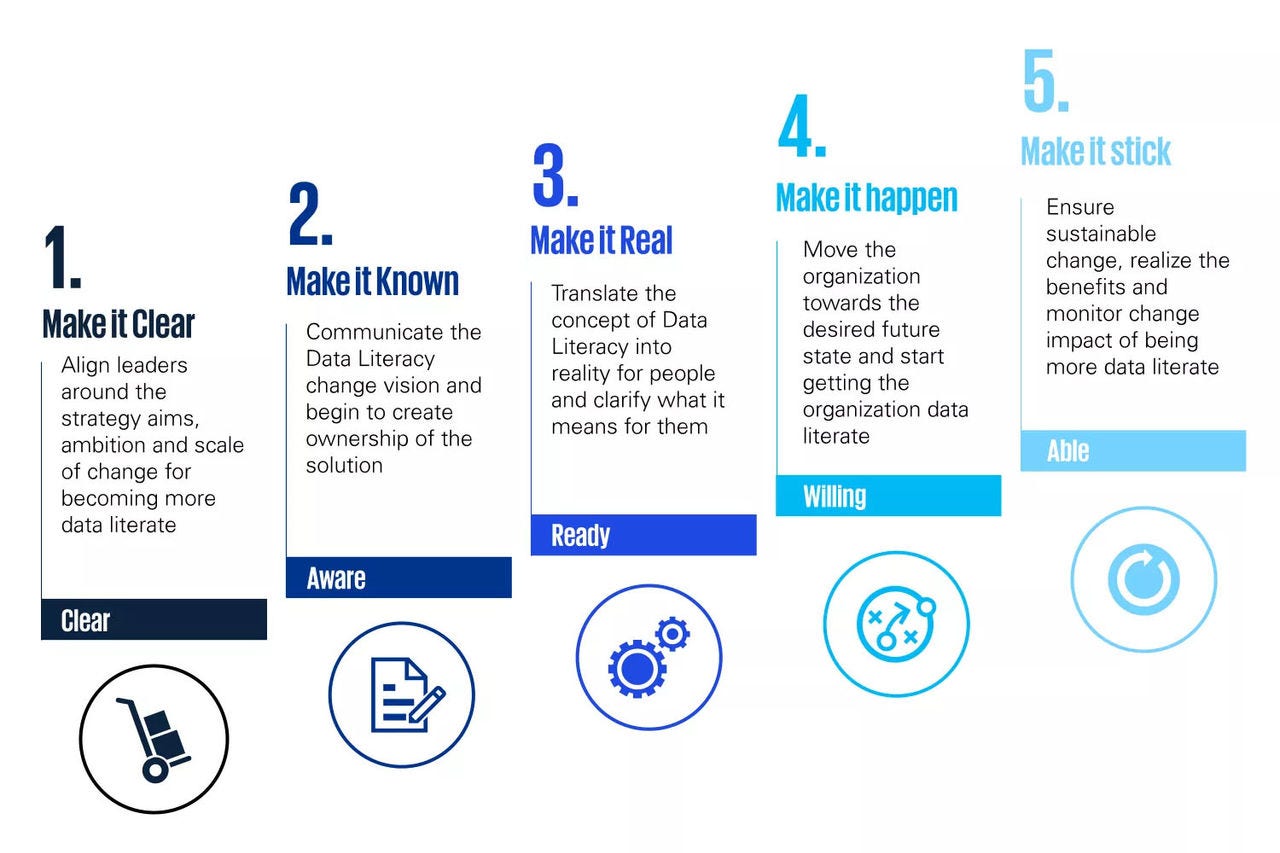
Leveraging the KPMG Behavioral Change Management Methodology
The KPMG Behavioral Change Management (BCM) Methodology aims to assist leaders in successfully managing organizational change. The five steps of the methodology provide a clear direction on what needs to be done and will help you find your way through the maze of actions needed to increase data literacy in your organization. Note that while the process is not strictly linear, it is crucial to complete each step at least once to enhance the likelihood of success.
Make it clear - Alignment phase
The objective of this first phase is to clarify why becoming more data literate is important, both for the organization and for the people. It is about reflecting on questions such as: “why do we need to change (towards becoming more data literate)?”, “what do we want to achieve with this change?”, “what will happen if we don’t change?”. Leaders need to clarify their vision and align around the strategic aims, ambitions, and scale of change for becoming more data literate. These need to be realistic and aligned to the data maturity of the organization. If an organization’s current level of maturity is low, there's no point in trying to become a top player in the development of complex machine learning models. Instead, it is essential in this case to start with the basics and build from there step by step. Employees should be able to understand the fundamental concepts of data and data analytics such as data types, governance, visualization, data quality, and so on.
The vision and ambitions defined by the leadership must be easily translatable into concrete action points that will help the rest of the organization. At this stage it is important that leaders look at the bigger picture and make it clear how the change will impact and help employees in the future.
Typical activities:
- (AS IS) Data maturity assessment: an evaluation of the current data maturity and literacy level of the organization in terms of data governance and usage capabilities, processes, and infrastructure can be done by conducting interviews and surveys. This will help identifying gaps, constructing a view of what is feasible/necessary and support the definition of the data literacy vision and ambition.
- Case for change: the case for change articulates why it is crucial for the organization to become data literate and how it will improve daily life for both the organization and its employees. It envisions the future state and justifies ambitions to improve data literacy in the organization.
Make it known - Awareness phase
Once the leaders have agreed on the ambitions for the transition towards increased data literacy, it's time to bring the rest of the organization up to speed. This second step aims at deploying a communication campaign to communicate ambitions, increase awareness and engage everyone. This step is crucial as it will be the step causing people to want to know more, and to start learning and taking ownership of the change. To get people on board and motivated, start by sharing a data story, “what does data mean to us?”, “what do we want to do with it?” and “what do we need to put in place to make the most of it?”. Listen to your audience, learn from your observations, and tailor your approach to have more impact. Think of illustrating the benefits of becoming data literate with concrete examples of pain points or issues that will be solved or will no longer occur if the change takes place. It will make it more concrete for people. While deploying a top-down communication, foresee moments where employees can give feedback and express their concerns in a bottom-up way.
Typical activities:
- Develop a comprehensive communication plan: the communication plan can include several communication items. Whether you focus on using one or several of them depends on the organization’s objectives with its communication. But remember that we want people to engage with the change as much and as fast as possible. Examples of communication items include communicating the case for change, data literacy awareness campaigns and success stories.
Make it real - Acceptance phase
Once the plan has been properly communicated and the whole organization is enthusiastic and ready to take up the challenge, it is now time to translate it into reality. The third step focuses on making the change more tangible for all people in the organization, “what does it mean for us to change?” In this step, the expectations and implications of the shift to a data literate organization need to be translated on a micro level. The goal here is to define what concrete actions, behaviors, capabilities, and improvements are expected to support this cultural shift. All employees, regardless of their level, need to know exactly what they can do to start increasing their data literacy.
Typical activities:
- Definition of a matrix roles/ skills & necessary data literacy training curriculum: define specific data roles/data aspects for team members, list the relevant data skills, and communicate how it will impact people. Then based on the defined roles and required skills, targeted learning paths and training programs can be created to help people build their skills and endorse their new data roles.
Make it happen - Adoption phase
The core part of becoming a data literate organization consists of implementing the desired changes in practice. It this step, all employees need to be supported and properly equipped to increase their level of data literacy, develop their capabilities, and adapt their behaviors. From organizing concrete awareness-raising workshop sessions, to providing them with comprehensive trainings and implementing supporting tools and technologies, there are a lot of different techniques that can be adopted. All of them can and need to be adjusted to the organization, the employees, and their needs, in accordance with discussions and decisions taken in the previous three steps. The end goal here is to ensure that everyone is at least capable of understanding and using data to fulfil their roles. But keep in mind that for certain data roles, achieving a higher level of data literacy proficiency is imperative.
Typical activities:
- Training plan: implement the training programs developed during the previous step and provide opportunities for employees to acquire and apply data literacy skills. The programs can contain different learning methods and activities such as classroom based, e-learning training courses, or hands-on workshops with concrete cases.
- Collaboration communities: encourage collaboration and knowledge sharing across the organization to foster a data-driven culture. This can be done by establishing recurrent knowledge sharing sessions or forums where employees can share best practices or ask questions.
- Mentoring/coaching program: create and implement a mentoring or coaching program where more data-literate employees can support and guide others in developing their data skills and discuss pain points and challenges.
Make it stick – Acceleration phase
Increasing data literacy within the organization is one thing, keeping it persistent over time is a whole other story. What we certainly want to avoid here is for people to fall back into old habits. The last step of the BCM methodology therefore focuses on ensuring a sustainable change, realizing benefits, and monitoring the impact of being more data literate. With the ultimate goal being to make data literacy an integral part of the organization’s long-term culture.
Typical activities:
- Celebration and reinforcement: reward and incentivize data literacy behaviors and achievements through performance and recognition programs.
- Align with HR to include data literacy aspects in the organization’s onboarding process and performance reviews to ensure that it becomes a continuous process rather than a one-time event.
Conclusion
Increasing data literacy within the organization can be challenging, but it's worth the effort. By doing so, your organization will improve decision-making, drive growth, and increase efficiency. To make it a success, it's important to start with the basics, encourage a data-driven culture, and foster collaboration. By following the five steps of the Behavioral Change Management Methodology, businesses can ensure that their employees are equipped with the necessary skills to leverage the power of data.
Remember, that one size does not fit all. The actions described in this article are examples and should be adapted to your organization's specific needs, culture, and resources. Regularly assessing progress, gathering feedback, and making adjustments is key to ensure a sustained increase in data literacy within your organization. The process is not linear, quite the opposite. Each step can be adapted or reinforced at any time if the need arises.
If you're interested in finding out more or need support in your transition, don't hesitate to contact us and our colleagues from People & Change.
Author: Louise Huret & Zoé Dubois