

Organizations today face a growing number of regulations that directly impact how data must be governed, protected, and exchanged. Across horizontal domains such as privacy, artificial intelligence, and cybersecurity - as well as sector-specific frameworks in industries like financial services and healthcare - regulatory initiatives increasingly require organizations to demonstrate consistent control, transparency, and accountability when it comes to their data. At the same time, the rise of data-sharing ecosystems, particularly within European data spaces, is introducing new obligations around interoperability, access, and cross-organizational governance. For data leaders, this means ensuring compliance with multiple frameworks, often with overlapping requirements, evolving implementation timelines, and increasing expectations for consistent, demonstrable control.
Overview of the expanding landscape and maturity
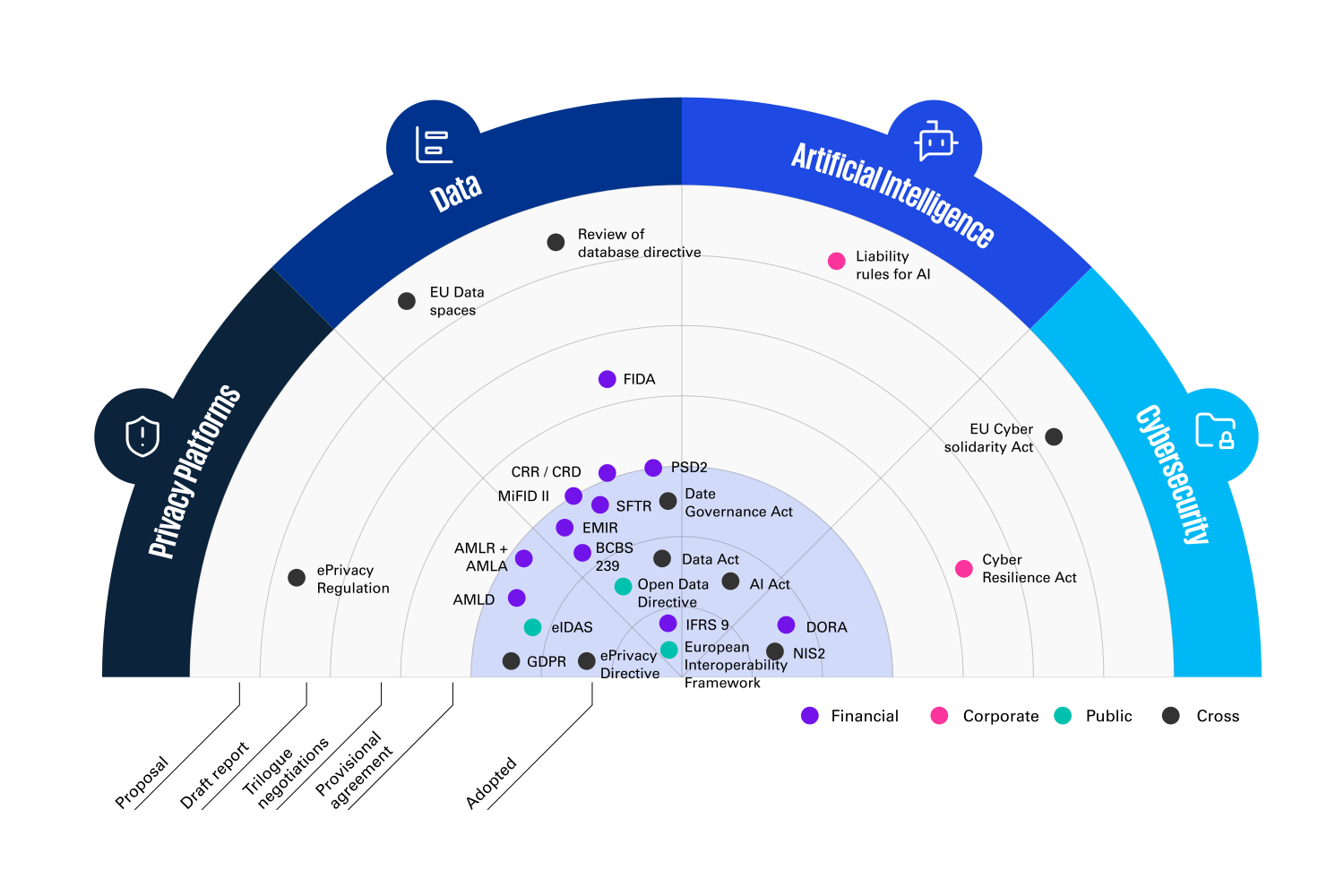
Regulatory initiatives increasingly shape how organizations structure and manage data across systems and governance processes. Considered together, these developments reveal a clear pattern: despite differences in scope and sector, many regulations depend on the same underlying data foundations. Yet in practice, organizations often respond with separate initiatives, leading to duplicated effort and fragmented approaches.
As regulatory expectations evolve, the challenge is no longer to parse each rule in isolation, but to establish a consistent, repeatable way to respond to regulatory change across the entire data landscape.

A structured framework for unified data regulatory compliance
Establishing a consistent response to regulatory change takes more than interpreting rules one by one. What’s often missing is a structured analytical lens that shows how regulatory requirements translate into the underlying data capabilities organizations need.
Introducing the Data Regulatory Compliance Framework (DRCF): a structured starting point that helps teams interpret regulatory obligations holistically and identify common capability needs across regulations. Rather than chasing every new rule with a separate project, the framework unifies regulatory expectations across core data‑management domains. By mapping requirements to your existing data governance, architecture, and control structures, it creates a consistent, scalable path to compliance, while avoiding duplicate effort and resources wasted on isolated initiatives and roadmaps.
The framework is organized around established data‑management domains, including:
- Data strategy and governance
- Metadata management
- Master and reference data
- Data architecture and modeling
- Data operations
- Data privacy and security
- Data integration and interoperability
- Data quality management
- (BI) Reporting and monetization
- Knowledge management or data content
By aligning regulatory expectations to these key data areas, the framework turns complexity into a coherent, approachable, and actionable data‑management plan. This capability‑driven perspective streamlines compliance efforts, reduces duplication across initiatives, and strengthens consistency in how regulatory requirements are operationalized. It also improves data quality, reinforces control environments, and increases trust in data.
From proof-of-concept to scalable data regulatory compliance
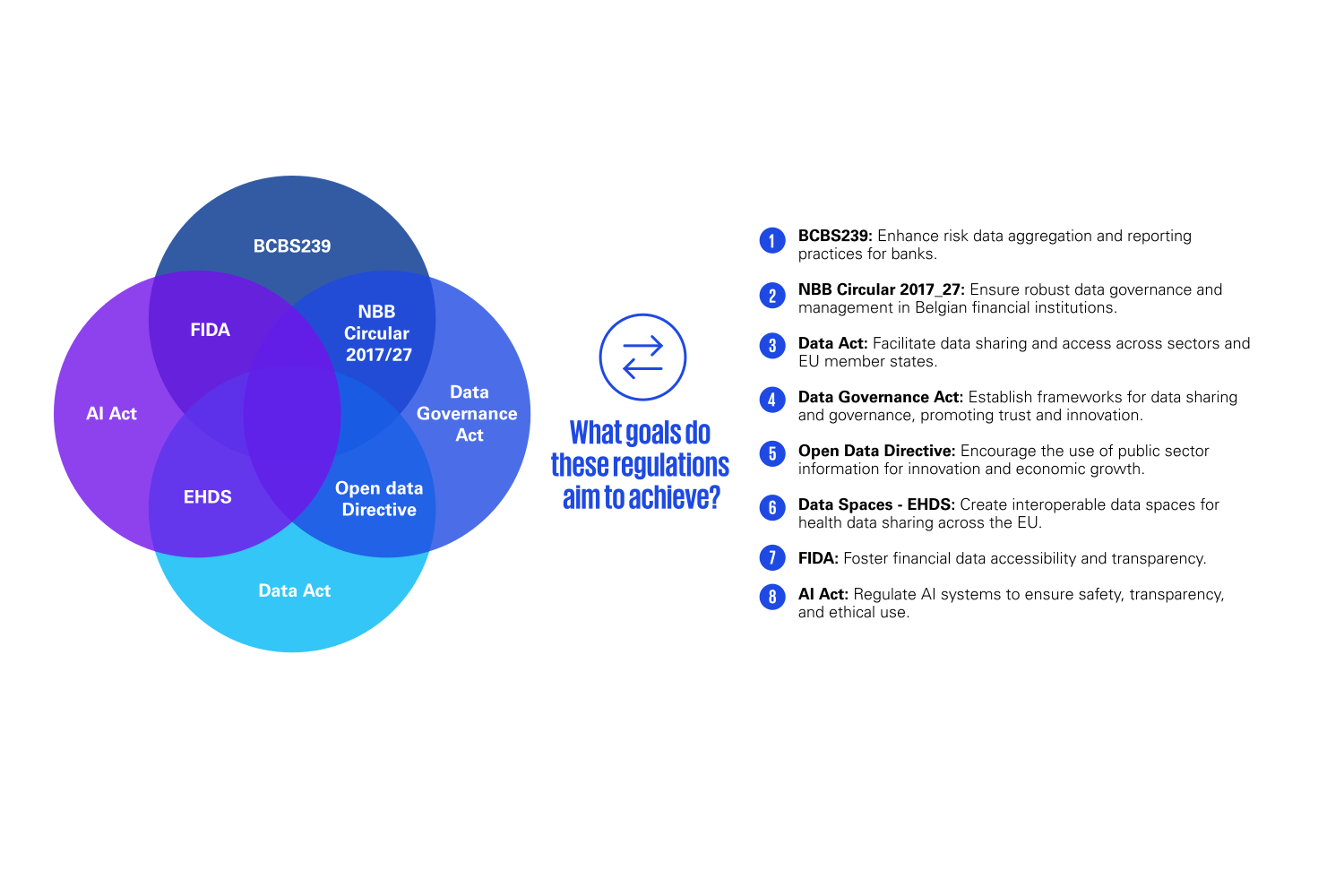
To validate this approach, we applied the Data Regulatory Compliance Framework (DRCF) in a proof-of-concept exercise focused on a prioritized set of data‑related regulations. The goal was to test whether regulatory requirements could be consistently translated into structured data‑capability domains. The results were clear: despite differing objectives, the regulations converge on common needs for how data is governed, documented, protected, and made accessible.
Selected set of priority data related regulations
Building on this structured framework, we’ve embedded AI‑enabled capabilities to interpret and apply regulatory requirements. Our regulatory AI agents draw on curated data and regulatory knowledge base to translate legal obligations into structured capability needs, evaluate applicability to your organization, and identify potential gaps.
By reducing reliance on manual interpretation and enabling more consistent analysis, this approach supports a shift from reactive compliance towards a more proactive and scalable model for managing regulatory change.
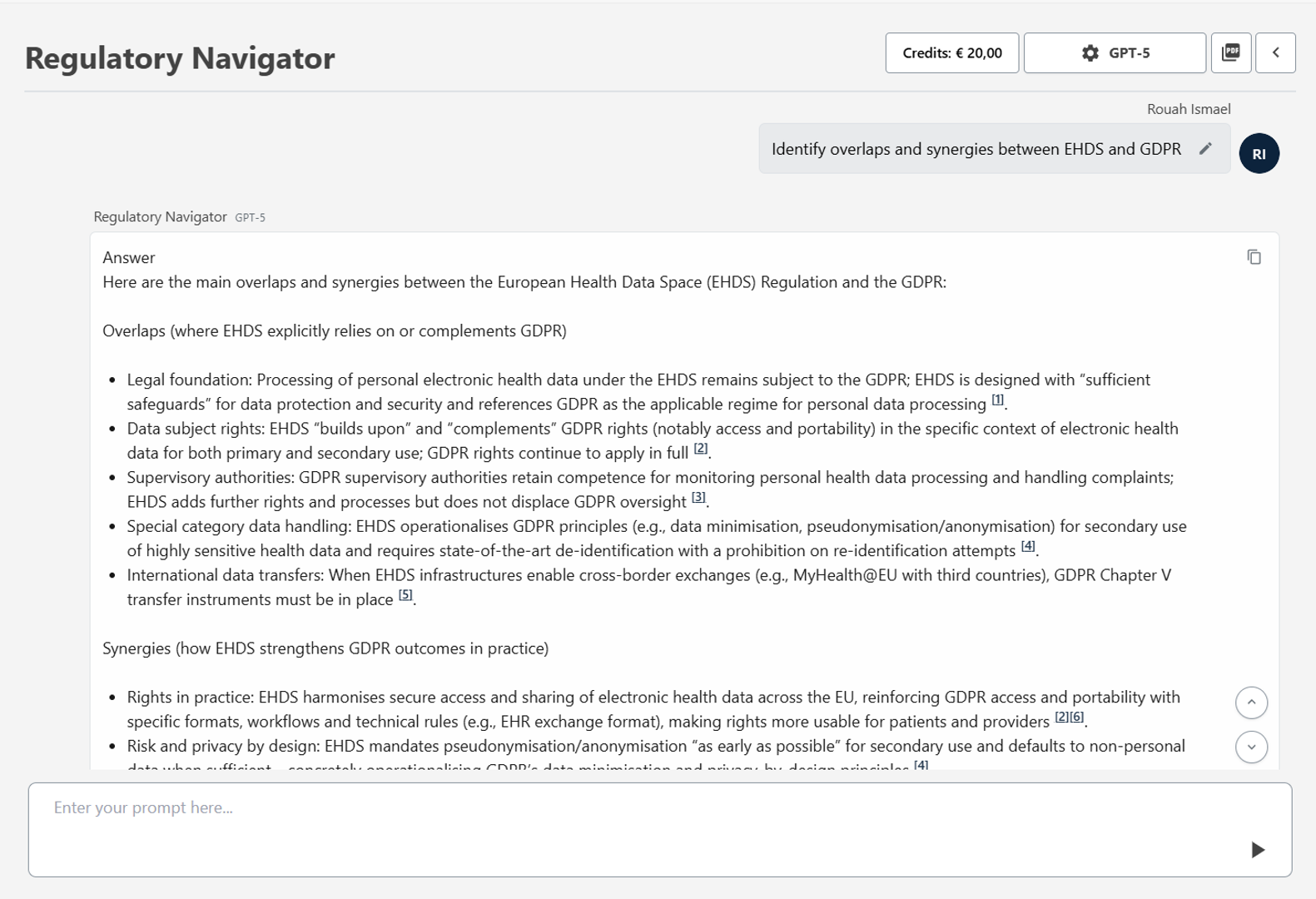
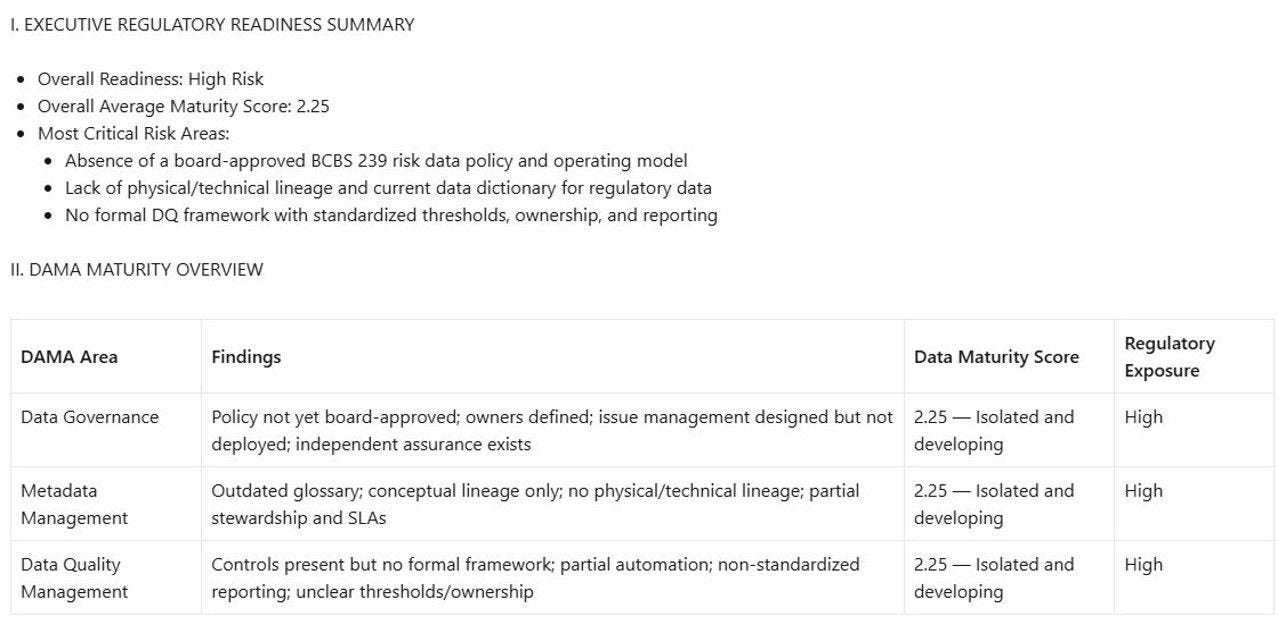
While current data regulations have undergone significant changes, future trends indicate even more regulations across sectors
Data requirements are becoming embedded across sectors. Take highly regulated industries such as financial services, where CRR3, EMIR Refit, and upcoming AML/KYC rules demand standardized, high‑quality, and shareable data. In healthcare, the European Health Data Space (EHDS) introduces secure, interoperable, cross‑border data‑sharing requirements. European data spaces further reinforce controlled data exchange, making robust data foundations essential. And as the cherry on top, scaling AI to create value depends first on those same foundations. Data is no longer just an input to compliance, it is the foundation, and trustworthy AI is the enabler for navigating increasingly complex regulatory landscapes.
Our capability model provides the structure to translate a complex regulatory landscape into actionable data and AI capabilities.
Taking the next step towards structured data regulatory compliance
As regulatory expectations evolve, fragmented data‑management approaches are becoming harder to sustain. Organizations that adopt a consolidated, capability‑driven model can respond more efficiently to change, strengthen data quality, enable interoperability, and build trust in their data assets.
A structured starting point helps teams:
- Map applicable regulations,
- Identify shared data‑capability requirements, and
- Prioritize implementation in a consistent, scalable way.
Using our capability model, we can assess your current regulatory landscape, accelerate compliance initiatives, and show how our AI can address your specific needs. We’d welcome the opportunity to demonstrate how this approach turns complex requirements into actionable, scalable solutions, and delivers trusted data for sustained compliance.
Authors:
Rouah Ismael, Junior Advisor & Latifa Mutara, Senior Advisor & Lucie Delporte, Senior Manager Advisor

