
KPMG’s second Africa Banking Survey finds that while the sector is profitable, resilient, and expanding, high funding costs, rising capital thresholds, and shifting competitive ecosystems are testing banks’ ability to unlock Africa’s full economic potential.
Key findings from the survey:
- High cost of funding limits long-term growth: Macroeconomic factors, such as sovereign rates, inflation, and shallow capital markets, keep funding expensive. In some African markets, prime lending rates sit near 18% to 20%, while riskier borrowers face rates of 40% or more, restricting long-term investment and pushing borrowers toward short-term trade.
- Regional champions are driving M&A: As European and US banks retreat from selected markets, well-capitalised indigenous banking groups from South Africa, Nigeria, Kenya, and North Africa are expanding across borders. Simultaneously, stricter capital rules, such as Kenya’s requirement to raise minimum core capital to KES 10 billion by 2029 and Nigeria’s March 2026 recapitalisation deadline, are forcing smaller banks to raise equity, merge, or sell.
- Scale has become a survival threshold: Escalating technology, compliance, and cybersecurity expenses are squeezing smaller lenders. One Nigerian bank reported investing an estimated US$100 million or more in a new core banking system, a cost that requires large customer volumes across multiple markets to justify.
- Telecoms and fintechs are reshaping ecosystems: In East and West Africa, telecoms-led mobile money platforms like M-Pesa and Telebirr are often viewed as bigger disruptors than standalone fintechs. Meanwhile, cash remains dominant across the continent, accounting for 56% of payment volume (costing R88.5 billion annually) in South Africa and 69% (hybrid cash-mobile and cash-only combined) in Kenya, creating major partnership opportunities for banks and fintechs to digitise informal merchants.
- AI returns require data readiness and governance: Almost every executive interviewed believes the industry has underestimated AI’s long-term impact, though short-term returns have been slower than hoped. While one pan-African group recorded a 5% to 15% productivity uplift from general AI tools, scaling requires clean data, with one West African group needing years of investment to make around 90% of its data usable and connected.
17 November 2026 – African banking stands at a pivotal crossroads. While the continent’s financial sector remains profitable, resilient, and increasingly sophisticated, its next phase of growth will depend on how effectively institutions lower their cost of funding, navigate sector consolidation, build fintech and telecom partnerships, and translate technology investments into commercial returns.
These are among the central findings of KPMG’s second Africa Banking Survey, The Art of Banking in Africa 2026. Building on its inaugural 2024 edition, the report draws on in-depth interviews with senior executives across 20 banks in South Africa, Kenya, Tanzania, Ethiopia, Nigeria, and Mauritius, alongside development finance institutions (DFIs) and industry experts.
Lowering the cost of funding: a systemic priority
The survey identifies the high cost of funding as a foundational challenge that shapes every loan a bank makes and limits broader economic development. Because funding costs are primarily driven by sovereign interest rates, inflation, shallow local liquidity, and an overestimated international risk premium, individual banks cannot solve the issue alone.
Low funding costs largely reflect market structure rather than operational efficiency. For example, an Ethiopian commercial bank reported an average cost of funding of around 3%, reflecting limited alternative investment options for local depositors, a dynamic expected to shift as Ethiopia’s capital markets open.
To bring funding costs closer to the macroeconomic floor, leading banks are focusing on what they can control: winning low-cost current and savings account (CASA) deposits by embedding themselves into daily payment ecosystems, and using behavioural data to predict and retain balances. Beyond individual balance sheets, KPMG highlights the need for regulators to review reserve requirements, DFIs to provide local-currency guarantees, and domestic pension funds to channel long-term savings into local infrastructure.
M&A and consolidation: scale as the new survival threshold
Consolidation has become a defining theme across African banking, driven by commercial economics as much as regulatory reform. Smaller banks are struggling to absorb the rising costs of core banking upgrades, cybersecurity, data privacy, and AI. In Tanzania, where roughly 42 banks operate, the top 10 institutions already hold around 80% of market share, pointing to significant future consolidation.
At the same time, the continued retreat of European and US banking groups has opened the door for well-capitalised African regional champions to acquire established franchises and follow corporate clients across borders. However, KPMG notes that deals are selective and execution remains complex. Regulatory fragmentation, currency devaluation, valuation gaps, and misaligned governance across regions mean that successful expansion depends on strong local integration rather than simply chasing balance-sheet size.
Fintech disruption, telecoms, and ecosystem partnerships
Rather than unbundling traditional banks, fintechs have carved out profitable niches in payments, merchant acquiring, and digital credit, segments incumbent banks historically struggled to serve cost-effectively. In East and West Africa, however, executives view telecommunications companies and their mobile money networks as an even greater competitive force than fintechs.
Most banks have shifted from resisting digital challengers to building hybrid ecosystems: investing in fintechs, partnering via APIs, or providing the underlying banking infrastructure that fintechs run on. Because acquiring a fintech often strips away the agility that made it successful, banks are increasingly opting for strategic alliances that pair fintech speed with banking licences, balance sheets, and institutional trust.
AI and client experience: balancing digital speed with human trust
While AI is now a board-level priority across the continent, KPMG cautions that access to AI tools does not equal transformation. Governance, regulatory compliance, scarce technical talent, and rising consumption costs remain major bottlenecks. Banks pulling ahead are moving beyond isolated productivity pilots to embed AI into high-value processes like fraud prevention, where one West African group achieved zero successful cyber intrusions, and faster credit scoring.
Ultimately, technology must reinforce rather than replace human trust. While customers expect instant digital onboarding and 99.8%-style system reliability, physical branches and personal relationships remain vital for winning customer confidence in many African markets.
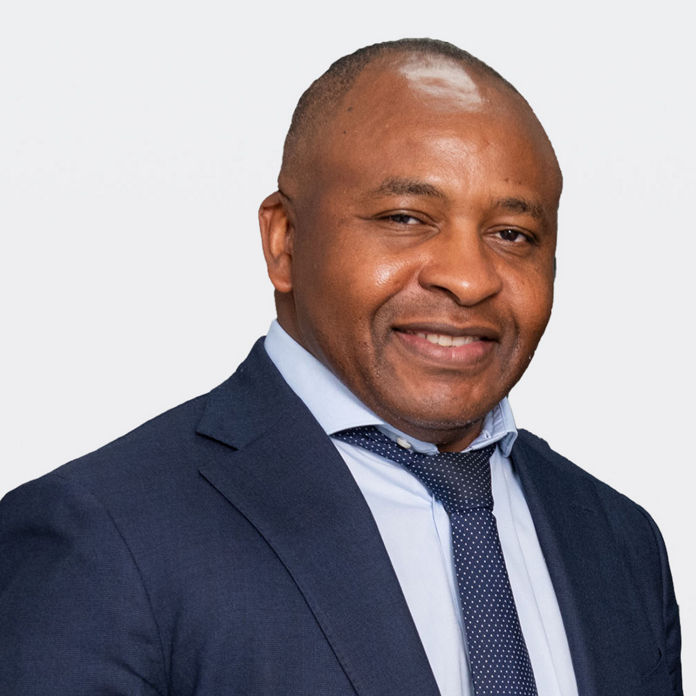
“The opportunity for African banking is significant, and investment will increasingly come from within Africa into Africa,” concludes Claude-Nguetsop. “Sustainable success will belong to institutions that combine sound funding structures, regional scale, and smart partnerships with a deep understanding of the local markets they serve.”
Access the 2O26 KPMG Africa Banking Survey here: 2026 KPMG Banking Survey
ENDS.
For media queries, please contact:
Dudu Ndlovu,
One Africa Head of Corporate Affairs
KPMG South Africa
E: dudu.ndlovu@kpmg.co.za
About KPMG One Africa
KPMG One Africa refers to the KPMG firms in the Southern, East, and West Africa regions. These are comprised of 13 countries from the 3 regional clusters, i.e. Southern Africa: Botswana, Mauritius, Mozambique, Namibia, South Africa, Zambia, and Zimbabwe; East Africa: Kenya, Rwanda, Tanzania, and Uganda; West Africa: Ghana, and Nigeria, who in 2025 have established a formal One Africa Cluster called KPMG One Africa.
The KPMG firms in these countries are member firms of the KPMG global organization of independent member firms affiliated with KPMG International Limited, a private English company limited by guarantee.
About KPMG Francophone Africa
KPMG Francophone Africa brings together KPMG member firms operating across North, West and Central Africa.
Its regional footprint covers 20 countries: Algeria, Morocco, Tunisia, Mauritania and Libya in North Africa; Benin, Burkina Faso, Ivory Coast, Guinea, Mali, Niger, Senegal and Togo in West Africa; and Cameroon, Gabon, Equatorial Guinea, the Republic of Congo, the Democratic Republic of the Congo and Chad in Central Africa. The KPMG firms in these countries are member firms of the KPMG global organization of independent member firms affiliated with KPMG International Limited, a private English company limited by guarantee.
