error
Subscriptions are not available for this site while you are logged into your current account.
close
Skip to main content

      Financial insecurity among Irish consumers has risen to its highest level since KPMG began tracking retail sentiment, with 38% saying they feel less financially secure than at the start of 2026.

      According to the latest KPMG Next Gen Retail Survey, this sentiment is up from 30% in April 2025 and 27% in October 2024, revealing a consumer population under significant and intensifying financial strain.

      The fieldwork was carried out during the US-Iran conflict, before the Irish fuel protests, suggesting that consumer anxiety may have become more acute than these figures capture.  

      David O'Kelly

      Partner, Corporate Finance, Head of Consumer, Retail & Manufacturing

      KPMG in Ireland


      Key findings

      38% feel less financially secure compared to the start of the year
      73% have not used Buy Now, Pay Later in the last 12 months
      89% rate value for money as the top priority when choosing a favourite retailer
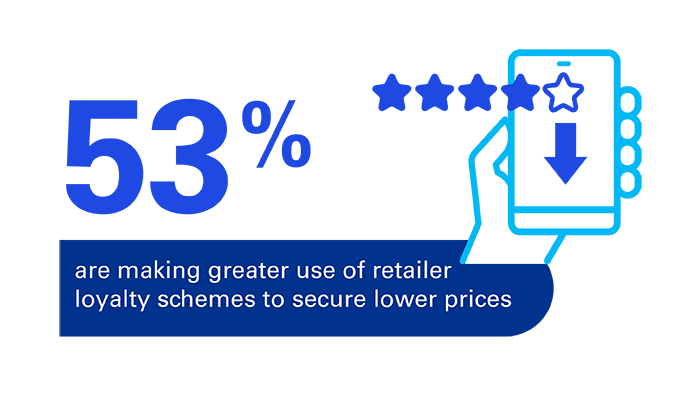
      53% are making greater use of retailer loyalty schemes to secure lower prices
      62% say loyalty programmes influence where they shop
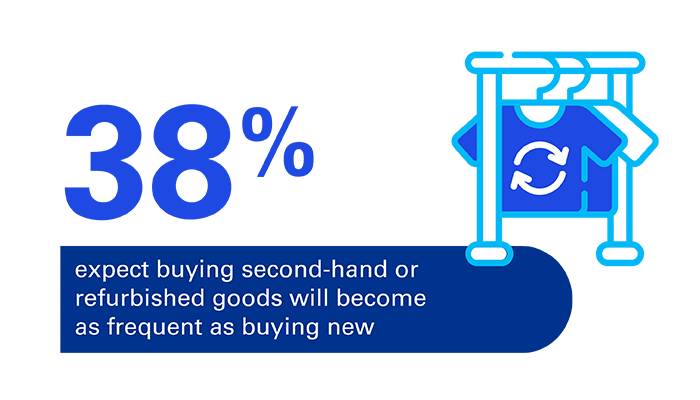
      38% expect buying second-hand or refurbished goods will become as frequent as buying new
      40% are using hybrid click-and-collect for clothes, electronics and appliances
      55% cite getting the best price remains main driver of choice
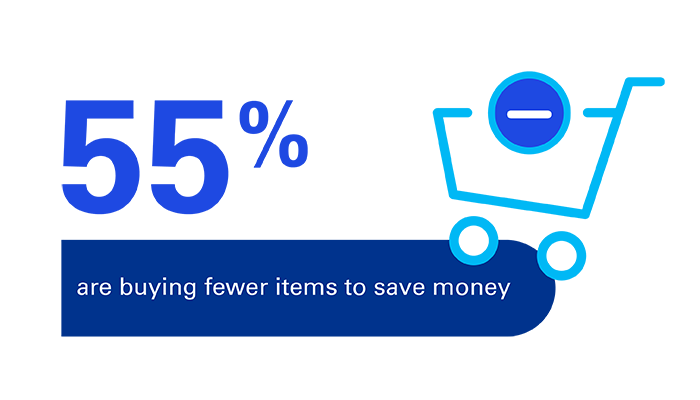
      55% are buying fewer items to save money
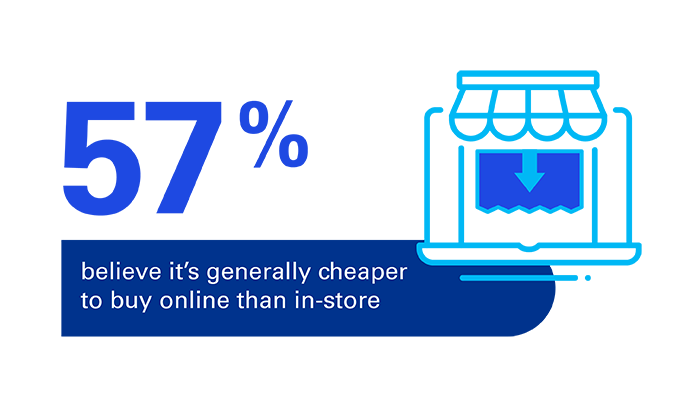
      57% believe it's generally cheaper to buy online than in-store
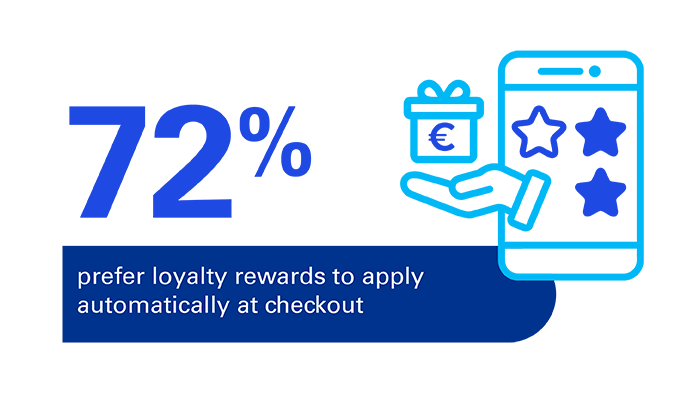
      72% prefer loyalty rewards to apply automatically at checkout
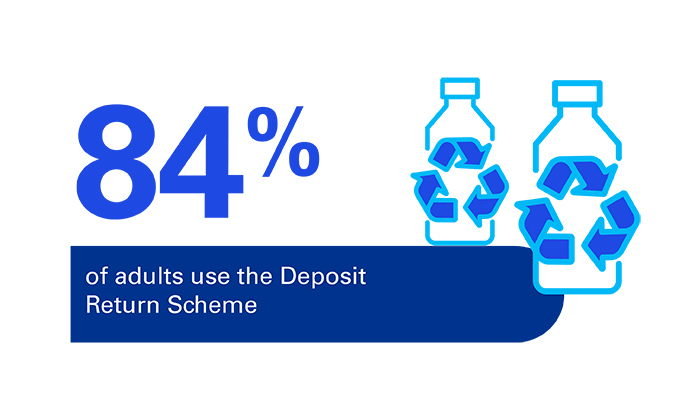
      84% of adults use the deposit return scheme


      The ‘squeezed middle’

      The surge in financial insecurity is not evenly distributed. Women are significantly more affected than men, with 43% of women now feeling less financially secure compared to 33% of men.

      The 35-54 age group - the ‘squeezed middle’ - emerges as the cohort under the most acute financial pressure, with 42% of them feeling less financially secure.

      This group is also the most price-sensitive when choosing where to shop, prioritising getting the best price above all other factors.

      With mortgage costs, childcare expenses and the general cost of living converging on this demographic, the commercial implications for retailers targeting these age groups are significant.


      Pressure on price

      Financial pressures have intensified, but consumers are adapting by seeking value, using loyalty, and switching channels to suit their needs.
      David O'Kelly
      David O’Kelly

      Head of Consumer, Retail & Manufacturing


      Meanwhile, over half (55%) of shoppers say getting the best price is the single most important factor when deciding where to shop, and at 89% value for money continues to dominate when consumers think of their favourite retailers.

      David O’Kelly, Head of Consumer, Retail & Manufacturing at KPMG, said: “Financial pressures have intensified, but consumers are adapting by seeking value, using loyalty, and switching channels to suit their needs.

      Retailers that combine fair prices with trusted experiences, seamless digital, and in‑store options that match different preferences will be best placed to retain and win customers.” 


      Shopping habits and behaviours

      Irish adults are actively adapting their shopping behaviours in response to financial stress. Over half (55%) have bought fewer items over the past year.

      Making greater use of retailer loyalty schemes to secure lower prices (53%), buying more products on promotion or discount (53%), switching to own-brand or value products (47%), cancelling monthly subscriptions (34%) and selling unwanted items online (22%) are the main money-saving tactics.

      The research reveals that females are notably more likely than men to implement various cost-saving measures.

      Physical stores continue to dominate for essential categories, with 85% of Irish adults purchasing groceries in-store, a figure that has remained stable across three consecutive waves.

      Similarly, 56% favour physical stores for homeware, and nearly two-thirds (64%) say they prefer shopping in physical stores because they can touch and see products before buying.

      Most (73%) have not used Buy Now, Pay Later (BNPL) services in the past 12 months. However, across those that have used it, it is more likely to be for clothes/fashion or electronics and appliances.

      55% are buying fewer items to save money
      53% are making greater use of retailer loyalty schemes to secure lower prices

      Online value perception hits new high

      Nearly 6 in 10 (57%) believe it is generally cheaper to buy products online than in-store, there remains opportunity for the channel to grow as price sensitivity rises.

      However, barriers to online conversion remain significant with 43% sometimes abandoning online transactions because of complicated or lengthy website navigation and payment forms, and over half (52%) say they find online product returns processes confusing.

      57% believe it's generally cheaper to buy online than in-store


      Loyalty schemes driving choice of retailer

      The influence of loyalty programmes on retailer choice has grown continuously since 2023, with 62% of consumers now saying loyalty schemes drive where they shop, up from 57% last year.

      Loyalty is of particular importance among under-35s, where the ability to store loyalty cards in a digital wallet such as Apple Wallet or Google Wallet significantly increases the likelihood of programme participation.

      For younger consumers, digital-first loyalty integration is not an optional extra, it is a threshold requirement.

      Consumers have a clear and consistent preference for how they want loyalty to work: automatic application of eligible rewards at checkout is preferred by 72%, immediate member prices at shelf or checkout by 61%, and digital wallet storage by 59%.

      Points accumulation systems and voucher-based programmes are significantly less preferred. The message to retailers is clear: friction-free, automatic value delivery is what drives loyalty engagement. 

      57% believe it's generally cheaper to buy online than in-store
      72% prefer loyalty rewards to apply automatically at checkout

      Growing scepticism about corporate sustainability

      Usage of the Deposit Return Scheme has reached 84%, up from 81% last year. The clearest evidence that when sustainable behaviours are made easy and embedded into the retail experience, Irish consumers will embrace them at scale.

      Over half continue to agree that brands should provide more information about their sustainability efforts (54%) and that retailers should actively educate consumers on the environmental impact of their purchasing choices (48%), figures that have remained broadly stable for over a year.

      84% of adults use the Deposit Return Scheme

      Attitudes towards the future of shopping

      When Irish consumers think about the future of their own shopping behaviour, the dominant narrative is circular and value-driven, not technology-led.

      AI-powered shopping tools remain largely untrusted and untested, with just 13% of consumers trusting AI agents to recommend purchases for them, and only 21% anticipating using a personal AI assistant to research products and complete purchases on their behalf.

      Just Walk Out technology, Augmented Reality try-ons, and livestream commerce all register low anticipated adoption across the general population.

      Perhaps most tellingly, 38% of consumers now anticipate that buying second-hand or refurbished goods will become as frequent for them as buying new products.

      For retailers, the strategic implication is clear: the growth opportunity in the next phase of Irish retail lies not in deploying the latest technology, but in meeting consumers where they are, financially stretched, value-focused, loyal to the brands that reward them, and increasingly open to a more circular way of consuming.

      The rise of second-hand and resale platforms is another defining feature of this environment with over 1 in 5 (22%) saying have sold unwanted items online (on platforms such as Vinted, Depop, etc). Vinted and Depop usage has seen particularly high growth among 25-34 year olds. 

      38% expect buying second-hand or refurbished goods will become as frequent as buying new

      Survey objectives and methodology

      KPMG’s Next Gen Retail Tracker survey of consumer retail attitudes was conducted via Red C’s online omnibus using RED C Live, a nationally representative online panel of over 45,000 members.

      A sample of n=1,005 respondents aged 18+ was surveyed. Quotas were set on age, gender, social class and region. Where available, results are compared to previous waves of the retail tracker carried in out in Oct’25, Apr ’25 and Oct ’24.


      Get in touch

      Do you have any queries about the findings of our KPMG Next Gen Retail survey, or the impacts for your business? Our team of seasoned industry specialists is here to empower your business with invaluable advice and solutions.

      To find out more about how KPMG perspectives and fresh thinking can help you, please get in touch with David O’Kelly, Head of Consumer, Retail & Manufacturing.

      We’d be delighted to hear from you.

      David O'Kelly

      Partner, Corporate Finance, Head of Consumer, Retail & Manufacturing

      KPMG in Ireland

      Helping businesses adapt, execute and maximise growth strategies while mitigating risk

      Media queries

      If you’re a media professional and have any questions about this article or would like to speak to one of our experts for background or interview purposes, please don't hesitate to reach out to us.

      Contact Sandra Farrell of our Communications team for more information.

      Sandra Farrell

      Associate Director of Communications

      KPMG in Ireland

      Read more in Retail & Manufacturing

      Something went wrong

      Oops!! Something went wrong, please try again