How are insurers approaching AI transformation?
Insurance organisations are approaching AI transformation strategically and with cautious optimism. Many have seen early success with a handful of integrated AI solutions, where use of the technology has typically been developed to tackle a specific problem, such as quality assurance.
Others are developing an understanding of the wider capabilities through integrated platforms, such as Microsoft Copilot, learning to quickly create human-like text, images, audio, and videos.
Historically insurance companies have been conservative when adopting new technologies and while insurance companies and CFOs understand the potential advantages of scaling initiatives, there is a hesitation to introduce AI more widely across the workforce, partly due to the speed of evolution and associated risks.
There are also growing concerns around data quality along with ethics and biases (particularly when using legacy datasets), in addition to regulatory compliance across jurisdictions. The inability to respond to these could result in significant risk to reputation and rising pressure from shareholders.
Ultimately, AI can help insurance companies improve the accuracy and speed of their financial reporting processes, which can help them make better-informed decisions and improve their overall financial performance.
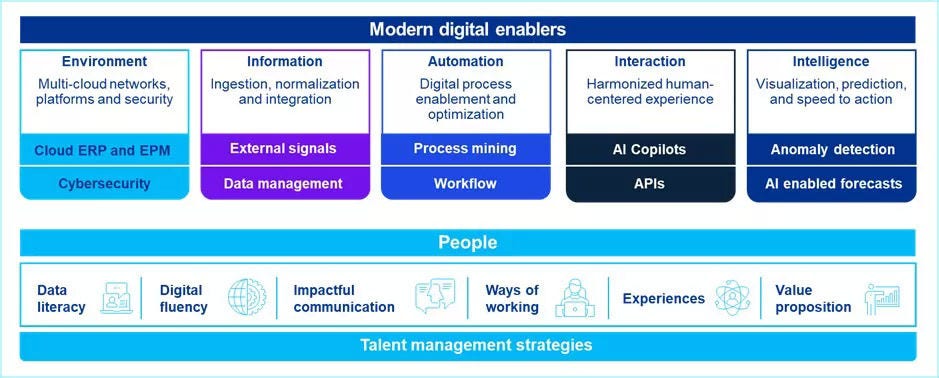
In order to harness the real power of Gen AI, however, organisations need a modern technology stack, access to quality data and an ability to integrate new technologies.
By the nature of it, an AI transformation program is heavily data-ready centric. To get the best results requires focus on the performance insights & data layer of the Finance Target Operating Model. For most organisations, there’s much to do around data to be able to exploit it to the full.
Therefore, it is important to ensure that you have the right combination of data skills, together with the experience of how to maximise the capability of data within an AI enabled finance function.
Consider the types of skills and capabilities that will be required. In part, this is about upskilling colleagues to add value within the new operating model, in addition to identifying new talent that understands the benefits that the new technology can deliver to the organisation, as well as people who can bridge the gap between finance technical skills and data/technology capabilities.
Finance leaders should also take the time to set the foundations of good transformation. Don’t underestimate the importance of good change management supported by open and continuous communication.
A key determining factor of success in transformation is the ability to influence and bring senior stakeholders, alongside the wider workforce, on the journey. Executive support and buy-in will be critical to securing budget, resources, and collaboration from the business.
And the more engaged finance professionals are in the project, the more value the organisation will get out of the investment in the long run.