error
Subscriptions are not available for this site while you are logged into your current account.
close
Skip to main content

      Data centres have become an important pillar of Ireland’s digital economy, placing Dublin at the centre of Europe’s digital infrastructure.

      Dublin now hosts Europe’s second largest data centre cluster with a reported 1,150 MW in operation, just short of London’s 1,189 MW and surpassing all other FLAPD markets (H1 2025 figures).

      However, development in Ireland has stalled in recent years, as the electricity grid struggled to cope with rapidly growing demand, concentrated in the greater Dublin region. The Regulator responded by effectively placing a moratorium on additional data centre grid connections in 2021.

      Recent decisions and action plans now lay out the framework to enable additional growth.


      Figure 1. H1 2025 load figures for data centres in operation, construction and planned for FLAPD markets

      James Delahunt

      Partner, Corporate Finance, Head of Energy & Natural Resources

      KPMG in Ireland


      Data centres accounted for 22% of Ireland’s power consumption in 2024, and EirGrid forecasts this demand to rise to 31% by 2034 in their median growth scenario.

      Much of the growth over this timeframe will be delivered by data centres with existing connection capacity agreements which have yet to be fully utilised. In response, the Irish government, the regulator, and system operators (“SOs”) are now introducing new measures to safeguard grid stability while enabling development which strategically aligns with national economic and decarbonisation agendas.

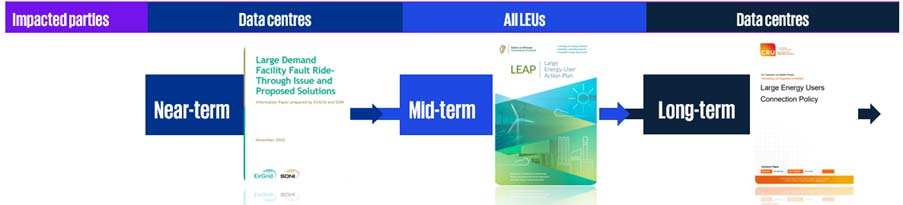
      Three recent policy updates will shape the landscape for data centres and other large energy users (“LEU’s”), ranging from near-term Grid Code modifications to longer-term strategic changes of how Ireland’s grid accommodates large, new demands.

      EirGrid’s Large Demand Facility Fault Ride-Through Proposed Solutions, the Irish Government’s LEAP - Large Energy User Action Plan, and the CRU’s Large Energy Users Connection Policy will have substantial near- and longer-term impacts on existing and new data centres in Ireland.


      Figure 2. Timeline of key LEU policies and impacted parties Figure 2. Timeline of key LEU policies and impacted parties

      While the new LEU connection policy decision, also referred to as the data centre connection policy, is the most talked about element, all three policies are important to understand and have been keenly awaited by industry. 


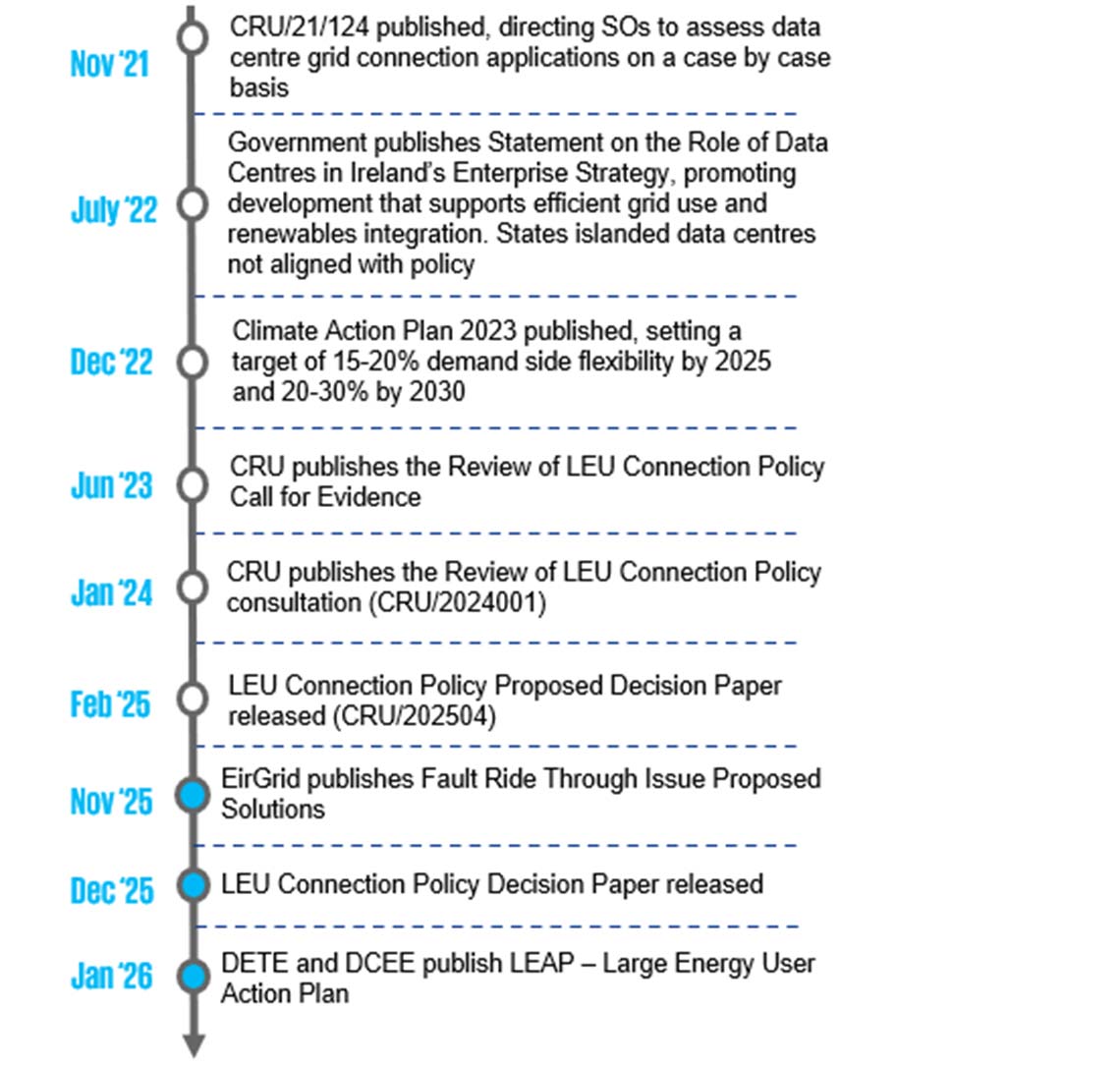
      Figure 3. Significant LEU Policy milestones Figure 3. Significant LEU Policy milestones

      A summary of these policies and their implications is outlined below. 


      1) Understanding the Fault Ride Through issue and proposed solutions

      Impacted parties: Data centres connected to the transmission system.

      Summary: In November, EirGrid published a Grid Code modification proposal in response to growing concerns that the scale of data centre electricity demand could pose significant risks to the stability of Ireland’s grid. The matter is technical and centres on a grid operations issue known as transient faults.

      The concern is that, following a temporary disturbance on the grid, one or more data centres will disconnect from the grid and rely upon their onsite power solutions. This could create additional disturbances, triggering further data centres disconnections.

      Such an event could lead to a sudden, large imbalance between supply and demand on the grid, leading to large changes in grid frequency. EirGrid has estimated that imbalances could reach over 1,150 MW if no additional mitigating action is taken.

      Similar risks were identified and addressed when Ireland began connecting large renewable generators to the grid. The wind generator technology at the time meant the generators would disconnect from the grid if they sensed a frequency disturbance, which could have led to too little generation serving demand from the grid leading to grid frequency drops.

      The proposed solution in both instances, at a high-level, entail modifying the Grid Code so that large facilities must in the first instance be more tolerant of disturbances and also reconnect to the grid within a specified timeframe.

      Specifically, the proposed modifications would require data centres to:

      1. Remain connected during a Rate of Change of Transmission System Frequency (RoCoF) of up to and including 1 Hz per second, measured over a rolling 500 milli-second period;
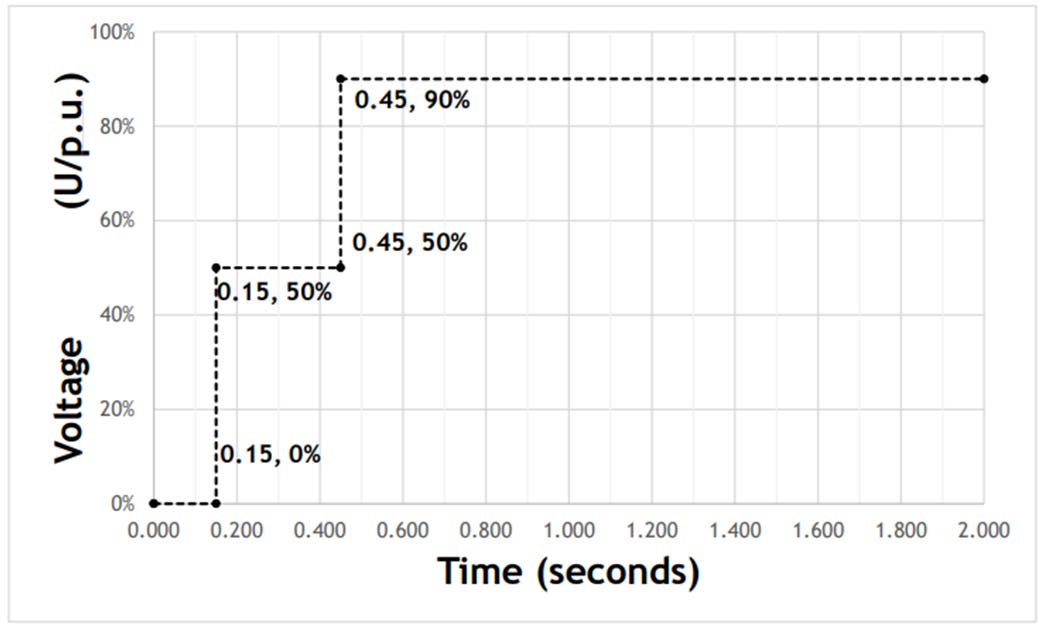
      2. Remain connected during and following power system fault disturbances which result in a voltage deviation which remains on or above the profile detailed in Figure 4; and
      3. Return to at least 90% of pre-fault demand within 500 milliseconds of the transmission system voltage recovering to 90% of the nominal voltage, with the required ramp up rate to be agreed between the TSO and the data centre owner.

      EirGrid continues to engage and collaborate with industry on these proposed solutions. Industry keenly awaits the final agreement of solutions, which will impact all current and future data centres in Ireland.


      Figure 4. Required voltage against time profile proposed in EirGrid’s Grid Code modification proposal Figure 4. Required voltage against time profile proposed in EirGrid’s Grid Code modification proposal

      2) Navigating the new data centre connection policy

      Impacted parties: All data centres seeking new or additional grid connection capacity.

      Summary: The Commission for Regulation of Utilities’ (CRU) decision paper defines the connection framework for new data centre grid connection applications, marking an end to the blanket moratorium on additional data centre grid connections in the Dublin region. The long-awaited policy decision has significant implications for how additional data centres are developed and interoperate with Ireland’s grid and electricity market.

      The policy applies exclusively to data centres without grid connection agreements currently in place. The requirements are linked to the Maximum Import Capacity (MIC) that the data centre is seeking, measured in megavolt-amperes (MVA). MVA is a measure of the import capacity of a grid connection, similar to how the megawatt (MW) is a measure of the export capacity for a generator connection. Ireland’s data centre market is dominated by the hyperscale market segment which operate large facilities well in excess of 10MVA.

      A summary of the key policy decisions is provided in Table 1 below. Subject to delivering the below requirements, the Regulator has confirmed that data centres will have no requirement for Mandatory Demand Curtailment (MDC).

      MDC is the reduction in MIC or disconnection of customers from the grid during emergency events


      Data centres under the de minimis threshold  (<1 MVA)

      • Data centres with a MIC of less than 1 MVA are exempt from the generation and renewable obligations of this policy.
      • Location constraints still apply at the SO’s discretion.

      Data Centres with MIC < 10 MVA and above the de minimis threshold

      • New data centres must provide an auto-producer unit that, on a derated basis, can cover 100% of the site’s MIC for the duration of the connection. (Autoproducer unit is defined in Section B.9.4 of the ISEM Trading and Settlement Code)
      • The unit must be operational and participate in the wholesale electricity market, ensuring the capacity is available to the Transmission System Operator (TSO) to dispatch.

      Data Centres with MIC ≥ 10 MVA

      • New data centres must provide dispatchable onsite or proximate generation and/or storage capacity that can cover 100% of the site’s MIC on a derated basis.
      • Generation and energy storage units must be front-of-meter grid-connected and metered separately to the data centre’s demand connection.
      • Generation and storage assets must participate in the capacity and wholesale electricity markets.

      Data Centres with MIC ≥ 10 MVA (cont.)

      • Data centres cannot ramp to their full MIC until the associated generation and/or storage has delivered the corresponding capacity. For the duration of the connection, the derated capacity of this plant must at least meet the ramped or enduring MIC and be operational. Ongoing non-compliance may result in reduced or withdrawn import capacity.

      Renewable Electricity Requirement

      • New data centres must meet at least 80% of annual demand from additional renewable generation in the Republic of Ireland. Fully repowered renewable projects are permitted.
      • The renewable generation requirement must be met within 6 years of data centre energisation.

      Location and Proximity

      • The SOs may assess each data centre connection and associated generation against node constraints and may refuse connections where the grid cannot accommodate the additional load.
      • Proximate generation must be electrically close at a minimum.

      Table 1. Key data centre requirements from the CRU LEU Connection Policy Decision Paper


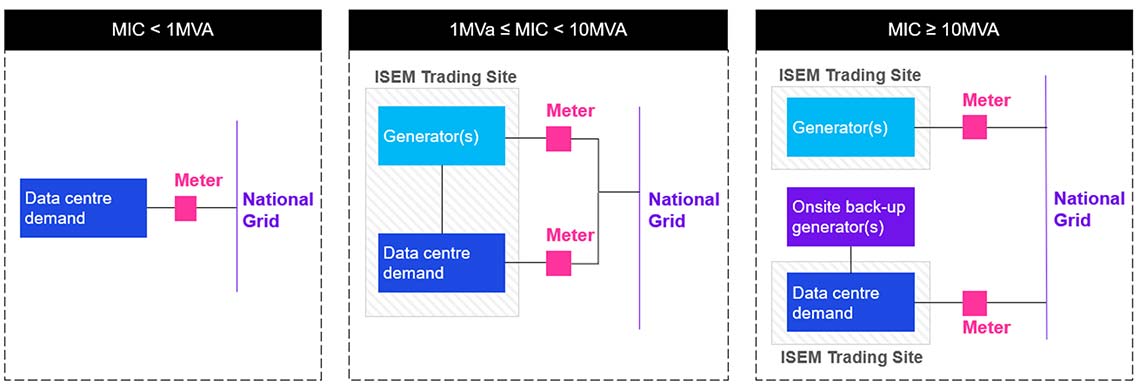
      A summary of the new data centre grid connection configuration requirements by MIC category is provided in Figure 5 below. In reality, data centres often request two import connections to the electricity grid for resilience.


      Figure 5. Data centre configuration requirements by MIC category Figure 5. Data centre configuration requirements by MIC category

      The CRU has instructed the SOs to each publish a connection application process reflecting these requirements by the end of March 2026. Navigating the new connection process will require a detailed understanding of connection decision requirements, Ireland’s grid infrastructure, the PPA market and the ISEM capacity market, along with their relevant regulatory frameworks.


      3) The Large Energy User Action Plan (LEAP) – addressing development barriers impacting LEUs

      Impacted parties: All new LEUs, including data centres, semiconductors, life sciences, and pharmaceuticals organisations, along with renewable generation and energy storage developers.

      Summary: The Government’s LEAP paper is intended to prepare all stakeholders for a transition to a plan-led approach to locating very large energy users, especially in the period beyond 2030. The objective is to facilitate future investment in energy intensive sectors, while unlocking Ireland’s renewable energy opportunity. The strategic plan sets out 17 actions aimed at addressing development barriers impacting LEUs, in particular regarding energy infrastructure.

      The cornerstone of LEAP is a plan-led approach which seeks to co-locate LEUs alongside new renewable generation with a focus on developer-led green energy parks that support grid infrastructure development and demand flexibility which enables a power system dominated by intermittent renewable generation.

      The strategy affirms strong government support for LEU’s which align with the national agenda of sustainable employment and high-value economic activities through actions to enhance engagement with green energy park developers, enterprise support for energy management innovation, and market design restructuring to support co-location.


      Forward outlook

      Ireland’s policy and regulatory developments have clearly signalled that LEU development must align with Ireland’s economic, energy security and decarbonisation agendas to gain support.

      Aligning connection methods to the proposed fault ride through standard, structuring data centre projects to also deliver dispatchable and additional renewable generation under the CRU decision paper and preparing for the LEAP plan-led approach is crucial to successfully delivering projects over the short, medium, and long term.


      Get in touch

      KPMG professionals understand the energy transition. We can help you deliver on your ambitions for your business, your people and the planet.

      To learn more about how KPMG perspectives on energy and our fresh thinking can help your business, please contact our team below. We’d be delighted to hear from you.

      James Delahunt

      Partner, Corporate Finance, Head of Energy & Natural Resources

      KPMG in Ireland

      Russell Smyth

      Partner, Head of Sustainable Futures and Corporate Finance

      KPMG in Ireland

      Terence McGovern

      Energy and Decarbonisation Lead

      KPMG in Ireland

      Dónal Ó Céileachair

      Senior Consultant

      KPMG in Ireland

      Aoife Cahill

      Senior Consultant

      KPMG in Ireland

      Discover more in Energy

      Something went wrong

      Oops!! Something went wrong, please try again

      Energy & Natural Resources

      Prepare your business for climate change and digital transformation
      Hand plugging in electric car charger