Moving proactively
Commercial geopolitical risk intel solutions enable airlines to move proactively - rather than reactively.
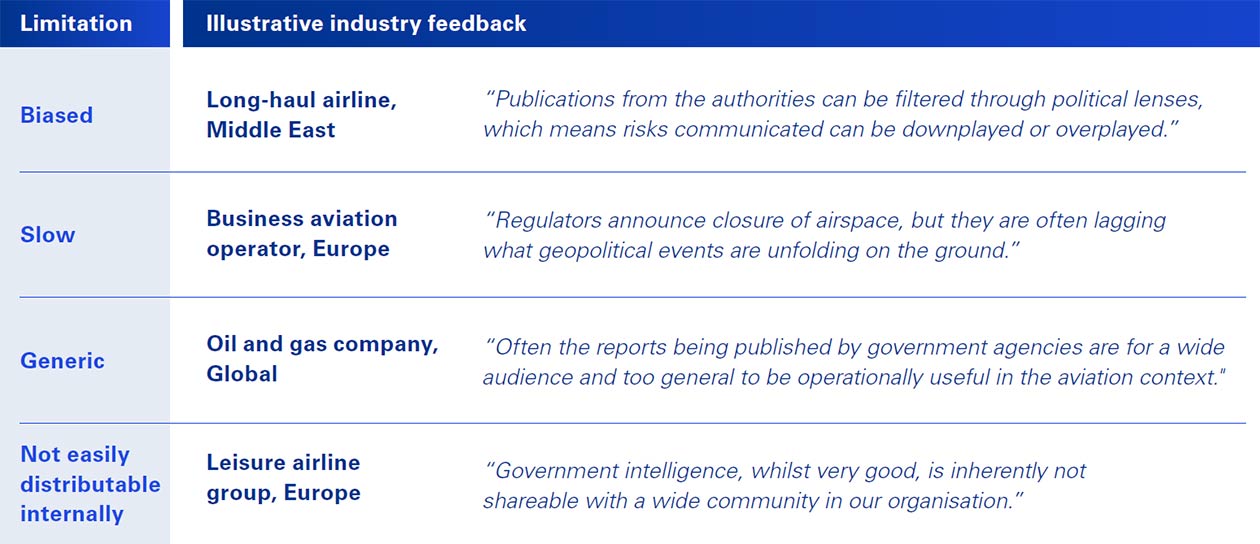
Due to the shortcomings of relying on slow, inconsistent government intelligence, and the heavy operational burden of manually interpreting raw information for aviation, airlines increasingly look to commercial risk‑intelligence platforms.
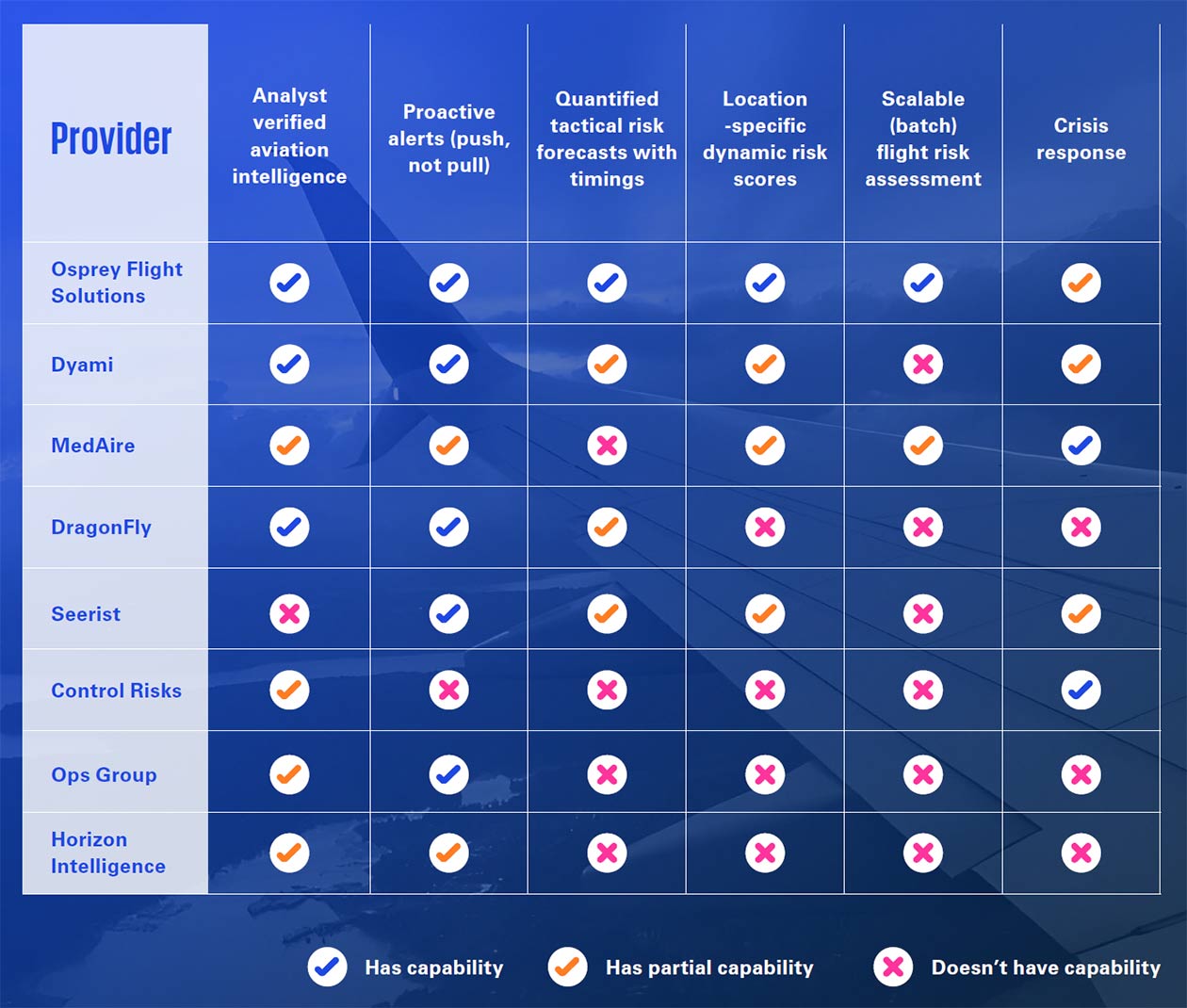
Best‑in‑class risk intelligence means airlines get fast, verified, aviation‑specific insights about any threat that could affect a flight, crew or airport. It goes far beyond news scraping or waiting for late government notices. Instead, solutions exist that integrate data from multiple sources, including news platforms, social media, government notices, satellite and thermal imagery, aircraft movement data and filters it into accurate, unbiased, real-time and even predictive alerts.
By crosschecking data inputs and filtering out unreliable data, these platforms help ensure that risk assessments rely on objective and verified information rather than isolated or subjective observations. Airlines value this because decisions on overflight, routing, and airport safety and security must often be made within minutes, not hours, and are further strengthened by predictive alerts that enable contingency planning.
It also means the intelligence is interpreted, not just delivered raw. Leading platforms show what threats mean for actual flight paths, altitudes, aircraft types and crew safety. Historical trends, predictive analysis and easy‑to‑use dashboards help airlines assess whether risks are rising, falling or stable.
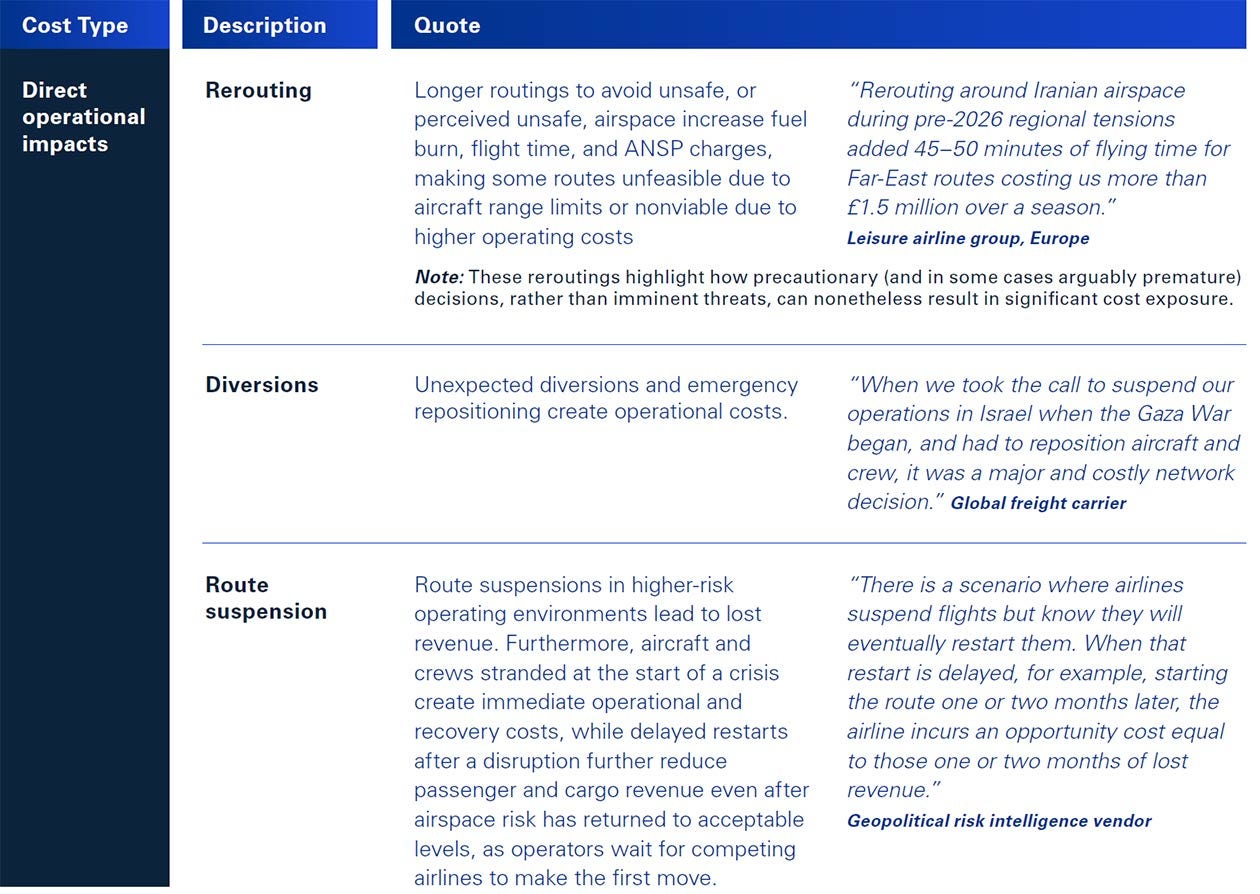
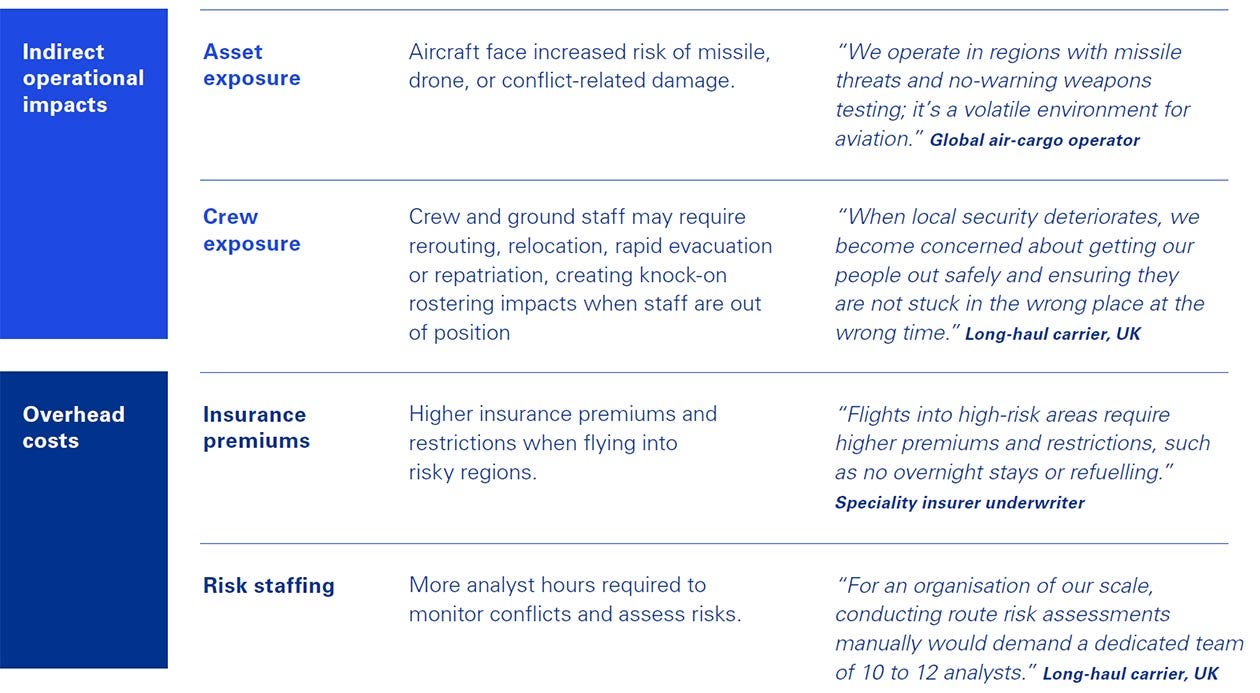
Ultimately, best‑in‑class intelligence supports safe but optimised operations; avoiding unnecessary costs while avoiding genuine hazards. It enables airlines to implement timely mitigation measures as risk rises - neither too early nor too late - while also supporting dynamic route reopening once risk returns to acceptable levels, with decisions clearly justified across the organization, including to crew and passengers.
Industry adoption remains limited, with most airlines operating below best practice.
Only an estimated 15–20% of airlines, typically larger and more safety‑mature carriers, have adopted truly best‑in‑class, daily risk‑intelligence tools. These airlines treat risk intelligence as essential infrastructure rather than a “nice to have,” and expect immediate alerts, deep analysis, forecasting, and aviation‑specific insight.
By contrast, the majority of airlines continue to rely on government advisories, media reporting, manual checks, or generic intelligence tools not designed for aviation. Even among larger carriers, capability is often fragmented or incomplete. While adoption is accelerating in response to recent global events, the industry overall remains in the early‑to‑middle stages of maturity.