error
Subscriptions are not available for this site while you are logged into your current account.
close
Skip to main content


      KPMG Financial Instruments (KFI) Market Outlook newsletter is a new publication series where we delve into the significant developments shaping the financial markets.

      It includes an in-depth analysis of the valuation trends, insights into latest regulatory changes and comprehensive overview of the market movements – at global and European level.

      The first edition examines how AI advancements affect the market movement, the global inflation rates’ impact on asset valuations and the current financial market indicators. Our team examines these and other topics in more detail below.


       

      Valuation trend

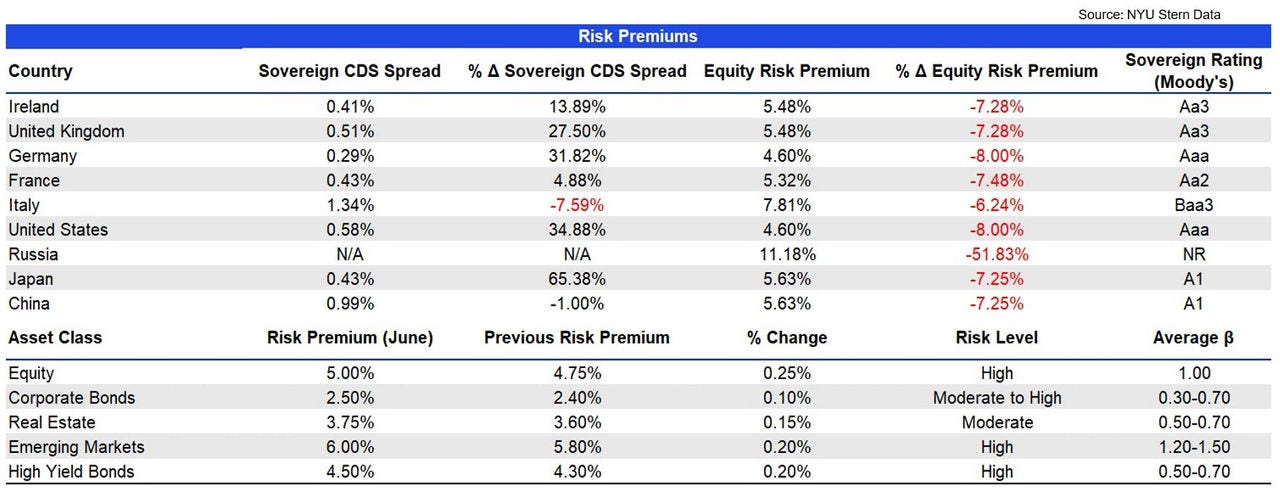
      In June, global equity markets experienced a significant increase in valuations. This upward trend was largely driven by improved economic indicators, such as higher GDP growth rates, lower unemployment rates, and increased consumer spending. These positive signals boosted investor confidence, leading to higher demand for equities and, consequently, higher market valuations. ESG considerations, which rose to prominence in 2023, will continue to impact valuations in 2024.

      graph

      Regulatory change


      The European Securities and Markets Authority (ESMA) introduced new guidelines that have a direct impact on asset valuations. The guidelines aim to enhance transparency and consistency in the valuation processes of financial instruments. They include stricter reporting requirements and more rigorous standards for the valuation of complex financial products. The regulatory change is expected to reduce discrepancies in asset valuations and improve investor trust in the financial markets.

      paper and pen

      Market movement


      The tech sector saw a notable shift in valuations, primarily driven by advancements in artificial intelligence (AI) technology. Innovations in AI have led to increased productivity and efficiency across various industries, making tech companies more attractive to investors. This surge in interest has resulted in higher valuations for tech stocks, reflecting the market’s optimism about the future potential of AI technologies.

      stats

      Economic indicator


      Global inflation rates showed signs of stabilisation, which had a positive impact on asset valuations. Stabilising inflation reduces uncertainty in the market, as it suggests that central banks’ monetary policies are effective in controlling price levels. This stability encourages investment, as investors feel more confident about the future economic environment, leading to higher asset valuations.

      graphic piggy bank

      KFI Market Outlook

      nas

      Equities


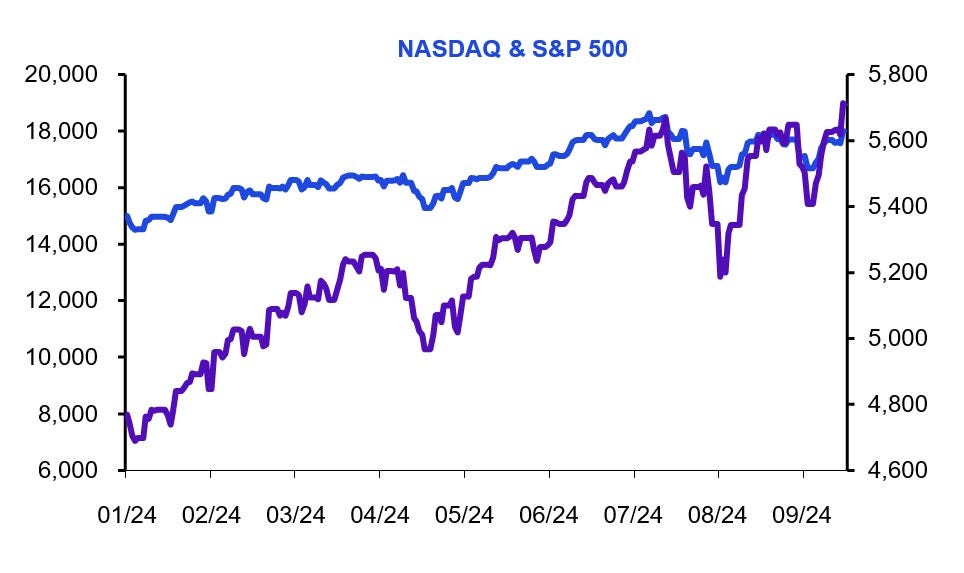
      • The S&P 500 experienced a dynamic month, reflecting broader economic trends and investor sentiment. The index saw a mix of gains and losses, driven by factors such as economic data releases, corporate earnings reports, and Federal Reserve policy decisions.
      • Fed implemented its first interest rate cut in over four years. The S&P500 finished the week at 5,702 points while the Nasdaq closed at 17,948 points, a monthly gain of 0.96% and 1.32% respectively
      nasdaq

      Fixed income


      • US 10-year bond yield gained 16 basis points to 3.82%, reflecting recent economic data and investor sentiment
      • This increase in yield coincided with a rise in consumer credit, which grew at an annual rate of 6.0% in July, driven by a 9.4% increase in revolving credit and a 4.8% increase in non-revolving credit
      wti

      FX exchange


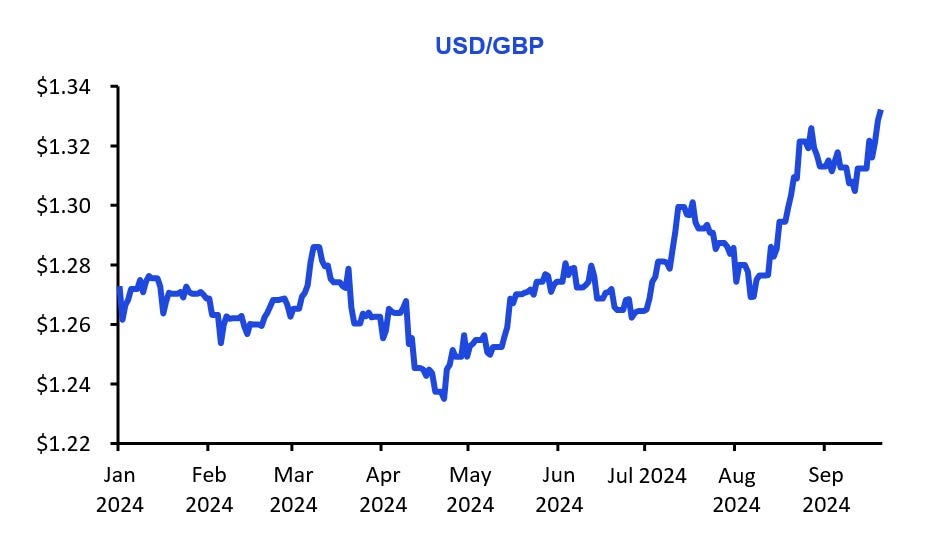
      • The USD experienced fluctuations due to the Federal Reserve’s decision to cut interest rates by 50 basis points, leading to a general weakening of the currency.
       
      • USD closed the week at 1.1163 USD per EUR. USD closed the week at 1.3322 USD per GBP.
      usd

      KFI Market Outlook

      nas
      • The European Collateralized Loan Obligation (CLO) market has shown robust activity this month, continuing its strong performance from earlier in the year.
      • Issuance levels have been impressive, with September seeing approximately €2.23 billion across six transactions, a notable increase from €1.16 billion in August. This uptick reflects growing investor confidence and a favorable economic environment.
      • The Irish Collateralized Loan Obligation (CLO) market has shown strong performance this month, with approximately €500 million in new issuances. This reflects growing investor confidence and favorable economic conditions.
      • The Central Bank of Ireland introduced new guidelines aimed at enhancing transparency and risk management in the CLO market. These changes are expected to improve investor confidence and market stability.
      • The spread for AAA-rated CLO tranches in Ireland is currently averaging around 140-160 basis points above SOFR
      • Easing of inflationary pressures and the European Central Bank’s recent interest rate cut have made credit markets more accessible, benefiting the underlying leveraged loan market.
      • The U.S. CLO market has been active this month, with issuance levels remaining strong. Approximately $10 billion in new CLOs were issued, reflecting continued investor confidence.
      • The spread for AAA-rated tranches has averaged around 140-160 basis points above SOFR, indicating stable market conditions

      Contact us

      To better understand the actual value of your assets and to see how we can help your business, reach out to our KPMG Financial Instruments (KFI) team below. 

      Jorge Fernandez Revilla

      Partner, Head of Asset Management

      KPMG in Ireland

      Ni Zhong

      Director, KPMG Financial Instruments

      KPMG in Ireland