error
Subscriptions are not available for this site while you are logged into your current account.
close
Skip to main content

      Global markets in September 2025 sustained their recovery momentum, buoyed by signs of stabilised inflation, resilient consumer demand, and eased energy prices.

      Equities advanced modestly, while bond yields declined amid expectations of gradual rate cuts by major central banks. Investor sentiment improved, though regional divergences in growth and persistent geopolitical tensions continue to shape global risk appetite.

      At a macro level, Europe’s industrial output rebounded, supported by stronger exports and fiscal measures in key economies. The U.S. labour market cooled slightly, offering reassurance on inflation trends, emerging markets saw renewed investor interest as a weaker dollar spurred fresh portfolio inflows.

      Inflation moderated to 2.7% in the Eurozone and 3.4% in the UK, resulted in expectations of rate stability through year-end.

      On the regulatory front, ESMA advanced work on green bond standards and MiCA implementation, underscoring continued focus on transparency and sustainability in financial markets.

      For investors, this landscape continued to favour quality, resilience, and long-term structural themes. Valuations held steady, credit spreads tightened slightly, and real assets such as infrastructure and renewables maintained their premium. Companies with stable earnings, lower macro sensitivity, and reliable cash flows remain in demand.

      The KPMG Financial Instruments (KFI) team have put together the insights below to provide an overview of the ongoing developments and to help you navigate through the changes.

      Download this page in PDFf

      Financial and Capital Market Updates

      (PDF, 1.5MB)

      Global overview

      Valuation trend


      In September 2025, global valuations remained steady as investors balanced optimism over potential rate cuts with caution around uneven macro data. U.S. equity multiples held firm, supported by resilient earnings outlook, while European markets posted modest gains led by industrials, infrastructure, and financials. Emerging markets continued to attract capital amid stabilised currency and improved growth forecasts.

      Credit spreads tightened marginally as risk sentiment improved, and real asset investments—notably in renewables and transport—remained in focus. Overall, valuations reflected a measured yet constructive tone, underpinned by quality earnings and long-term structural visibility.

      Market movement


      Markets showed broader participation in September 2025. European equities outpaced the U.S. as investors shifted to industrials and energy sector following improved purchasing managers index (PMI) readings.

      Emerging markets saw renewed inflows supported by a softer dollar and stronger export momentum in Asia. Technology, AI productivity, and infrastructure themes continued to anchor investor interest. Overall, investors remained focused on stable earnings, macro resilience, and dependable dividend payers, which reinforced a cautiously optimistic global tone.

      Regulatory change


      The European Securities and Markets Authority (ESMA) maintained a proactive stance in September 2025, and published updates on UCITS liquidity stress testing and clarifications under the SFDR Q&A to refine environmental data disclosures. The authority also released further guidance on MiCA to strengthen anti–market manipulation oversight and ensure alignment across EU jurisdictions.

      Alongside this, the ECB and EBA issued a joint note reinforcing valuation governance and fair-value practices for illiquid instruments Collectively, these steps marked another move toward a more transparent and harmonized European valuation framework.

      Economic indicator


      Global inflation trends remained largely stable through September 2025. The Eurozone headline rate edged up to 2.1%, while Germany reported 2.4%, led by higher services inflation. The ECB held rates at 2.0%, emphasizing a data-dependent stance.

      In the U.S., inflation hovered near 2.9%, while bond yields softened as markets anticipated a potential Fed rate cut before year-end. The stabilizing rate environment continued to support valuations across real estate, utilities, and infrastructure, maintaining a balanced investment climate heading into Q4.


      Financial market indicators

      Equities

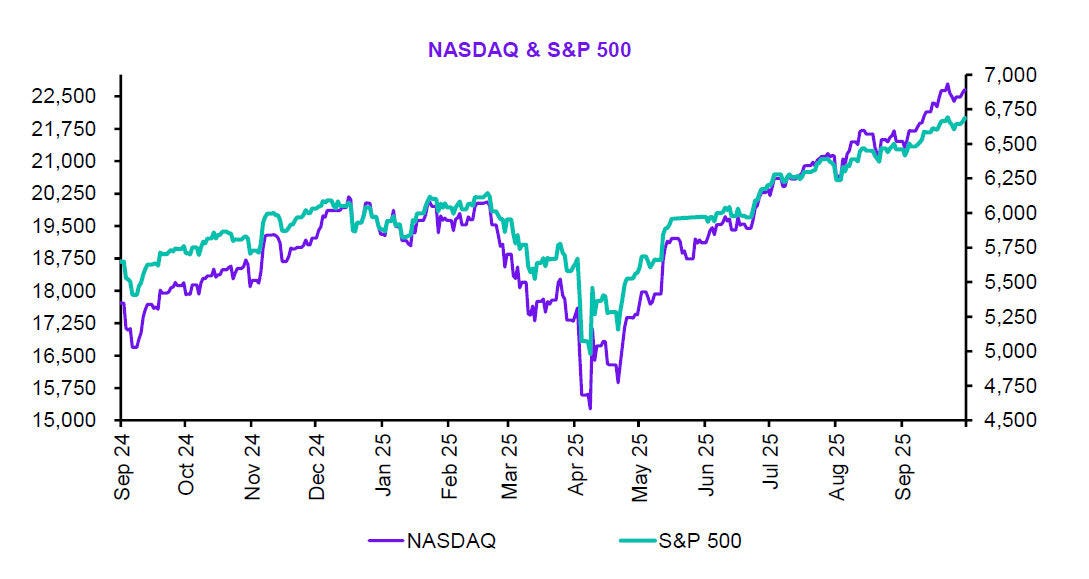
      • U.S. equities advanced in September, with the S&P 500 rising 3.53% to close at 6,688 points and the NASDAQ advancing 5.61% to 22,660 points, driven by fresh inflow of cash as risk sentiments improved with Fed rate cuts and investment prospects in AI technology.
      • Despite volatility in the markets, companies continued to bet heavily on AI software and technologies, with Nvidia announcing a potential $100 billion investment in Open AI.
      NASDAQ & S&P 500

      Fixed income

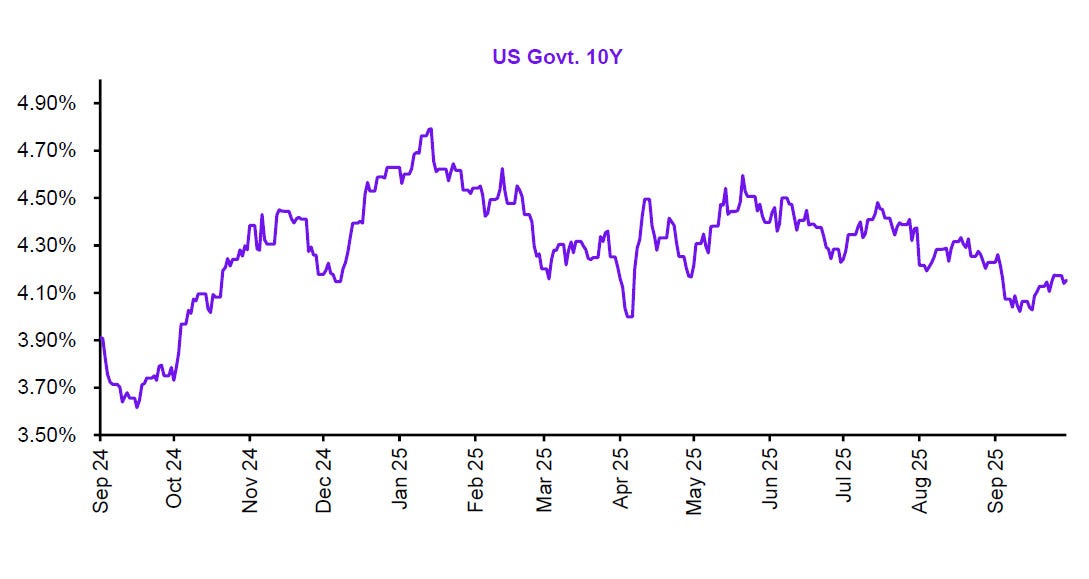
      • Credit markets in the U.S. remained volatile in September, driven by the ongoing tariff war and the US Government shutdown, with added pressure from market anticipation surrounding the upcoming Federal Reserve meeting in October. The U.S. 10-year Treasury yield declined by 8 basis points during the month to close at 4.15%.
      • Irish Treasuries saw less volatility in September as ECB kept the deposit rate constant as it monitors inflation and political instability.
      US Govt. 10Y

      Commodities

      • The commodities market remained volatile throughout September, largely influenced by shifting trade policies and escalating geopolitical tensions, with oils and metals experiencing the most significant impact.
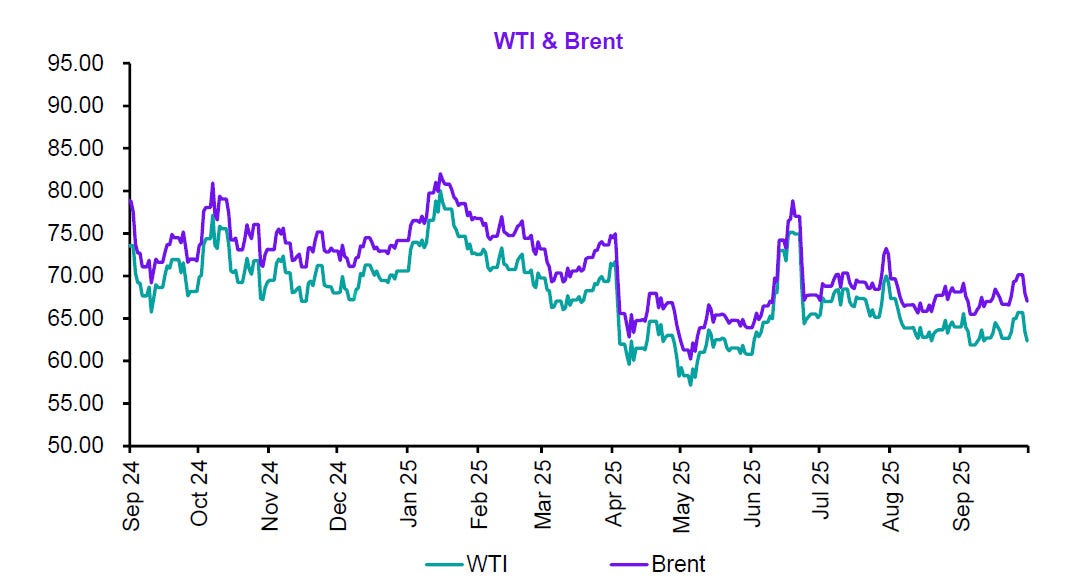
      • Brent crude settled near $67.02, while WTI crude closed at $62.37, losing 1.61% and 2.56% respectively as rising output and geopolitical pressure weighed on prices.
      • Gold rose to record highs, while American soyabeans, saw a disruption in exports to China due to ongoing trade dispute. Platinum saw a significant surge in demand as transition into green energy rises. Overall, commodity indices showed stability in the month of September
      WTI & Brent

      FX exchange

      • The U.S. dollar weakened in September, driven by geopolitical tensions, US Government shutdown and anticipation of next Federal Reserve’s meeting to monitor inflation and purchasing managers index (PMI).
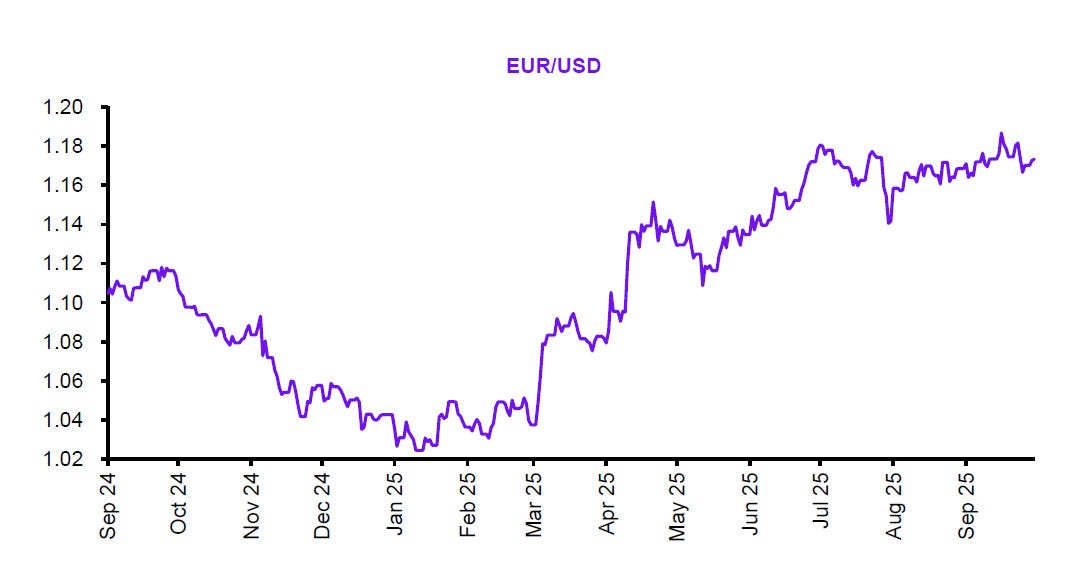
      • USD ended the month at 1.17335 against the euro reflecting weakness across major currencies during September.
      EUR/USD

      CLO market updates for Q3 2025

      In September, Europe’s CLO issuance momentum remained resilient, with YTD volumes nearing €37.2 billion, driven by a steady pipeline of new deals, resets, and refinancings.

      Investor sentiment stayed firm as tighter liability spreads and stabilized loan markets boosted issuance appetite across both primary and secondary transactions.

      The Irish CLO market continued to anchor regional activity, with several managers launched vehicles under Ireland-domiciled structures amid rising global investor demand. The Central Bank of Ireland maintained its focus on transparency and data consistency under the Sustainable Finance Disclosure Regulation (SFDR) and MiCA frameworks.

      In the U.S., CLO issuance remained healthy and surpassed $245 billion YTD, supported by increased refinancing activity and tighter spreads.

      AAA spreads in Europe tightened to around 125–135 bps over SOFR, highlighting persistent demand for top-rated tranches, while mezzanine tranches (BB/BBB) continued to attract buyers amid improving relative value dynamics.

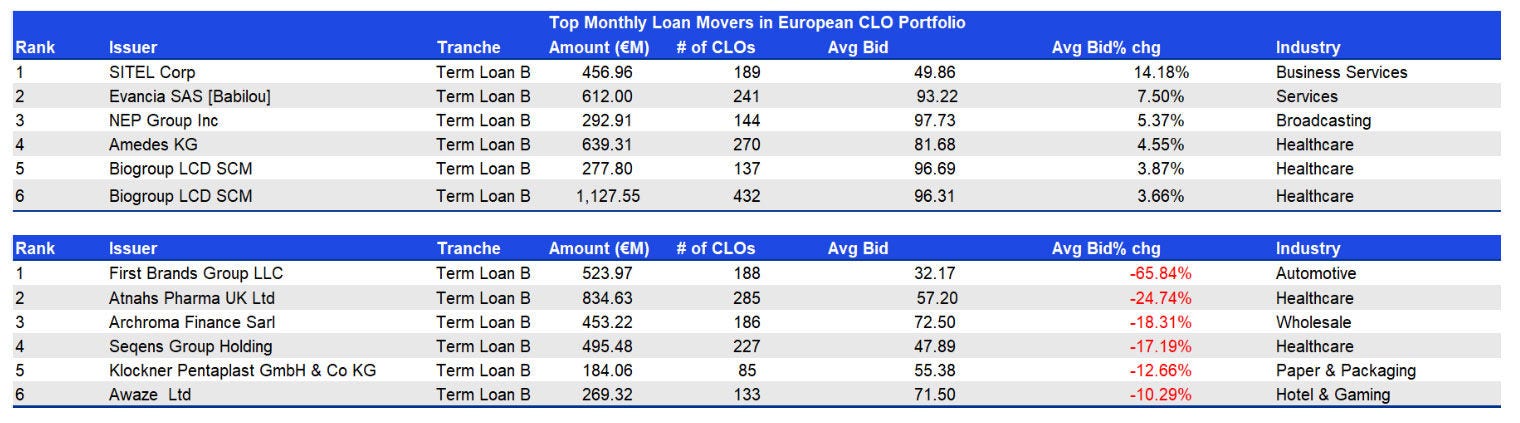
      Segment focus : CLO market

      Segment Focus : CLO Market

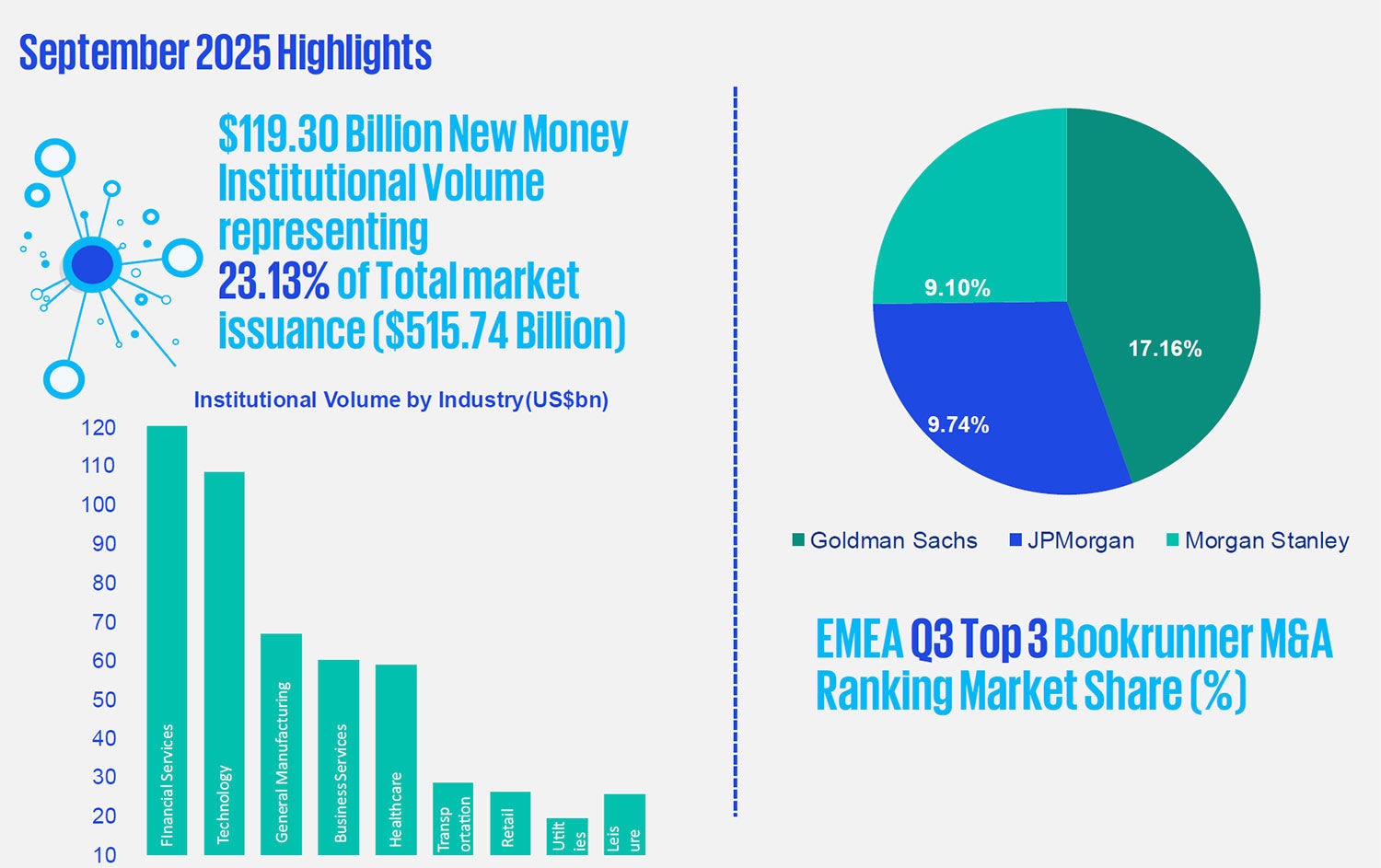
      September 2025 Highlights


      Key rates

      In September, global economic data reflected a mixed yet steady recovery trend. The Eurozone registered GDP growth of 0.40% QoQ, supported by resilient household consumption and a gradual rebound in business investment. Inflation continued to ease, keeping the ECB’s policy stance data dependent ahead of year-end rate discussions.

      In Germany, industrial output remained subdued, down to 0.30%, as energy costs and weak external demand persisted. Conversely, France composite purchasing managers index (PMI) rose further into expansionary territory, singalling improving domestic momentum. Ireland’s manufacturing purchasing managers index (PMI) held firm, underpinned by strong export orders and investment linked activity.


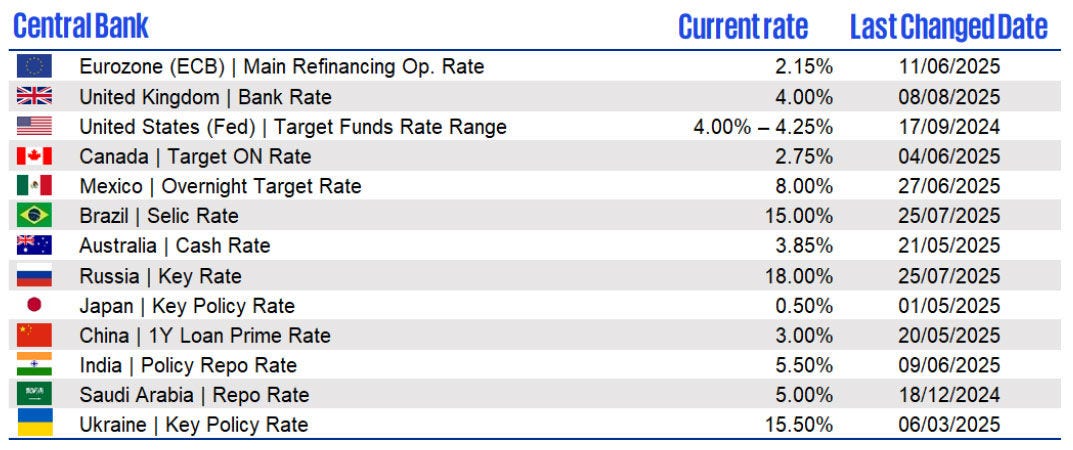
      Central Bank key rates

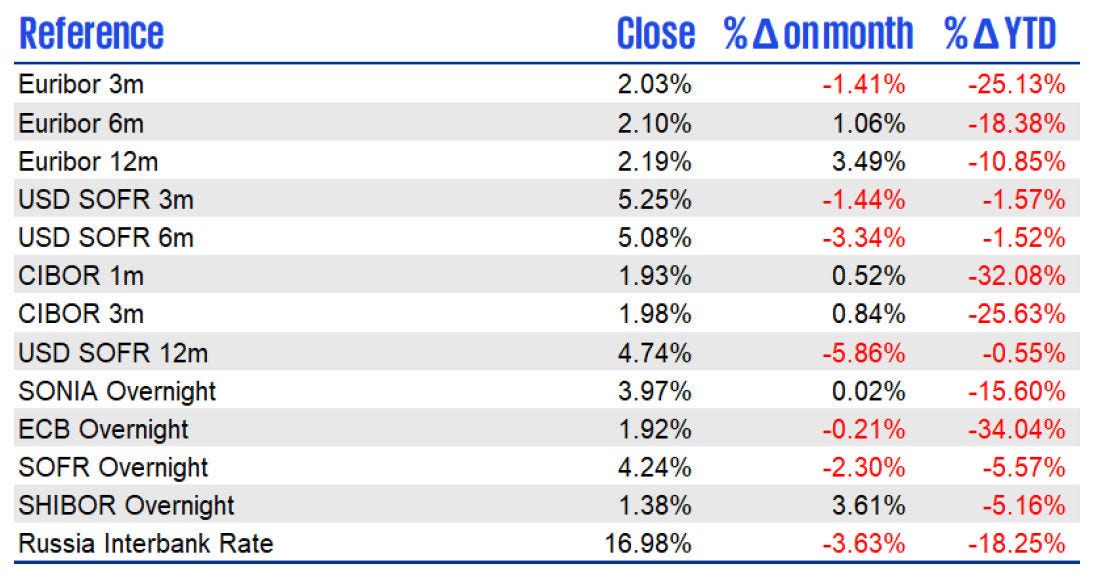
      Key rates reference

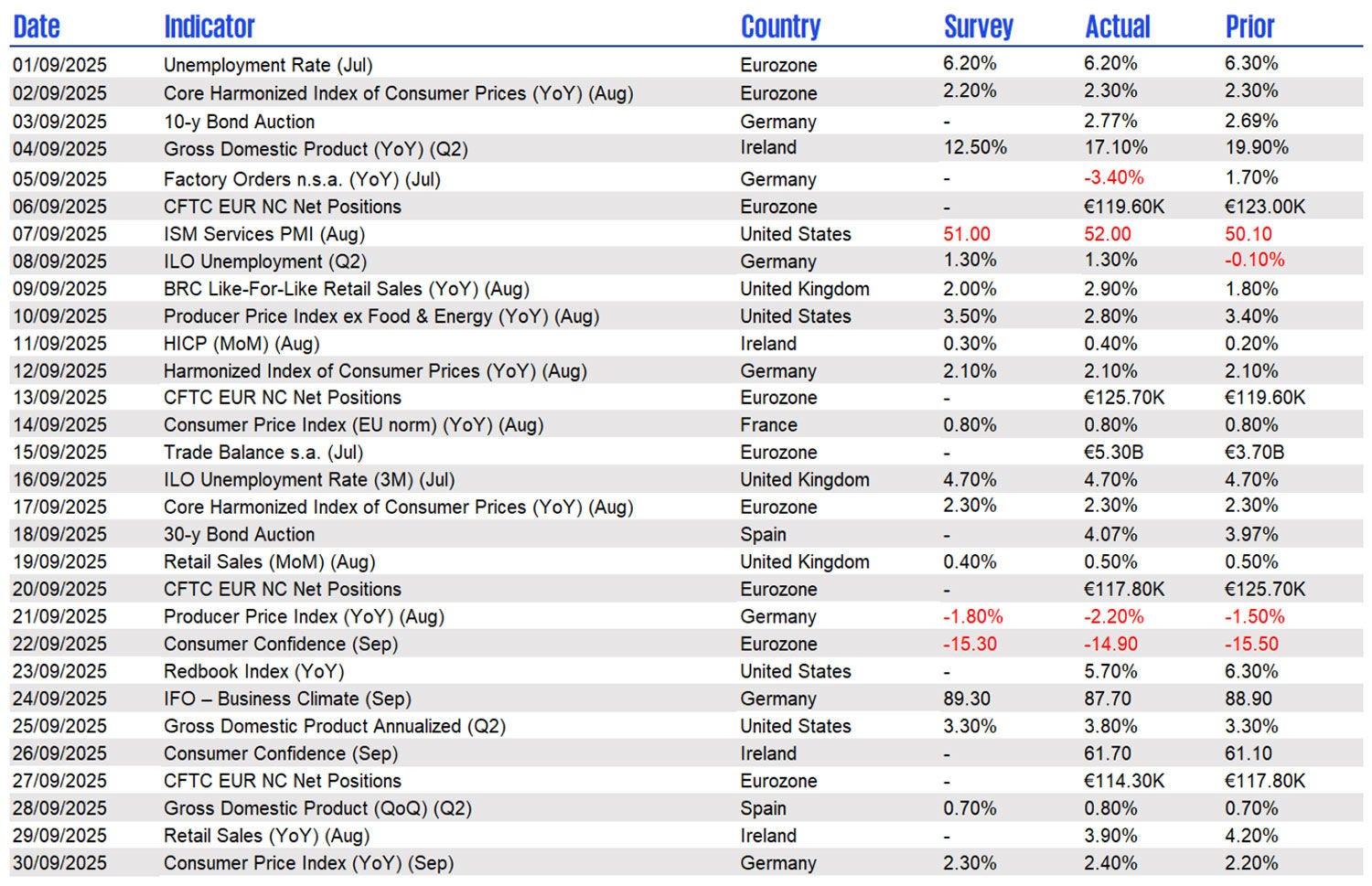
      Economic calendar

      Economic Calendar


      Macroeconomic outlook

      The global economy entered the final quarter of 2025 on uncertain footing, with growth slowing and risks mounting. The IMF’s October World Economic Outlook projects global growth at 3.2% in 2025, easing slightly to 3.1% in 2026, as higher tariffs and tighter financial conditions weigh on trade and investment.

      The OECD’s September Interim Report echoes this concern, noting that the early boost from accelerated trade ahead of tariff hikes has faded and warning that growth could slip to 2.9% by 2026, with persistent inflation and weakening labour markets adding pressure.

      Both institutions emphasise that without stronger global cooperation and reforms to boost productivity, the world risks a prolonged period of weak growth, fragmented trade, and heightened vulnerability to shocks.


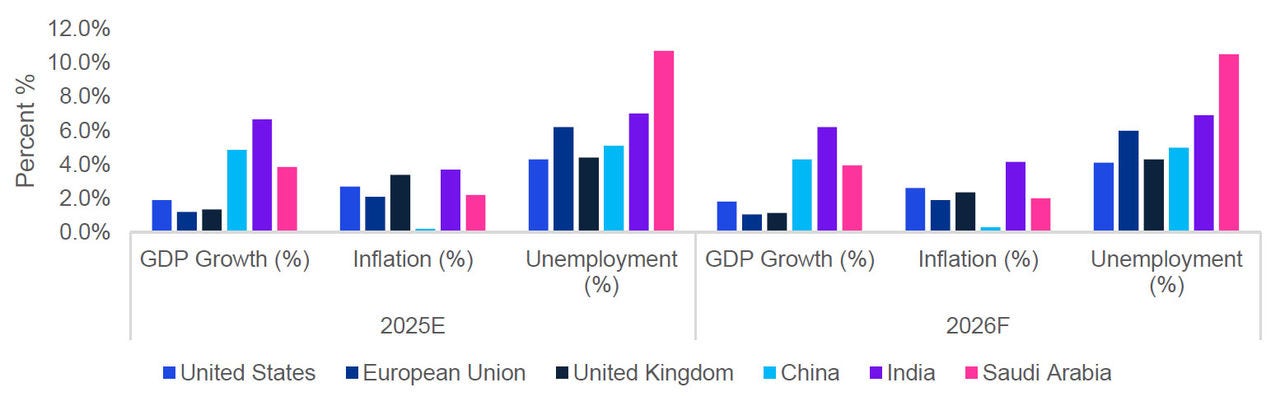
      Q3 2025 macro update


      Q3 2025 Macro Update

      • GDP Growth: 1.8% to 2.0% (2025), 1.5% to 2.1% (2026)
      • Inflation: 2.7% (2025), 2.4% to 3.0% (2026)
      • Unemployment: ~4.3% (2025), ~4.1% (2026)
      • Growth is slowing as tariffs and weaker labor markets weigh on activity, while inflation remains above target. AI-driven investment and fiscal support provide some cushion, but risks from trade fragmentation and labour supply shocks persist.

      • GDP Growth: 4.8% to 4.9% (2025), 4.2% to 4.4% (2026)
      • Inflation: 0.2% (2025), 0.3% (2026)
      • Unemployment: ~5.1% (2025), ~5.0% (2026)
      • Growth moderates as fiscal stimulus fades and tariffs bite, with property sector weakness adding pressure. Inflation remains low, supported by currency depreciation and export front-loading, but structural challenges persist.

      • GDP Growth: 1.2% (2025), 1.0% to 1.1% (2026)
      • Inflation: 2.1% (2025), 1.9% (2026)
      • Unemployment: ~6.2% (2025), ~6.0% (2026)
      • Credit easing offers limited support, but trade frictions and geopolitical uncertainty continue to drag on growth. Fiscal expansion in Germany offsets some weakness, yet inflation remains subdued and industrial activity soft.

      • GDP Growth: 6.6% to 6.7% (2025), 6.2% (2026)
      • Inflation: 2.9% to 4.5% (2025), 3.9% to 4.3% (2026)
      • Unemployment: ~7.0% (2025), ~6.9% (2026)
      • Strong domestic demand and policy easing sustain growth, though job creation lags behind demographic needs. Inflation is gradually declining, but fiscal and structural constraints limit the pace of long-term recovery.

      • GDP Growth: 1.3% to 1.4% (2025), 1.0% to 1.3% (2026)
      • Inflation: 3.3% to 3.5% (2025), 2.1% to 2.7% (2026) 
      • Unemployment: ~4.4% (2025), 4.3% (2026)
      • Economic momentum is constrained by tighter fiscal policy and rising trade costs, keeping inflation elevated. While inflation is expected to ease by 2026, labor market conditions are weakening, and growth stays below pre-pandemic trends.

      • GDP Growth: 3.7% to 4.0% (2025), 3.7% to 4.0% (2026)
      • Inflation: 2.2% (2025), 2.0% (2026)
      • Unemployment: ~10.7% (2025), ~10.5% (2026)
      • Oil exporters drive regional growth as production rises, but fiscal space remains tight and unemployment high. Inflation is easing from elevated levels, yet structural vulnerabilities and geopolitical risks weigh on the outlook.

      Market benchmarking: Q3 2025

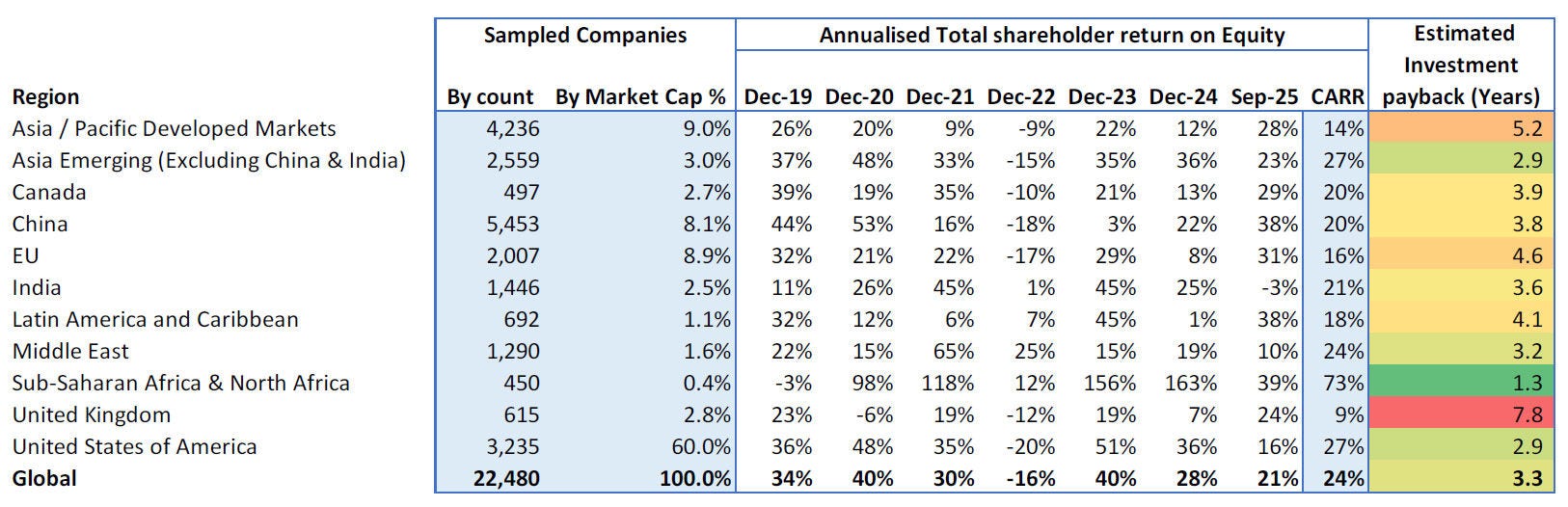
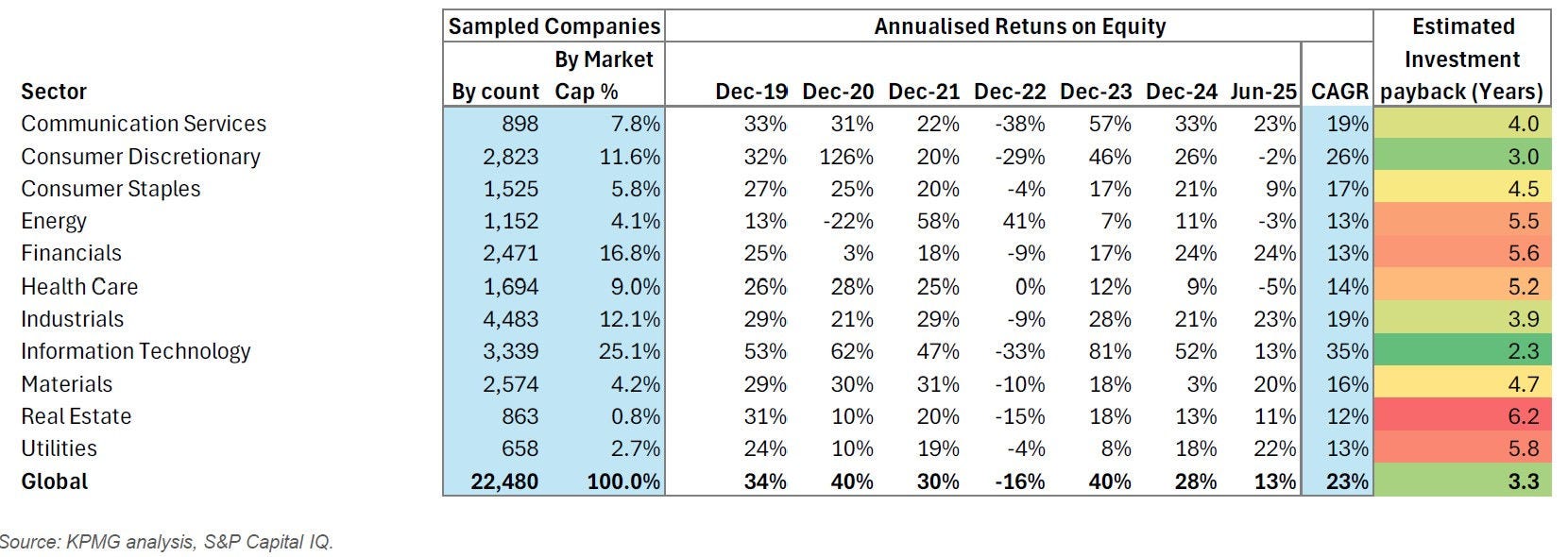
      To support performance evaluation, we have conducted a comprehensive benchmarking exercise on liquid public equities for each calendar year with annualised total shareholder returns including capital gains and dividends.

      These returns (with caution) can be used as a benchmark to evaluate the performance of investments in equity and equity like investments. 


      Regional equity performance Q3 2025


      Regional Equity Performance Q3 2025

      Global equities rebounded in Q3 despite tariff-related volatility but returns varied widely across regions. U.S. equities gained 16%, held back by high starting valuations, slower growth expectations, and early-year tariff shocks, even though tech and AI spending helped.

      Europe outperformed strongly, with EU up 31% and UK 24%, as investors rotated into cheaper stocks, supported by fiscal stimulus and expectations of deeper ECB rate cuts compared to the Fed. Canada rose 29% on commodity strength and currency gains. In Asia, China surged 38% thanks to policy support, AI investment, and easing trade tensions, while India fell 3% due to expensive valuations, weak earnings, and foreign outflows.

      Emerging markets also attracted capital, with Asia ex-China & India up 23% and Sub-Saharan Africa & North Africa up 39%.

      Sector performance reflected these trends: Materials (35%), Communication Services (31%), and Information Technology (29%) led on AI-driven growth and cyclical recovery, while Industrials (24%) and Financials (23%) also advanced. Health Care (2%), Energy (6%), and Consumer Staples (5%) lagged due to regulatory and commodity pressures.

      Sectoral equity performance Q3 2025


      KFI graph sectoral equity performance h1 2025

      Source: KPMG analysis, S&P Capital IQ.


      Market deals

      2025 outlook


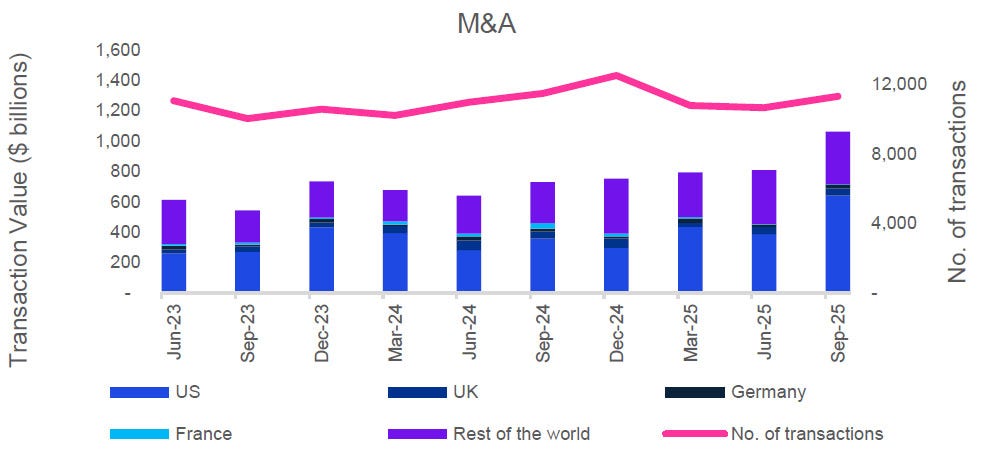
      Q3 2025 was one of the strongest quarters in recent years, with global M&A deal value reaching USD 1 trillion, marking a significant increase of 31% from Q2 despite a comparable number of transactions.

      This surge was driven by mega deals. Companies shifted toward fewer but higher-value transactions, reflecting a strategic pivot from aggressive expansion to resilience and long-term positioning.

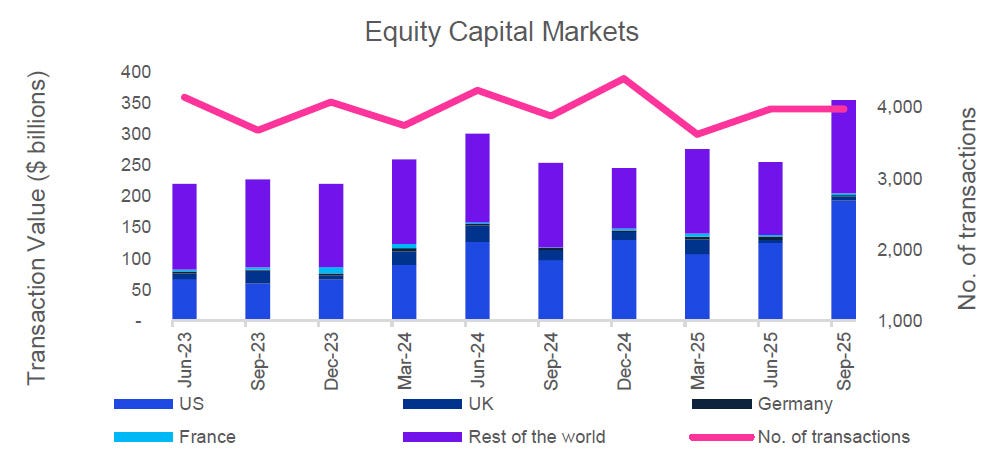
      Private equity sponsors played a major role, accounting for a record share of global deal value, focusing on large-scale take-private transactions. Equity Capital Markets (ECM) saw a notable rebound late in the quarter.

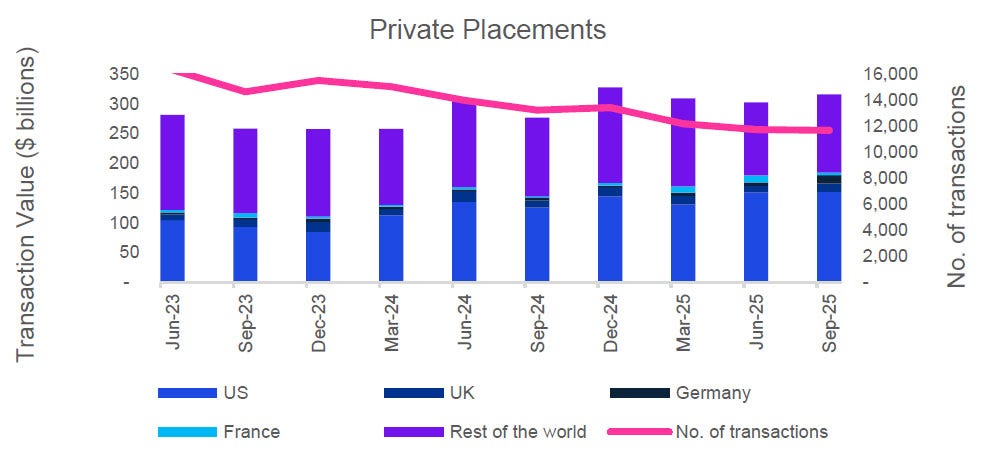
      IPO activity accelerated as investor sentiment improved following the Fed’s September rate cut and easing inflation expectations. Secondary offerings and private placements also gained traction as firms increasingly favoured equity financing over debt to strengthen balance sheets and fund strategic initiatives.

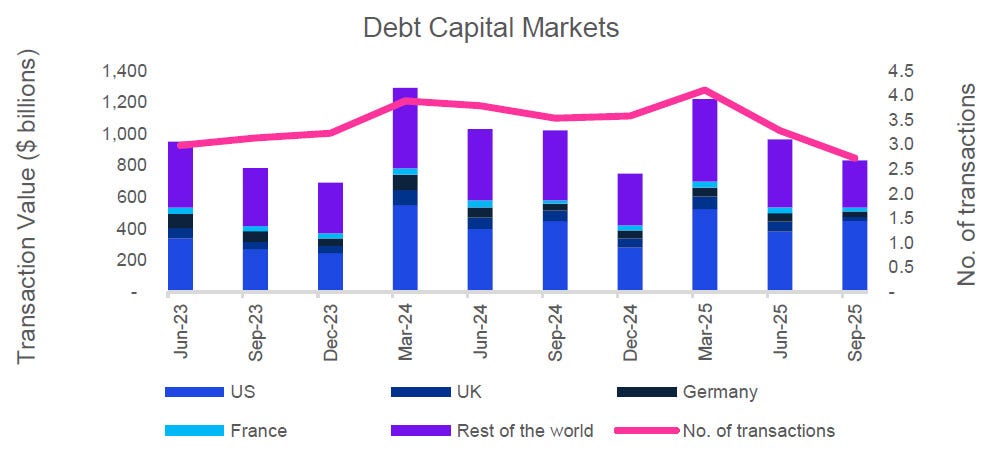
      Debt Capital Markets (DCM) remained subdued, as companies opted for equity and private credit amid rate uncertainty and tighter credit conditions.

      United States


      The U.S. led global deal activity in Q3, accounting for the majority of mega deals and transaction value. US witnessed a 65% surge in M&A activity in Q3 vs Q2 2025.

      Landmark transactions included the $85B Union Pacific Norfolk Southern merger, creating America’s first transcontinental freight railroad, and the $55B take-private of Electronic Arts, the largest leveraged buyout in history.

      Chevron’s $53B acquisition of Hess further underscored consolidation in energy. ECM activity strengthened, with rising as market confidence due to rate cut expectations. DCM issuance also witnessed a slight increase in transaction value.

      United Kingdom & Europe


      M&A activity in Europe strengthened in Q3, driven by strategic consolidation and attractive valuations. Notable mega deals included Anglo American’s $53B merger with Teck Resources, creating a -copper giant, and Air Lease Corp’s $7.4B take private deal backed by global investors.

      The UK also saw significant cross border transactions in financial services and energy transition assets. ECM activity improved with several high-profile listings, while DCM issuance declined as firms favoured equity and private credit over traditional debt financing.

      Rest of the world


      Emerging and non-traditional markets played a resilient and increasingly important role. The rest of the world consistently contributed between 20% and 40% of global deal values, particularly in mergers and acquisitions (M&A), private placements, and equity capital markets (ECMs).

      Although overall deal volumes remained modest, the region reported no growth in M&A, reduction in DCM and slight increase in ECM activity, indicating cautious investor sentiment.


      M&A
      Private Placements
      Equity Capital Markets
      Debt Capital Markets

      Get in touch

      The KPMG Financial Instruments (KFI) team is uniquely positioned to help clients navigate this environment by providing high-quality independent valuations, leveraging deep technical expertise and market insight.

      As clients face changing regulatory requirements, evolving capital allocation trends, and increased scrutiny surrounding asset quality and impairment, KFI provides critical support through application of best-practice valuation methodologies.

      From private equity and structured products to financial instruments impacted by interest rate volatility, KFI enables businesses to evaluate risk, maintain audit readiness, and respond with confidence to dynamic market and regulatory developments.

      Should any of the matters outlined in this market outlook be of interest, or if you would like to explore the potential implications for your business, please feel free to contact one our team members. We would be pleased to assist you further.

      Jorge Fernandez Revilla

      Partner, Head of Asset Management

      KPMG in Ireland

      Ni Zhong

      Director, KPMG Financial Instruments

      KPMG in Ireland

      Muhammad Bilal

      Associate Director, KPMG Financial Instruments

      KPMG in Ireland

      Discover more in Asset Management

      Something went wrong

      Oops!! Something went wrong, please try again

      Asset Management

      Adjust for an increasingly digital world
      Abstract pink and purple graph on navy background