
      Supervisory expectations in the financial sector in light of the fines imposed in 2025


      At the beginning of 2026, we have analysed, for the seventh time, how fines imposed by the Supervisory Authority („Supervision” „Authority” or „MNB”) have changed, which sectors have been most affected and what measures the Authority has called upon financial sector participants to take. Among the identified deficiencies, shortcomings and violations of the law related to market manipulation, consumer protection, corporate governance – especially related to IT and information security – and credit risk were the most prevalent. In addition, substantial fines were imposed in connection with insider trading and carrying out various services without licences.


      Supervisory expectations in the financial sector


      Every year, Supervision conducts numerous investigations in the financial, capital, insurance and funds markets, with the aim of monitoring their internal processes and verifying their compliance with EU, government and supervisory regulations.

      The primary focus of our analysis of inspections and areas of risk for compliance is again based on the fines imposed (a total of 234 decisions were considered). Based on the MNB's annual reports for 2020-2024 , we can see how the distribution of fines has developed between sectors, as well as in a time series, and supplemented with the values of the MNB's decisions for 2025.

      As in previous years, the number and amount of fines imposed increased in 2025, however, this year larger amounts were imposed in the financial market sector compared to the capital markets sector. The payment amount of fines (mn HUF) imposed in 2025 again exceeded the previous year's values, and this upward trend has been going on for five years now. At the same time, we consider it noticeable that the increase is smaller compared to last year, at 4.89% (while between 2023 and 2024 this increase was approximately 20.65%).
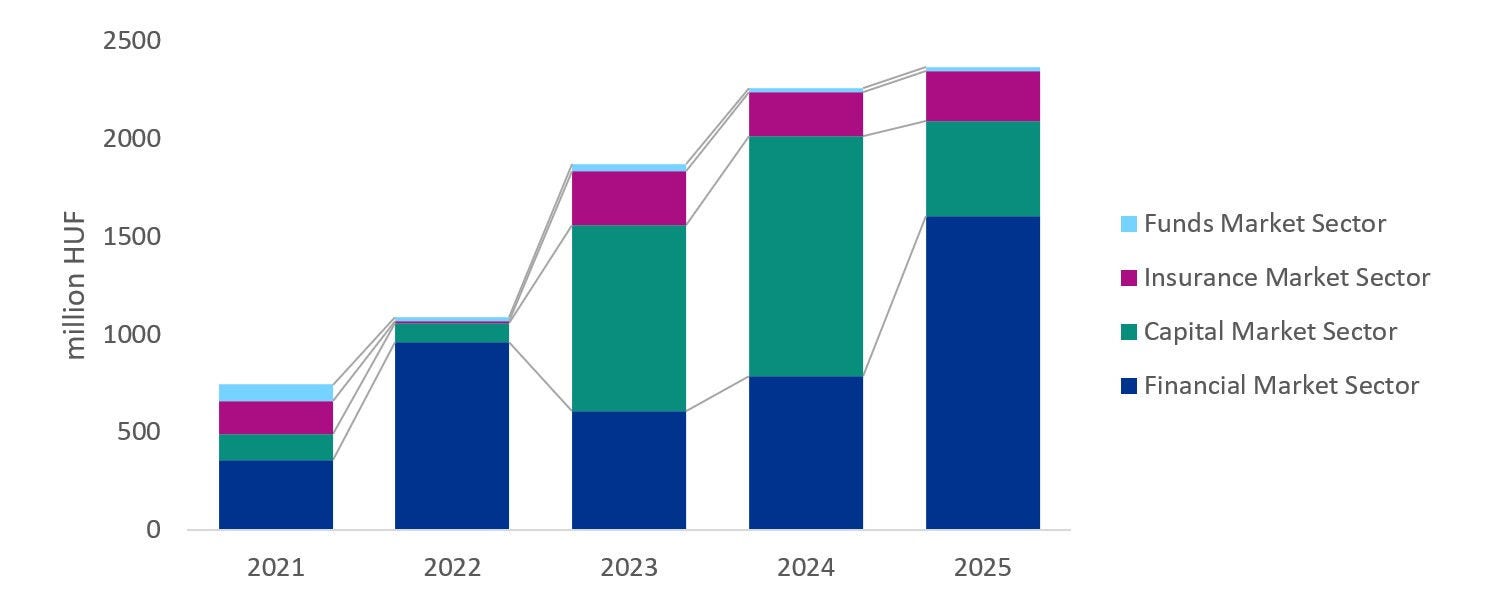
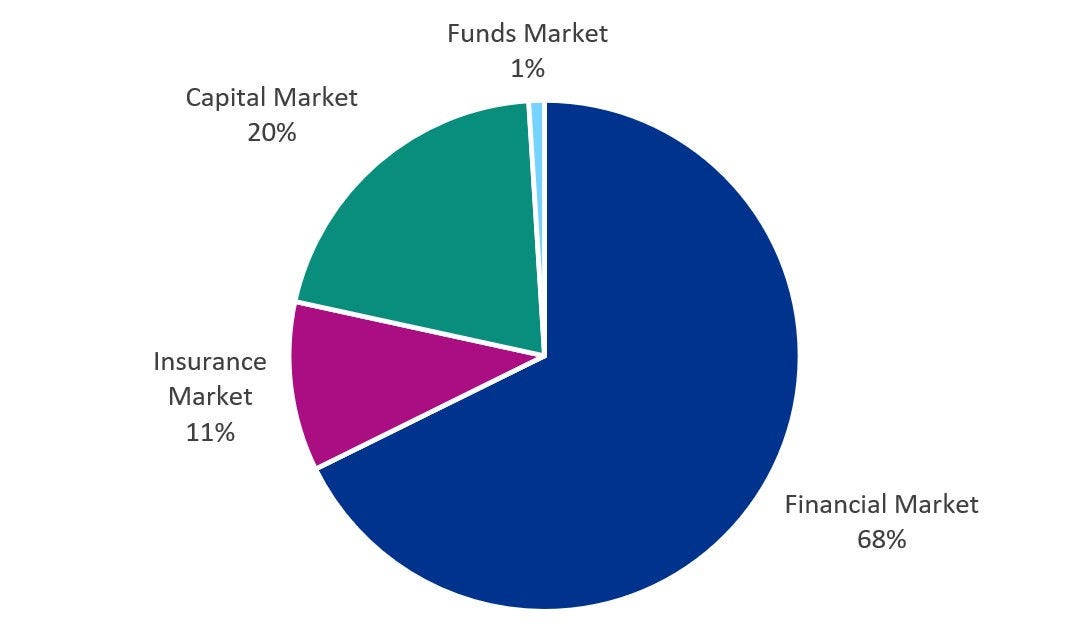
      Figure 1: Distribution of administrative fines measured between 2021 and 2025 based on MNB decisions [1]


      Topic-specific comments


      Taking all four market sectors into account, the MNB has identified several weaknesses in its overall, thematic, targeted and ex-post inspections also in the framework of ongoing supervision. The most common issues were:
       

      • Market manipulation and insider trading: Fines were imposed in several cases in 2025 for violating legal provisions prohibiting market manipulation and insider trading. Regarding market manipulation, similarly to last year, transactions resulting in the generation of turnover and exchange rate manipulation to the most significant extent; orders classified as the initial impulse and transactions resulting in the setting of closing prices were included as established reasons, while in the case of insider trading, the reason was primarily the unauthorized disclosure of inside information.

        The Supervision maintains a continuous focus on preserving the integrity of market trading.
        The prohibition of market manipulation and insider trading remains critical, as the interconnectedness of markets can lead to widespread effects, even across national borders. Supervisory sanctions can directly be imposed to individuals, and the behaviour underlying these decisions can even fall within criminal offence. The Authority's continuous focus on market integrity suggests that it is worthwhile, in some cases mandatory, to apply automated solutions and experts with sufficient expertise in the compliance strategy of financial institutions to protect market integrity, and it is also important to regularly check the correct parameterisation of the solutions.
         
      • Consumer protection: Consumer protection fines typically arise from violation of the pre-contractual customer information obligations, the inadequate fulfilment of the legal requirements for the handling of customer complaints, and the disclosure of the characteristics of certain products. During the supervisory procedures, it was established that some service providers did not provide consumers with the complete and clear information necessary for informed decision-making before the conclusion of the contract, and deficiencies also emerged in relation to the documentation, investigation and timely response of customer complaints. In addition, in several cases, the presentation of the characteristics, risks or conditions of the products offered did not fully comply with the relevant legal requirements. In 2024, the cumulative occurrence of these infringements justified the imposition of significant consumer protection fines on several occasions. All this is of paramount importance because the correct definition and optimal design of the pre-contractual information tasks (preferably in the most digitized form possible) are not only the first steps of defining the customer experience, but also of compliance risk management. In the field of consumer protection, the primary objective of the MNB is to reduce excessive fees, to raise the standard of customer complaint handling practices and to ensure the transparency of the information provided to consumers.

        In 2025, the highest consumer protection fine was HUF 23 million, which was imposed by MNB for a breach of the legal requirements for informing consumers before the conclusion of a contract, for inadequate compliance with the obligation to notify premiums, for deficiencies related to the processing of data classified as insurance secrets, and for non-compliance with the rules on the handling of customer complaints.
         
      • Money laundering and terrorist financing: This area has always been strictly supervised, but the diversity and complexity of anti-money laundering rules also require increasing attention and preparedness, as well as an appropriately sophisticated infrastructure and experts. Accordingly, the Supervision monitors the compliance of market service providers with money laundering and terrorist financing prevention processes and systems with particular rigour. The Authority imposed fines in several cases due to deficiencies related to internal control and information systems, compliance problems related to filtering systems, and IT deficiencies.

        The largest fine imposed by MNB in this area was HUF 41.25 million on a credit institution for applying an inadequate risk-based approach, deficiencies related to key public figures, deficiencies in the management of documentation related to customer due diligence, inadequate screening and reporting practices, and deficiencies in IT support.

        For MNB, the monitoring of the prevention of money laundering and terrorist financing is of paramount importance, as these activities pose a serious risk to the stability and transparency of the financial system and to confidence in the financial markets. Effective internal and supervisory controls designed to monitor them contribute to the detection and prevention of illicit financial transactions and ensure that the operation of financial institutions complies with national and international regulatory requirements. Based on this, it is important for almost all financial institutions to develop appropriate anti-money laundering and counter-terrorist financing processes, to implement the appropriate level of digitization and automation, to consider AI solutions and to regularly review their implemented solutions and processes.
         
      • Unauthorised activities: The Supervision continues to treat this violation with severity. Inspections revealed cases where both natural and legal persons conducted money lending, investment analysis or acceptance of other repayable funds by the public without permission or notification. In connection with these, the Supervision imposed a ban on activities and a market surveillance fine in the case of the acceptance of other repayable funds from the public, in an extremely high amount.
         
      Distribution of fines, trends


      The MNB's annual report for 2025, in which the fines are also summarised, has not yet been published, however, it is clear from the available MNB decisions that in 2025 the majority of the fines concerned credit institution participants, which is due to a penalty of outstanding value (HUF 567 million), which was imposed by the Authority for providing services without a licence.

      This newsletter analyzes decisions published on the Supervision’s website before 31.12.2025. Based on these a total fine of HUF 1 billion 604 million was imposed on the financial market sector, followed by the capital market sector with a total amount of HUF 488 million, then the insurance sector with a lower fine of HUF 254 million, and finally the funds sector with a total amount of HUF 23.5 million.

      Figure 2: Distribution of MNB penalties in 2025 by section[2]


      Sector-specific comments

      Credit institutions and financial corporations
      The Supervision instructed several banks and financial corporations to address identified deficiencies and adjust their processes following inspections.

      In the case of several banks, penalties were imposed for deficiencies in their activities aimed at preventing money laundering and terrorist financing, where customer due diligence and risk management systems were not properly operated, but there were financial institutions where the investigation revealed corporate governance, credit risk and IT security problems.

      The primary fines were imposed on financial institutions for the violation of the obligation to provide information. Additionally, multiple fines of lower amounts were issued for breaches of disclosure obligations.

      Insurance providers
      The Supervision identified deficiencies at several insurers due to the obligations to inform those entitled to the service and the violation of the laws governing complaint handling. In addition, significant fines were imposed in several cases as a result of the regulations related to certain products, as well as the registration, data supply and control systems, insurance brokerage activities carried out without notification, and IT deficiencies.

      Pension funds
      Fines were imposed on several funds in connection with the deficiencies in the provision of data to the Authority, as well as deficiencies related to the membership relationship. As a further organisational irregularity, the Supervision found that the decision-making or the keeping of the minutes of the Board of Directors or the Assembly of Delegates was objectionable. Finally, several funds were sanctioned for deficiencies in IT security requirements.

      Highlighted fines
      In 2025, the MNB imposed exceptionally high fines on credit institutions in two cases due to the extraordinary situation.

      The MNB imposed a fine totalling HUF 567 million on two clients of a credit institution operator, one of them was fined for accepting public funds without authorisation, while the other client was fined for his involvement in this.

      In addition, the MNB prohibited the credit institution operator from providing unlicensed services with immediate effect.


      The other outstanding penalty is a market surveillance fine of HUF 100 million, which was imposed by the MNB on a credit institution for providing loans without a licence.

      The areas becoming increasingly important, such as digitalisation and information security, the strengthening of the fight against fraud and money laundering, as well as consumer protection and legal compliance expectations, are the defining focus of the Authority's audit practice. The data of recent years show that although the trend is for the level of fines to increase, record fines account for an increasing proportion every year (usually in the field of capital market operations and unauthorised activities).

      To avoid fines, it is also advisable to carry out internal (self-) inspections in the regulatory areas that are a priority for the Authority, including the functioning of internal lines of defence, in the periods between comprehensive supervisory inspections. In doing so, it is recommended to examine not only legal requirements but also supervisory recommendations and international good practices. KPMG's international network and experience in domestic financial regulation make us ready to assist financial sector actors in ensuring compliance.


      [1] MNB Query for resolutions. URL: Query Resolutions - WebUI

      [2] 2025 MNB Resolutions URL: Search for Decisions and Orders (mnb.hu)


      Contact us

      Ágnes Rakó

      Partner, Advisory Co-leader

      KPMG in Hungary

      Péter Szalai

      Associate Partner

      KPMG in Hungary

      Gergő Wieder

      Director

      KPMG in Hungary

      Viktória Glózer-Say

      Senior manager

      KPMG in Hungary