
      Key Findings:

      • Focus on Germany: The volume of cross-border acquisitions of German companies by foreign buyers rose by 134 percent from Q3 2025 to Q2 2026, reaching $128.7 billion.
      • Market Outlook: The total number of transactions involving German companies could rise to 3,109 deals by 2028, reaching the peak of the period modeled through 2030. Domestic deals (+22 percent), acquisitions of German companies by foreign buyers (+13 percent), and overseas acquisitions by German companies (+20 percent) are all expected to increase through 2028.
      • Artificial Intelligence: 61 percent expect AI to trigger a new wave of acquisitions and divestitures within the next three years.

      Berlin, November 5, 2026


      German companies are more sought after by international buyers than they have been in a long time: Between Q3 2025 and Q2 2026, the volume of cross-border acquisitions of German companies by foreign buyers rose by 134 percent to $128.7 billion. At the same time, the number of these transactions rose from 897 to 926 deals. A total of 18 of these transactions, with a volume exceeding one billion U.S. dollars, were announced. This is shown in the latest M&A Outlook 2027, for which KPMG, in collaboration with Oxford Economics, surveyed over 200 top decision-makers in the M&A sector. The results underscore Germany’s high appeal to international buyers and its position as the most important destination for international M&A capital within the EU in the first half of 2026.

      Technology and industrial companies, as well as infrastructure assets, were particularly in demand. Among respondents reporting increased M&A activity, technology has gained significantly in importance on both the buyer and seller sides. 
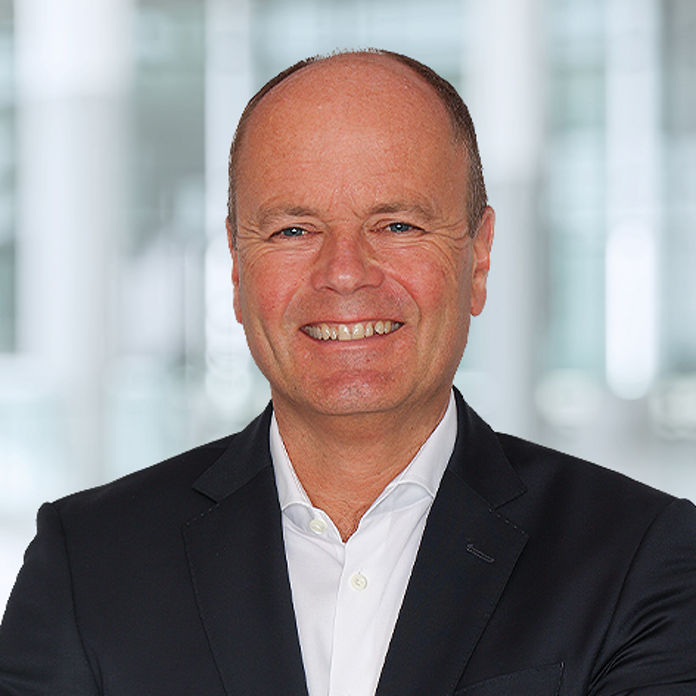

      The next wave of artificial intelligence will not be decided solely in the world’s major technology hubs. Ger-many is also coming into focus for foreign investors. This is because many German companies combine technological expertise, industrial excellence, and high-quality data. It is precisely this mix that is currently in high demand. As a result, German companies are at the top of the shopping list for many U.S. investors. U.S. buyers recently accounted for a total of 175 inbound deals in Germany. In ten of the 18 transactions, each with a volume of more than one billion U.S. dollars, the buyers came from the U.S. Additional momentum is provided by the valuations of German companies — which are attractive by interna-tional standards — and the prospect of extensive public investment in infrastructure and defense.
      Michael Buhl

      Managing Partner, Head of Deals & Performance

      KPMG AG Wirtschaftsprüfungsgesellschaft


      German M&A Market Proves Resilient

      During the period under review, the German M&A market proved to be significantly more resilient than the broader economic environment, even excluding acquisitions by foreign buyers. Domestically, 1,038 transactions were announced — nearly as many as in the same period of the previous year (1,054). At the same time, deal volume rose by 67 percent to $31.7 billion. German companies also resumed investing more heavily abroad. The number of foreign acquisitions rose from 593 to 622 transactions, and the volume increased by 15 percent to $42.9 billion. Overall, the volume of the German M&A market across all segments increased by approximately 83 percent to $203 billion, spread across 2,586 transactions.


      The increase in market volume was concentrated primarily at the high end of the market. Five megadeals, each with a volume of at least 10 billion U.S. dollars, accounted for 41 percent of the total transaction volume. In the same period the previous year, mega-deals accounted for only 14 percent of the market volume. At the same time, the volume of transactions between one and ten billion U.S. dollars rose from 61 to 87 billion U.S. dollars, while the number of smaller transactions remained largely stable. Companies acted as buyers more frequently during the period under review. Financial investors, on the other hand, focused on fewer but larger acquisitions. Nevertheless, they continued to play a defining role, particularly in large transactions: They were involved as buyers or sellers in 17 of the 30 transactions with a volume of more than one billion U.S. dollars.

      Deal activity is expected to peak by 2028

      The model projections from this comprehensive study anticipate an increase in the total number of German M&A transactions from 2,625 deals in 2026 to 3,109 deals in 2028. This represents an 18 percent increase and marks the peak of the market development modeled through 2030. Growth is expected across all market segments: Domestic deals are projected to rise by 22 percent to approximately 1,300 transactions by 2028, while acquisitions of German companies by foreign buyers are expected to increase by 13 percent to 1,039 deals. At the same time, the authors anticipate a 20 percent increase in foreign acquisitions of German companies, reaching 770 transactions.

      Technological Transformation and AI Drive the Market

      Among the key drivers of the expected upswing is the technological transformation of many business models. Artificial intelligence is increasingly becoming a standalone catalyst for transactions. 61 percent of respondents expect AI to trigger a new wave of acquisitions and divestitures within the next three years. 57 percent anticipate that companies will be more likely to acquire the necessary AI capabilities by 2030 rather than build them in-house. 

      Trade policy and geopolitical risks are slowing the upswing

      Trade policy uncertainties currently rank among the most significant geopolitical risks for M&A activity. 65 percent of respondents cite them as one of the three most significant geopolitical factors. This marks a significant shift in the geopolitical risk landscape compared to the previous year. When asked about specific hurdles to completing transactions, buyers primarily cite market uncertainty (67 percent) and high valuation expectations on the part of sellers (58 percent). These figures refer to respondents who did not carry out potential buy-side transactions in 2026.


      Methodology

      For the current M&A Outlook 2027, KPMG and Oxford Economics surveyed a total of 203 M&A decision-makers from corporations, private equity firms, and family offices. This comprehensive analysis was supplemented by market and transaction data from LSEG based on announced transactions for the period from Q3 2025 to Q2 2026, as well as economic model projections from Oxford Economics on the development of the German M&A market through 2030.


      M&A Outlook 2027: Germany attracts international investors

      Why investors are backing German industrial and technology companies, what M&A trends to expect in 2027, and how AI is transforming the deal market.
      Skyscraper

      Press Contact

      Clemens Reisbeck
      Deputy Head of Corporate Communications

      T+49 89 9282 1722
      creisbeck@kpmg.com