      The latest KPMG Location Index shows: More than half of CFOs (52%) currently rate the economic situation of their German subsidiaries as “poor” or “very poor”; 23% plan to reduce their investments in Germany

      • Location Index[1] hits historic low: Index drops to +0.2 points (2017: +3.1; 2023: +1.2); 14 out of 24 factors are rated worse than in 2023; in eleven areas, Germany falls below the EU average.
      • Energy costs, bureaucracy, and digital infrastructure are the weakest location factors in an EU comparison: Around 70% of the surveyed companies rank Germany among the five weakest locations in the EU in all three areas. 43% rank German energy costs as the worst. This factor was surveyed separately for the first time and is the weakest.
      • Investment intentions are deteriorating: 23% of companies plan to cut back (2023: 11%), while 46% expect levels to remain unchanged.

      Berlin, April 22, 2026
       

      CFOs of international companies in Germany are taking a much more critical view of Germany’s competitiveness—at a time when soaring energy prices driven by the war in Iran, trade disputes, the import boom from China, and the strong euro are further intensifying global competition for business locations. This is shown by the KPMG Location Index, a detailed analysis of 24 key location factors, which has fallen to a historic low in a comparison of EU countries.

      At the same time, 52% of CFOs rate the economic situation of their German subsidiaries as “poor” or “very poor.” This is nearly a threefold increase compared to 2023.

      For the “Business Destination Germany” study, KPMG surveyed 400 CFOs of the largest German subsidiaries of international corporations from Germany’s eight most important investor countries. The survey has been published every two years since 2017.


      Our fifth location index documents a tipping point: Germany is not experiencing a temporary economic downturn, but rather a structural problem. The consequences: More and more international investors are critically reviewing their commitments in this country. If policymakers and the business community do not take countermeasures now and promptly implement the promised reforms , international corporations will shift investments, jobs, and value creation to other countries. This would have massive consequences for growth, innovation, and tax revenues.
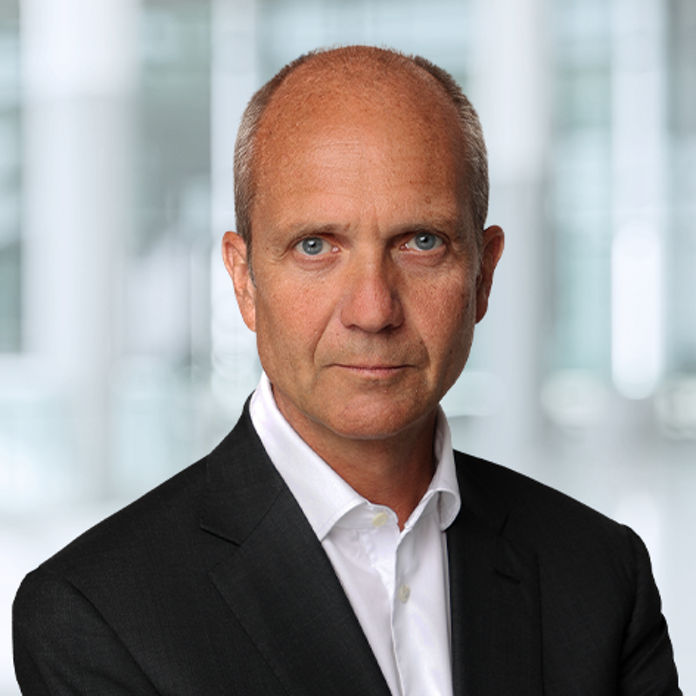
      Andreas Glunz
      Andreas Glunz

      Executive Partner for International Business

      KPMG AG Wirtschaftsprüfungsgesellschaft


      The Location Index shows a steady decline: Since the study’s inaugural edition in 2017, the score has fallen successively from +3.1 points to +2.6 (2019), +2.4 (2021), and +1.2 (2023), ending at +0.2. Germany now ranks only slightly above the EU average.

      “This low score is the result of eight years of creeping erosion of the country’s competitiveness in terms of energy costs, digitalization, regulation, taxes, infrastructure, and skilled labor,” Andreas Glunz (KPMG) further summarizes. “For an increasing number of CFOs at international corporations, Germany is shifting from a preferred location to a location under scrutiny.”

      Economic Conditions and Investment Plans Are Deteriorating

      The sentiment among international companies in Germany has deteriorated significantly. In 2023, nearly one in five (18%) rated the situation of their German subsidiary as “bad” or “very bad” (2021: only 8%). In the current survey, this figure has risen to more than one in two companies (52%). Only 23% still rate their current situation as “good” or “very good.” That is 28 percentage points lower than in 2023 and 43 percentage points lower than in 2021.

      These weaker expectations are reflected in investment plans. Nearly one in four companies (23%) plans to invest less in Germany. That is more than twice as many as two years ago (11%). This trend is particularly pronounced among companies from Southeast Asia: 71% of them plan to scale back their investments. Among investors from Central and Eastern Europe, the share stands at 47%. Of the companies cutting back, 26% plan reductions of more than 30%.

      Although nearly one in three companies (31%) plans to invest more in Germany, 42% of them are aiming for growth of less than 10%.

      Bureaucracy and energy costs are weighing on the business climate

      Bureaucracy is the biggest drawback of the business environment. 70% rank Germany among the five weakest EU countries in terms of regulation, and 29% place it at the very bottom. This figure shows the sharpest decline of all factors. As a result, 32% call for a reduction in bureaucracy, but only 19% expect progress in the next five years.

      The verdict is even harsher when it comes to energy. The security of energy supply at competitive prices was surveyed separately for the first time and ranks last among all 24 criteria. 43% view Germany as the weakest location in the EU, with another 26% ranking it among the five weakest.

      “Short-term relief on electricity prices falls short: Not least, the war in Iran is driving up energy prices and increasing supply uncertainty. At the same time, automation and digitalization are increasing energy demand—making energy costs a key factor in international location decisions. This weakens the location’s appeal,” explains KPMG expert Glunz.

      Infrastructure is increasingly rated poorly

      69% rank digital infrastructure among the five weakest in Europe, with 33% placing it at the bottom. When it comes to physical infrastructure, only 29% still count Germany among the top 5 (2017: 77%, 2023: 44%).

      Taxes remain a disadvantage. 47% rank Germany among the five countries with the highest taxes and the greatest complexity (+12 percentage points compared to 2023), while 19% see the country as the worst.

      Immigration policy is also viewed more critically. Only 24% see Germany as a leader (2023: 44%), while 45% rank it among the five weakest (2023: 17%).

      Where Germany continues to score well

      60% of international companies use Germany as their European headquarters. 63% also manage activities outside Europe from here.

      Institutional factors, in particular, score highly: 66% of international CFOs rank Germany’s public safety among the top five in the EU, and 65% cite its political stability. These are the highest ratings in the entire ranking.

      Germany also remains in the top tier for key market and innovation factors: 57% cite the market’s size and purchasing power, 52% the research landscape, and 54% the innovation-friendly environment and openness to technology.

      51% rank Germany among the top 5 for quality of life and standard of living—significantly fewer than in 2023 (74%).

      “Germany remains a key location for international companies, but investors’ patience is limited. Whether reforms take hold or creeping deindustrialization continues will be decided now,” summarizes Andreas Glunz (KPMG).

      Opportunities for profitable growth from the perspective of international investors

      The federal government’s reform agenda influences the investment decisions of international companies more than current sentiment would suggest. For about one in five international companies (19%), it ranks among the top three reasons for investing in Germany over the next five years.

      17% see opportunities in the country’s major transformation challenges—particularly the energy transition, climate neutrality, digitalization, demographics, and strengthening defense capabilities. Another 17% cite the new infrastructure and defense package as an investment incentive.


      [1] On a scale ranging from +10 (top performer in the EU) to –10 (bottom performer in the EU). A score of zero indicates the EU average for the 27 EU member states.


      About the “Business Destination Germany 2026” study

      For the study, the opinion research institute Appinio, on behalf of KPMG AG Wirtschaftsprüfungsgesellschaft in Germany, surveyed 400 CFOs and commercial directors of the largest German subsidiaries of international corporations online from November 13 to 25, 2025. The respondents represent the eight most important investor countries in Germany: the U.S. (105 participants), Japan (32), China (33), the United Kingdom (32), France (34), the Netherlands (32), Switzerland (34), and Austria (33). Additionally, 65 inbound investors from other countries were included.

      The study is the fifth publication in a biennial series and follows the editions from 2018, 2020, 2022, and 2024. Participants assess the opportunities and challenges of Germany as a business location compared to other European Union countries and provide insights into their investment plans, location preferences, and expectations regarding political and economic conditions.

      Business Destination Germany 2026: Between high pressure to reform and a strong foundation

      Survey confirms tense situation - but future prospects are assessed more positively
      A modern map of Germany

      Media Contact

      KPMG AG Wirtschaftsprüfungsgesellschaft
      Clemens Reisbeck
      T +49 89 9282 1172
      creisbeck@kpmg.com
      www.kpmg.com/de