

- Region continues to gain importance as a sales market for German companies: 29% expect an increase in turnover in the short term, and 63% in the five-year period
Clear nearshoring trend: for 39%, the region will become one of the most important procurement hubs in the longer term
Sustained high investment momentum: 41% plan to invest within the next twelve months, 19% plan to invest more than five million euros
High domestic demand is the most important incentive for investment for more than half (53%)
Ukraine ranks second as an investment destination, behind Poland
Berlin, February 12, 2026
Central and Eastern Europe continues to gain in importance for German companies in their global strategies. This is shown by a recent survey by KPMG and the Committee on Eastern European Economic Relations, for which 115 companies were surveyed about their business expectations in the region. According to the survey, 63% of companies expect the countries of Central and Eastern Europe to make an even greater contribution to their global turnover over the next five years. Almost a third (29%) expect the region to become increasingly important in the current fiscal year.
Central and Eastern Europe is continuing to develop structurally. The region is moving away from its role as a low-cost production base and establishing itself as an integrated production, procurement and sales area. This development is being driven by a population of around 155 million, rising purchasing power, expected economic growth of almost three percent on average in 2026 and ongoing integration into the European single market and the eurozone. Poland in particular is further expanding its importance as an economic anchor in Central and Eastern Europe. The German economy also sees great opportunities in Ukraine, despite the ongoing war.
At the same time, competition is intensifying 16 percent of the surveyed companies report growing competitive pressure from Chinese firms, which are increasingly investing in and exporting to Central and Eastern Europe because of U.S. tariffs.
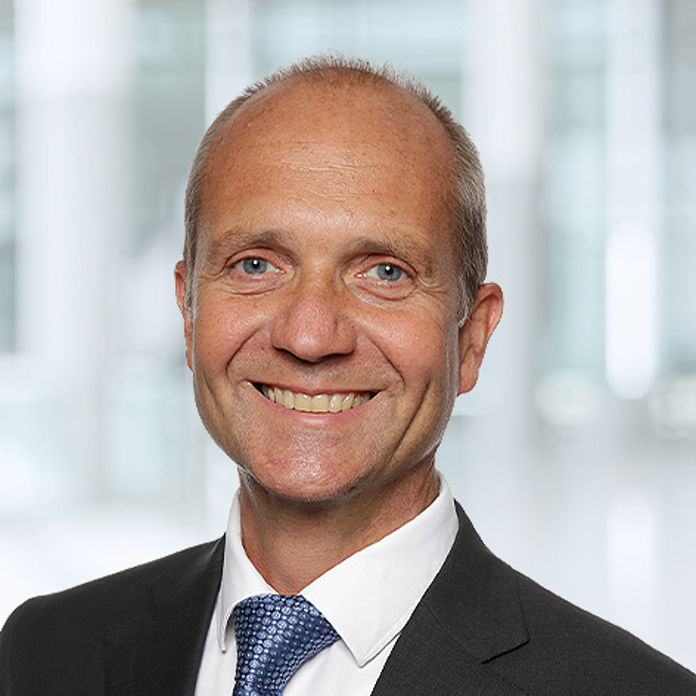
"Central and Eastern Europe has long been more than just a production location for German companies - the region is an anchor of economic stability in Europe," says Michael Harms, Managing Director of the Committee on Eastern European Economic Relations. "Those who invest there today are future-proofing their own business and strengthening European competitiveness. We must now make both the EU and the candidate countries ready for enlargement as quickly as possible. The bigger the single market, the stronger Europe."
More than half of companies plan to create new jobs
German companies rate their current business situation in Central and Eastern Europe as predominantly positive: Almost half (47%) rate it as "good" or "very good", with a further 39% describing it as "stable". Only a small proportion of those surveyed (14%) described the situation as "weak". Three quarters (75%) expect their business development to improve over the next five years; only five percent expect it to deteriorate.
In terms of outlook, the region is clearly gaining in importance in company portfolios. 63% expect the region to account for a higher proportion of their company's turnover over the next five years. Only five percent expect a decline. 61 percent want to create additional jobs and only three percent expect the number of employees to fall.
Strong sales market, but also security risks
Just over half cite the attractive sales market as the most important locational advantage (+13 percentage points compared to the previous year's survey). Low labor costs are also a key argument (38%, +5 percentage points). In contrast, only 28% of respondents cited the availability of labor as an advantage (-9 percentage points).
At the same time, challenges and obstacles remain. A large proportion of respondents (60%) see political and security risks as the biggest disadvantage of the region (compared to 67% in 2025). 47% cite corruption as a challenge (+9 percentage points). More than one in three German companies complain about too much bureaucracy.
For almost half of those surveyed (45%), the Russian war against Ukraine has no impact on their investment decisions in Central and Eastern Europe. US customs policy also has no impact on their regional business for more than half of the companies (53%).
Every fourth company is considering relocating production
Every fourth company involved in the survey (26%) is considering relocating production activities from Germany to the region (25% in 2025), but only four percent have concrete plans for the next twelve months. In contrast, 70 percent rule out relocating production in the short term.
41% of respondents are planning to invest in Central and Eastern Europe within the next twelve months (42% in 2025). Over the next five years, this figure rises to 55 percent. Around a third of these companies (32%) expect project volumes of more than five million euros.
Poland is the top investment destination – almost half are considering investing in Ukraine
Despite the Russian war of aggression, 48% of the companies surveyed are considering investing in Ukraine within the next twelve months. 19 percent are also planning to do so if the war continues. This is eleven percentage points more than in the previous year. 19 percent are already active on the Ukrainian market.
"Despite the ongoing war, Ukraine remains a future market for the German economy. German companies are not investing there for short-term considerations, but because they want to play an active role in shaping the country's long-term reconstruction and economic integration into the European single market," says Michael Harms (Committee on Eastern European Economic Relations).
Poland is also the most attractive investment location in 2026: more than half (56%) of those surveyed want to invest in the country. Ukraine follows with 43 percent. Romania and the Czech Republic are in equal third place with 35% each
In addition to Poland (+11 percentage points), the Czech Republic (+12 percentage points) and Ukraine (+8 percentage points) are the biggest climbers as investment locations compared to the previous year's survey; Serbia (-18 percentage points), Hungary (-16 percentage points) and Romania (-10 percentage points), on the other hand, fall significantly in terms of investment intentions.
About the "German CEE Business Outlook 2026"
KPMG Germany and the Committee on Eastern European Economic Relations surveyed subsidiaries of German companies based in Central and Eastern Europe as well as German companies with business activities in Eastern and Central Europe for the "German CEE Business Outlook 2026". A total of 115 companies took part. The survey was conducted between November 24, 2025 and January 20, 2026 and the questions focused on the economic prospects of German companies in the region as well as their challenges and business opportunities.
About KPMG
KPMG is an organization of independent member firms with more than 275,000 employees in 142 countries and territories. KPMG is also one of the leading audit and advisory firms in Germany, with over 14,500 employees in 28 locations. Our services are divided into the business areas Audit, Tax, Performance & Strategy, Deal Advisory and Consulting.
KPMG in Germany has established Country Practices between Germany and other countries or regions for all relevant business corridors. All Country Practices are staffed by country experts who are familiar with the special features and regulatory environment of these markets, work regularly in these countries and advise German and global multinational companies on their country and corridor-related issues.
About the Committee on Eastern European Economic Relations
The Committee on Eastern European Economic Relations (founded in 1952) promotes the German economy in 29 countries in Central, Eastern and South-Eastern Europe, the South Caucasus and Central Asia. German trade with Eastern Europe accounts for around one fifth of total German foreign trade, making it more important than trade with the USA and China combined. The Committee on Eastern European Economic Relations has around 350 member companies and associations and is supported by five leading German business associations - BDI, BGA, Bankenverband, DIHK and ZDH.
Press Contact
KPMG AG Wirtschaftsprüfungsgesellschaft
Katrin Häbel, Head of Corporate Communications
T +49 69 9587 4228
khaebel@kpmg.com | www.kpmg.com/de
Committee on Eastern European Economic Relations
Christian Himmighoffen, Head of Press and Communications
T +49 30 206167 122
c.himmighoffen@oa-ev.de | Ost-Ausschuss der Deutschen Wirtschaft