

- The Carbon Border Adjustment Mechanism (CBAM) is part of the EU’s climate policy and is designed to prevent the carbon leakage of greenhouse gas emissions to non-EU countries in certain economic sectors.
- The CBAM came into force on 1 October 2023 as part of a transitional phase. Importers of the affected goods into the EU are required to report quarterly on imported goods, CO₂ emissions and CO₂ levies already paid in the countries of origin.
- From 2026, importers must report annually on the volume of goods imported into the EU in the previous year and the corresponding CO2 emissions.
- For the manufacturing industry, which is heavily reliant on the goods in question, this leads to increasing administrative burdens and steadily rising costs.
Key Facts:
CO2 border adjustment: What does it mean for the manufacturing industry?
A new regulation has been in force for certain sectors in the EU since October 2023. In order to provide incentives to reduce CO2 emissions and counteract the risk of greenhouse gas emissions being shifted to non-EU countries, the EU Commission has proposed the so-called Carbon Border Adjustment Mechanism.
If products are imported into the EU accordingly, certificates must be purchased. These correspond to the CO2 price that is incurred for goods that are manufactured in accordance with the EU rules for pricing CO2 emissions. If a non-EU manufacturer can prove that a price has already been paid for the CO2, the importer can claim full credit for the corresponding costs.
The carbon border adjustment mechanism will be introduced gradually and will initially apply only to energy-intensive goods where there is a particularly high risk of carbon leakage. These goods include, amongst others, fertilisers, cement, electricity, hydrogen, as well as iron, steel and aluminium. Furthermore, the scope also covers initial primary products manufactured from these, such as profiles, bars, sheets or screws.
However, as outlined in a proposed amendment by the European Commission from December 2025, the scope of the mechanism is set to be significantly expanded from 2028 onwards. The plan is to include around 180 additional product categories. Products that will be affected in future include, amongst others, engines, pumps, furnace burners, fridge-freezer combinations, oil and fuel filters, cranes, lifts, conveyor belts, industrial robots, washing machines, cables, wires, commercial vehicles, vehicle bodies, and furniture made of aluminium or steel.
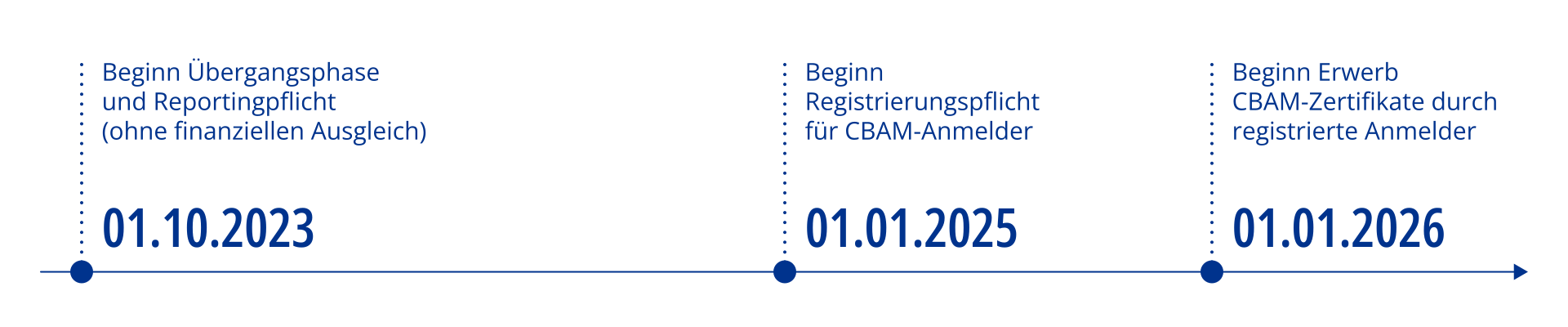
Source: KPMG, Germany, 2023
Creating incentives to reduce emissions
In order to avoid carbon leakage, energy-intensive companies have received free emissions trading certificates as part of the EU Emissions Trading System (ETS). This artificially mitigates CO2 costs and reduces the incentive to relocate to countries with lower CO2 prices. Although the system has proven effective in combating carbon leakage, it also dampens the incentive to invest in environmentally friendly production at home and abroad.
The border adjustment system is to be extended to all sectors subject to EU emissions trading by 2030. With the gradual introduction of the CBAM, the CO2 certificates allocated free of charge will be gradually reduced by the end of 2034. This should prevent emissions-intensive manufacturing activities from being relocated to countries with less stringent emissions regulations and also ensure a level playing field between EU and non-EU manufacturers in terms of CO2 emissions costs.
Although the EU emissions trading scheme and previous environmental legislation have created incentives to reduce CO2 emissions in the EU, these are not enough to stay on the 1.5°Celsius path of the Paris Climate Agreement. This requires even greater incentives, which are now being created by the Green Deal and the resulting legislative initiatives.
Everything you need to know about the CBAM at a click
We explain the CBAM and clear up misconceptions
Who is affected, what reporting obligations apply and to which product groups should the Carbon Border Adjustment Mechanism (CBAM) be applied? There are a number of false assumptions and myths surrounding the new regulation. We clarify and set the record straight.
The CBAM is a trade policy instrument
The CBAM is not an additional climate tariff and should therefore not be reduced to merely another EU trade defence instrument. The EU is not alone in its decarbonisation efforts: key trading partners such as Canada, the UK and Australia are introducing similar carbon pricing systems. To ensure a level playing field, the CBAM recognises carbon taxes already paid on imports into the EU and reduces CBAM costs by the same amount. In addition, a discount on emission allowances to be purchased will be granted in the same amount as the economy benefits from free allowances under the European Emissions Trading Scheme (EU ETS). These provisions are intended to make the CBAM an instrument that makes a significant contribution to decarbonisation.
CO2 pricing regardless of country of origin
The simultaneous abolition of free CO2 allowances within the EU means that companies in the affected industries, regardless of whether they source their raw materials from the EU internal market or third countries, will be confronted with rising costs to the same extent.
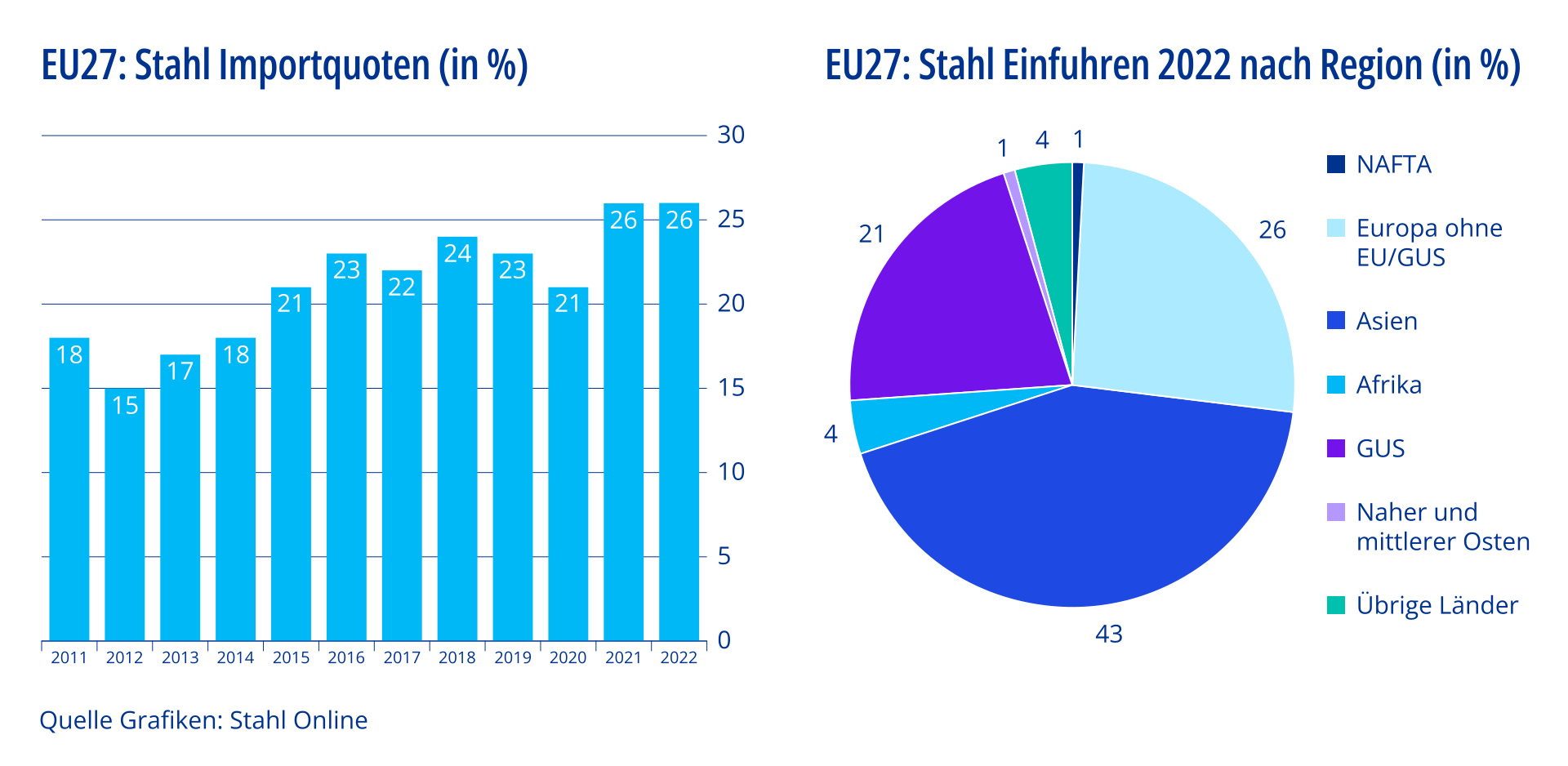
Manufacturing industry at the center of the regulation
The CO2 border adjustment system will initially be applied to emissions generated during the production of iron, steel, aluminium, cement, electricity, fertilizers and hydrogen. Raw materials that are used to a particularly high degree in the manufacturing industry. Individual downstream products and preliminary products are also covered.
The steel industry alone is responsible for 30 percent of industrial emissions in Germany. The abolition of free certificates and the introduction of full pricing for greenhouse gas emissions will significantly increase costs.
More bureaucracy, higher costs: there is a need for action
Reducing CO2 emissions from energy-intensive industries is a key element in achieving the European climate protection targets. In order to drive forward technology investments in a timely manner and avoid the threat of relocation trends, the pricing of CO2 emissions will be an indispensable control element in the future. Companies that rely on one of the raw materials affected by CBAM for their production should already be preparing for rising prices and the establishment of new reporting structures.
CBAM: How to implement it in four steps
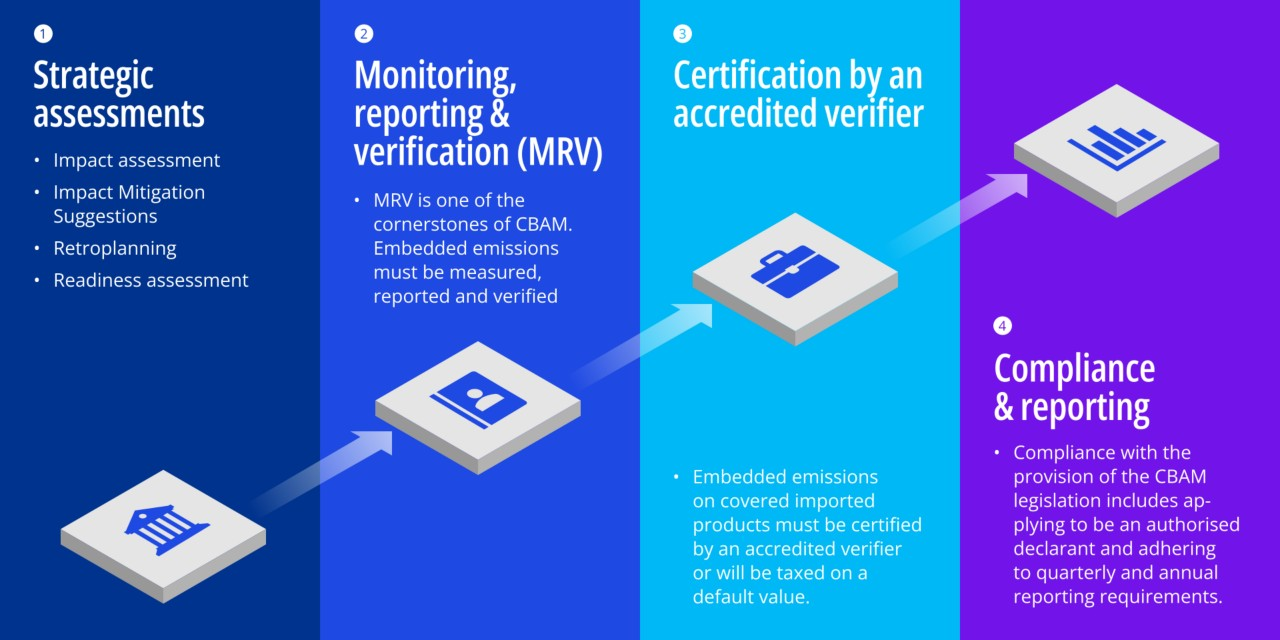
Quelle: KPMG, Deutschland, 2023
More KPMG insights for you

Your contact
