
      The Digital Product Passport (DPP) is a tool for the systematic collection, processing and transfer of product-related information throughout the entire product life cycle, from development to recycling. Among other things, it contains key data such as material composition, carbon footprint, reparability and disposal instructions.

      The DPP is a core element of the new EU Ecodesign for Sustainable Products Regulation (ESPR). The pending delegated acts define the exact scope of application for each product group. Once published, companies will have 18 months to implement the DPP.

      The introduction will initially apply to prioritised product groups such as textiles, tyres, furniture and mattresses, as well as intermediate products made of aluminium, iron and steel. In addition, horizontal requirements are to be created that will apply to several product groups yet to be defined in more detail. These relate in particular to the issues of repairability, recycled content and recyclability of electrical and electronic equipment.
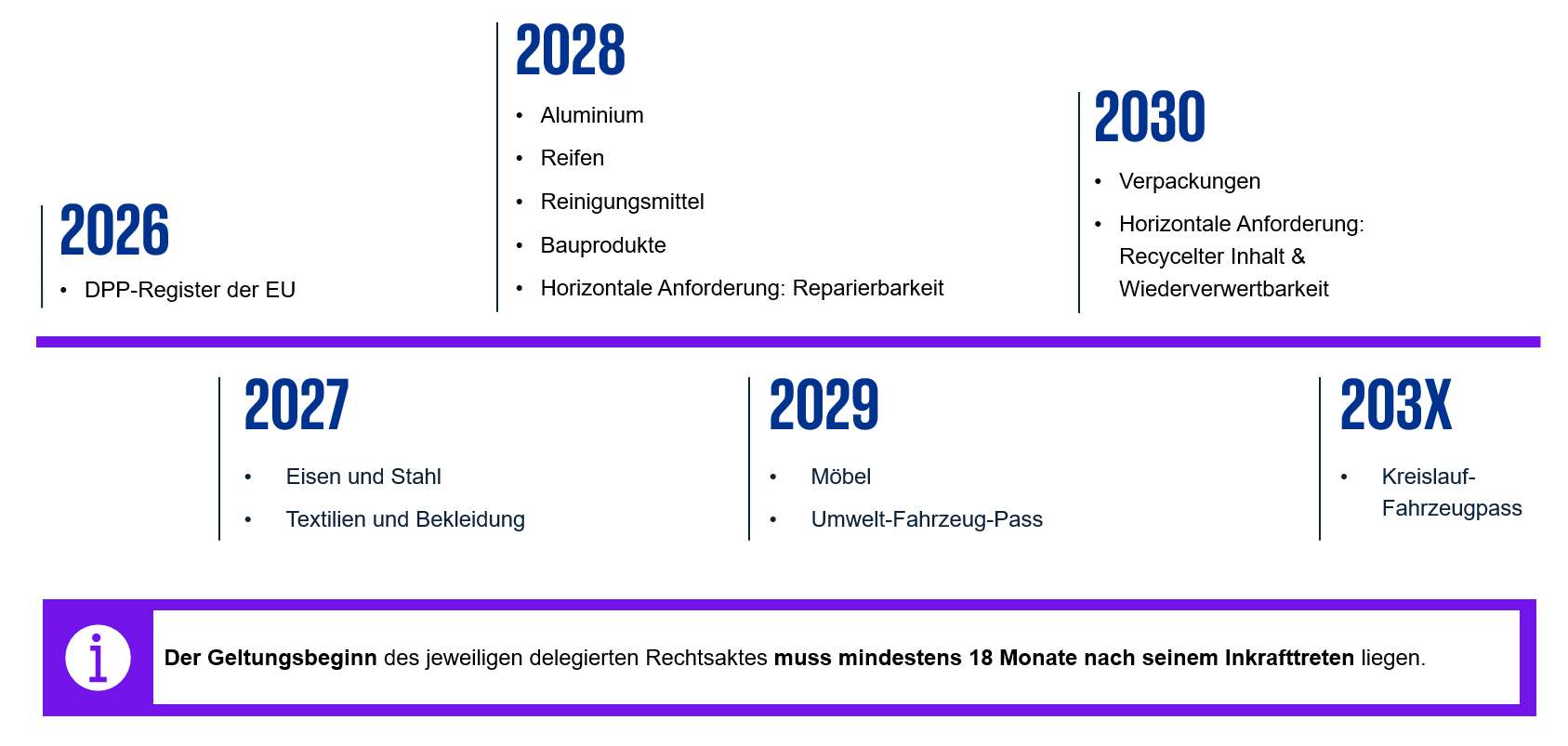
      Schedule for entry into force of delegated acts under the ESPR

      Digitaler Produktpass - Zeitplan 2026
      cast

      Thursday, 5 March 2026, 10:00 a.m. – 11:30 a.m.


      From regulatory requirement to strategic added value

      Companies that take action early on secure clear advantages:

      • Personalised recommendations and additional offers: Digital product information enables companies to offer interactive content such as application tips, maintenance instructions or supplementary product recommendations. This increases customer satisfaction and opens up new sales opportunities. 
      • Accessible presentation: Multilingualism and accessible formats, for example for people with visual impairments, improve user-friendliness and expand the target group.
      • Optimisation of internal processes: Structured product information enables companies to make their processes more efficient. For example, manual enquiries, time-consuming data searches and the request and transmission of individual documents are no longer necessary, which reduces complexity and saves time and money.
      • Reduction in physical labelling: Fewer physical labels or accompanying documents mean lower material, printing and logistics costs, as well as a more sustainable solution. Digital product information replaces paper-based processes and simplifies administration.
      • Strengthening the brand promise: The DPP enables sustainability promises to be verified, strengthening the trust of customers and business partners. 
      • Certificate monitoring: Companies can manage certificates centrally and monitor their validity. This reduces risks during audits and increases legal certainty. 
      • Comparability of sustainability information: Transparent presentation of product data creates differentiation in the market and strengthens brand positioning in an increasingly environmentally conscious environment.
      • Efficient recalls: The DPP enables fast and accurate notification in the event of recalls at batch level. Companies can identify affected products in a targeted manner and proactively inform customers. This reduces costs, minimises damage to reputation and increases customer safety.
      • More transparent information on ingredients: Detailed information on materials and ingredients, including potentially critical components such as allergens or chemicals, increases product safety, reduces risks for consumers and supports compliance with legal requirements.
      • Brand protection: Reducing product counterfeiting strengthens brand integrity.

      Future security through transparency

      The digital product passport is more than just a regulatory requirement – it is a driver of innovation for sustainable business models. Companies that act now will gain competitive advantages through trust, efficiency and sustainability – and secure their place in a circular, digital economy in the long term.

      We recommend that affected companies take the following steps:

      1. Conduct a product analysis

      Identify the products affected by the DPP and review product-specific requirements.

      2. Create a data inventory and gap analysis

      Record existing product data in existing systems and identify missing information.

      3. Plan and implement IT adjustments

      Adjust ERP, PIM and e-commerce systems to integrate the DPP.

      4. Evaluate added value potential

      Analyse the opportunities offered by the DPP for customer experience, brand loyalty and market differentiation.

      Reach out to us

      Now is the time to start analysing the data and setting up the necessary structures. We are happy to help you with the preparations.

      1. Involvement of relevant departments: We support you in coordinating purchasing, production, sales, data management and compliance, as well as in providing management information.

      2. Readiness check & gap analysis: We help you evaluate the current data status and identify gaps in your processes and IT systems.

      3. Strategy & integration: With our expertise, we support you in developing a roadmap, establishing data governance and integrating the DPP into existing processes.

      4. Tools & traceability: We advise you on the selection and implementation of suitable technical solutions for managing product data and ensuring traceability.

      Further insights

      Your contacts