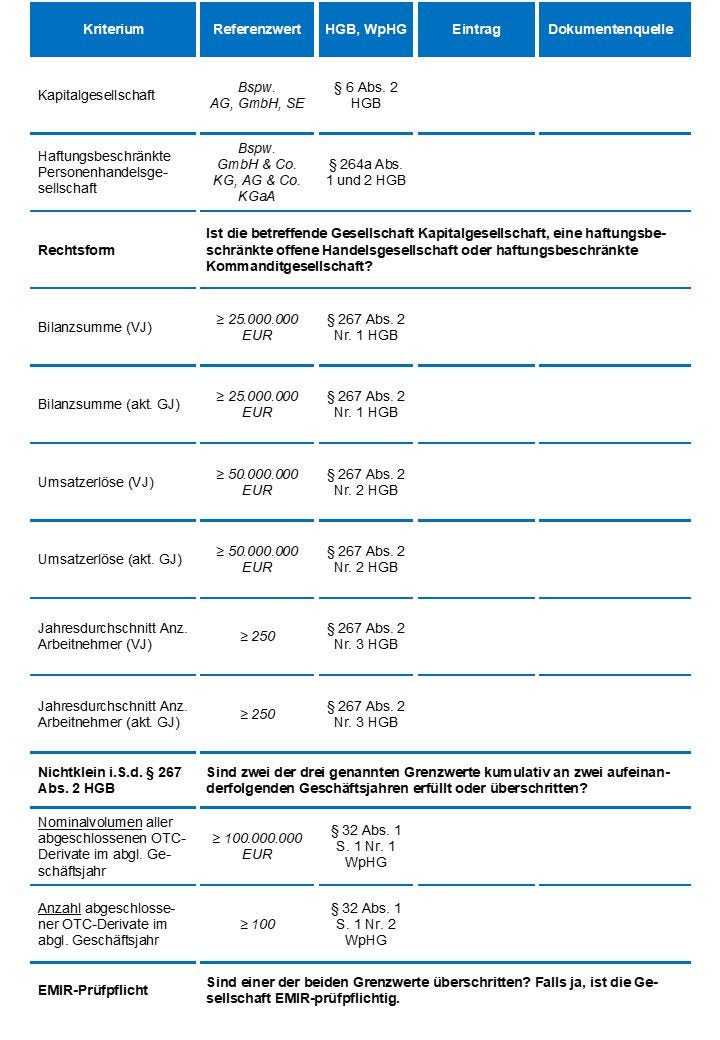
31 December is approaching and the three-month commissioning and nine-month implementation period for the independent audit of the EMIR compliance system begins for companies with a financial year on the same calendar.
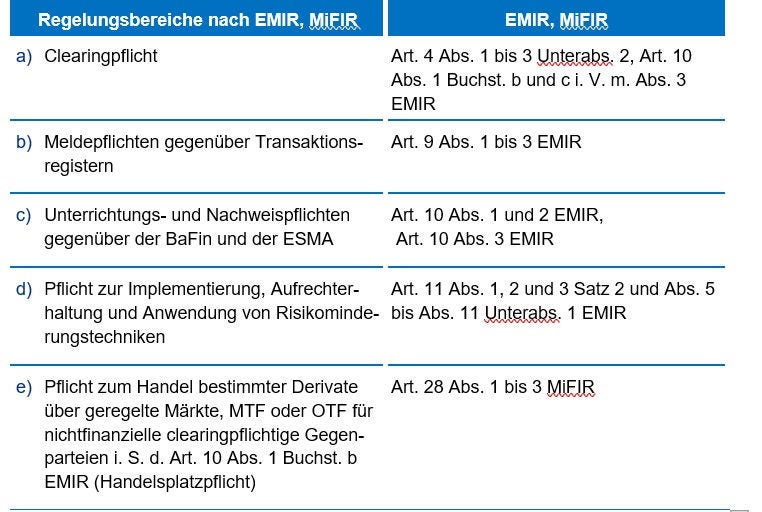
Such an EMIR compliance system must be set up as soon as over-the-counter (OTC) derivative contracts are concluded in the past financial year. The obligation is not limited exclusively to financial companies (such as credit institutions), but also includes non-financial companies (such as industrial companies).
► The obligation to set up an EMIR compliance system results from EU Regulation 648/2012 of 4 July 2012, which was adopted by the European Parliament and Council in response to the 2008 financial market crisis. The aim of this regulation is to increase the transparency of the unregulated OTC derivatives market and limit potential default risks.
The use of over-the-counter derivative contracts, on the other hand, is by no means exotic in Risk management, but rather serves to hedge interest rate and foreign currency risks as well as commodity price risks resulting from the company's activities. If a company enters into an OTC derivatives transaction, an EMIR compliance system must always be implemented.