Private equity is increasingly becoming a key driver of transformation, growth and succession planning in the SME sector. This is demonstrated in our publication “Private Equity and Family Businesses in DACH”.

      Compared with previous years, the importance of such partnerships has increased significantly, with a growing share of private equity in the M&A market as well as corresponding collaborations between family businesses and private equity investors. 

      Opportunities for synergy between family businesses and private equity investors

      Capital


      (Operational) Value Creation


      Risk sharing


      Expertise


      Governance


      Succession planning

      Family businesses are increasingly facing challenges posed by digitalisation, geopolitics, regulation and succession. In this environment, partnerships with private equity investors help to overcome such hurdles, offering more than just the provision of capital. 

      Download the report now

      picture_as_pdf

      Studie

      Private equity and family businesses in Germany, Austria and Switzerland

      Structures, trends and opportunities in the current market environment

      Please fill in the form below to receive the KPMG publication:


      How private equity is accelerating internationalisation and transformation

      Private equity investors provide particular support in the areas of internationalisation, operational development and the implementation of transformation programmes. Furthermore, it is evident that companies with private equity backing grow faster on average than comparable companies without such an investor.

      The German market in particular offers considerable untapped potential for cooperation between family businesses and PE investors – both in terms of investment volume and potential transactions arising from upcoming succession planning.

      The significance of private equity for family businesses extends beyond individual transactions. Partnerships generate liquidity that is reinvested in private capital strategies via family offices. This creates a cycle in which family capital plays an increasingly important role – not only for private equity, but also for other private capital sectors such as private credit, infrastructure, energy or real estate.

      Our analysis is based on market data, transaction evaluations and a comparative analysis of companies with and without private equity involvement. This is supplemented by selected practical examples and assessments from experts.

      Key findings

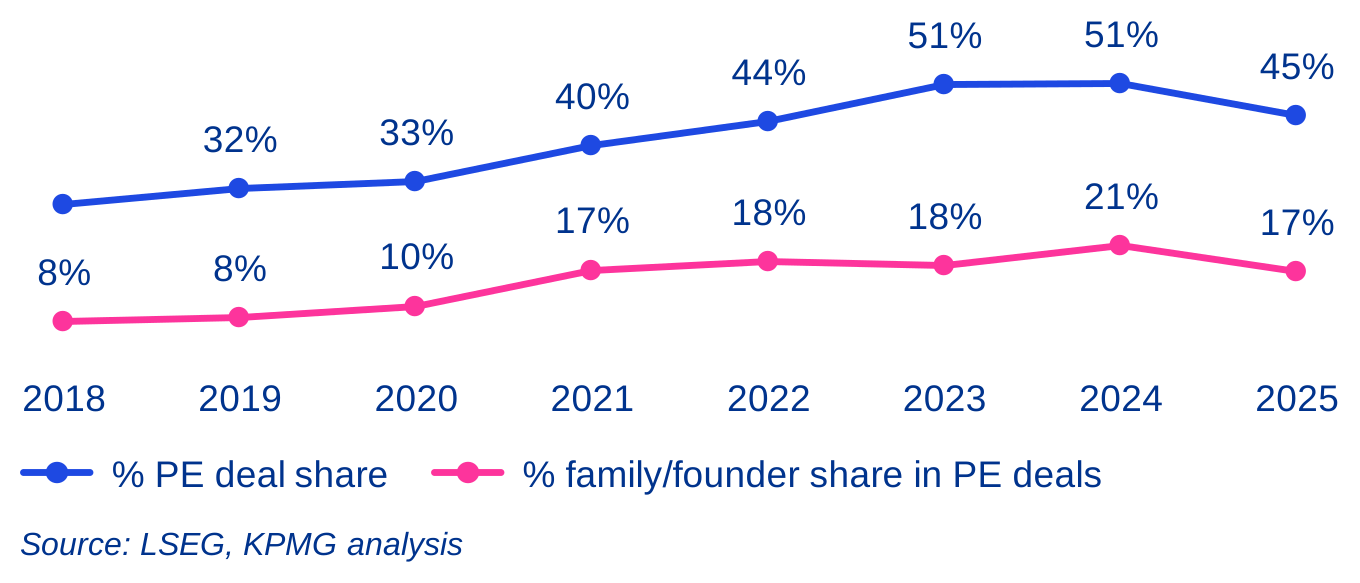
      In 2025, private equity investors accounted for 45 per cent of M&A transactions in the DACH region, with 17 per cent of these resulting from partnerships between family businesses and private equity firms – compared with 29 per cent and 8 per cent respectively in 2018.

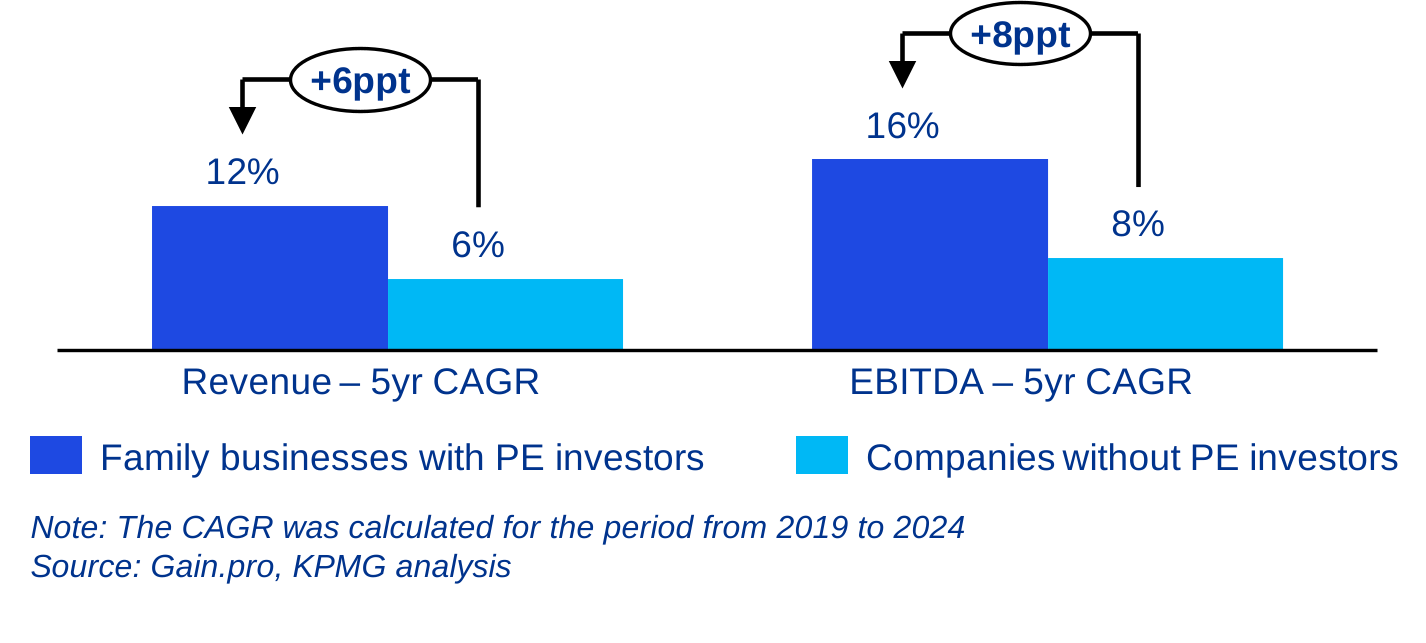
      Family-owned businesses with private equity backing grow twice as fast in terms of turnover and EBITDA compared with similar companies without private equity investors, with a lead of 6 and 8 percentage points respectively each year.

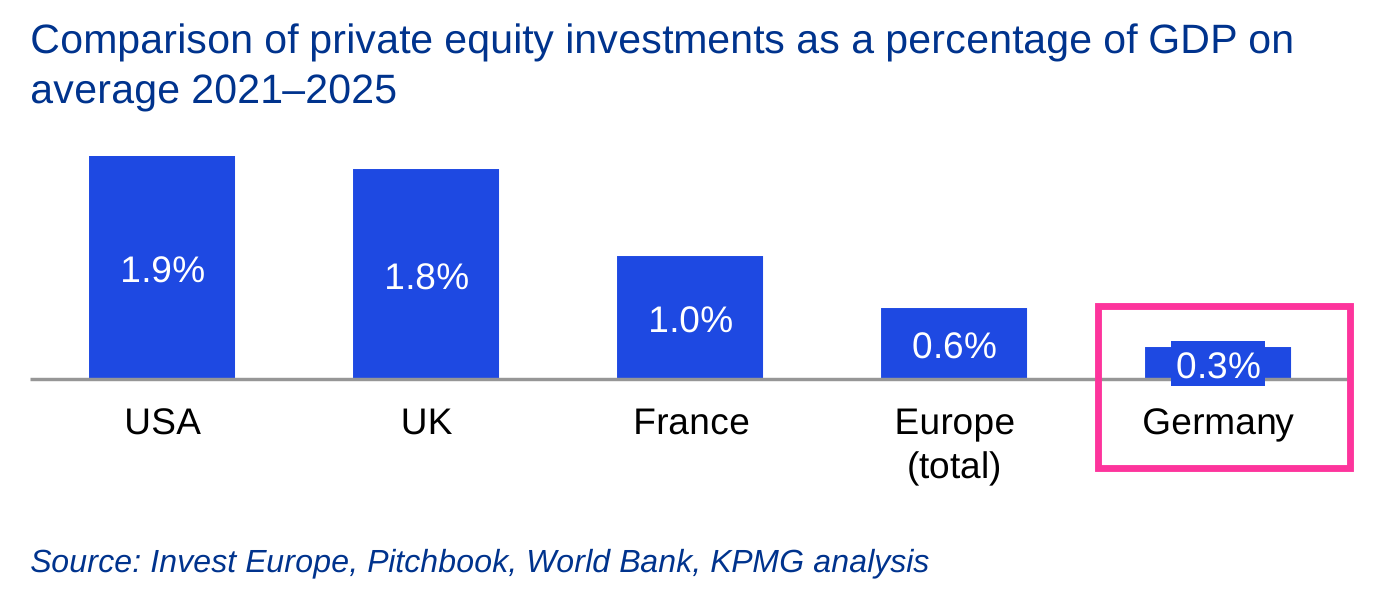
      Private equity investment accounts for just 0.3 per cent of GDP – internationally, the figure is significantly higher, at 1.9 per cent in the US, 1.8 per cent in the UK and 0.6 per cent across Europe as a whole.

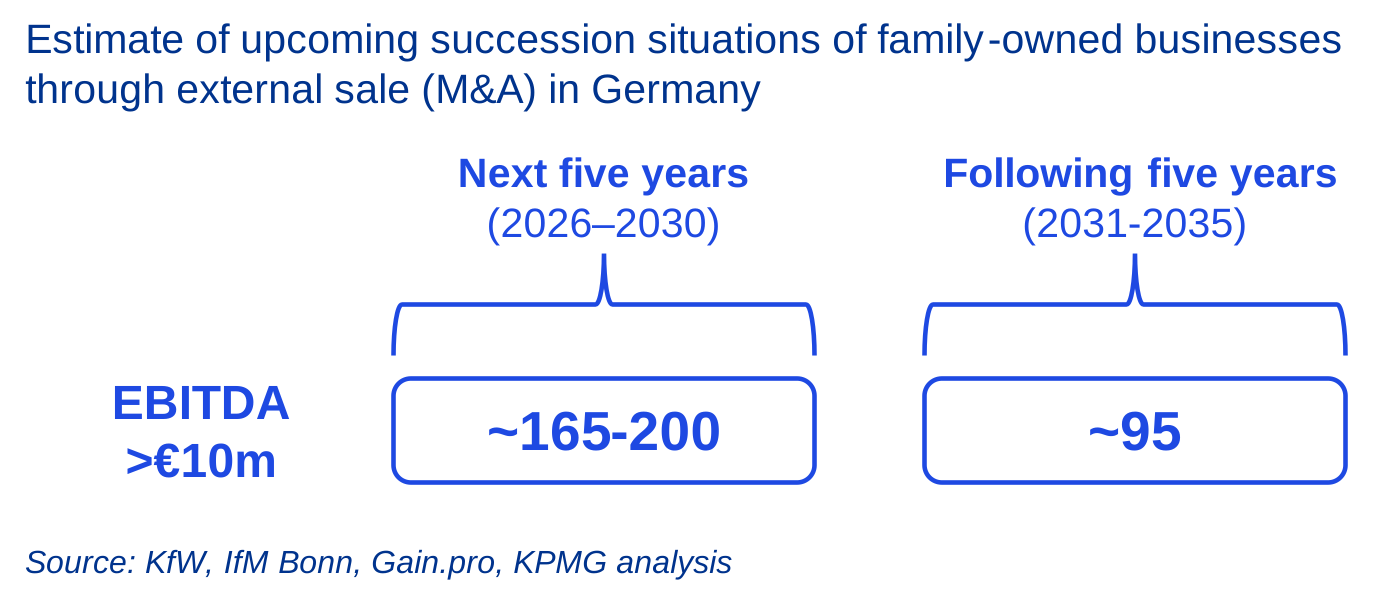
      Over the next ten years, between 260 and 295 business sales by family-owned companies to external parties are expected, each with an EBITDA of at least ten million euros.

      Your contact

      Tilman Ost

      Partner, Deal Advisory, Private Equity, Global Private Equity Advisory Leader

      KPMG AG Wirtschaftsprüfungsgesellschaft