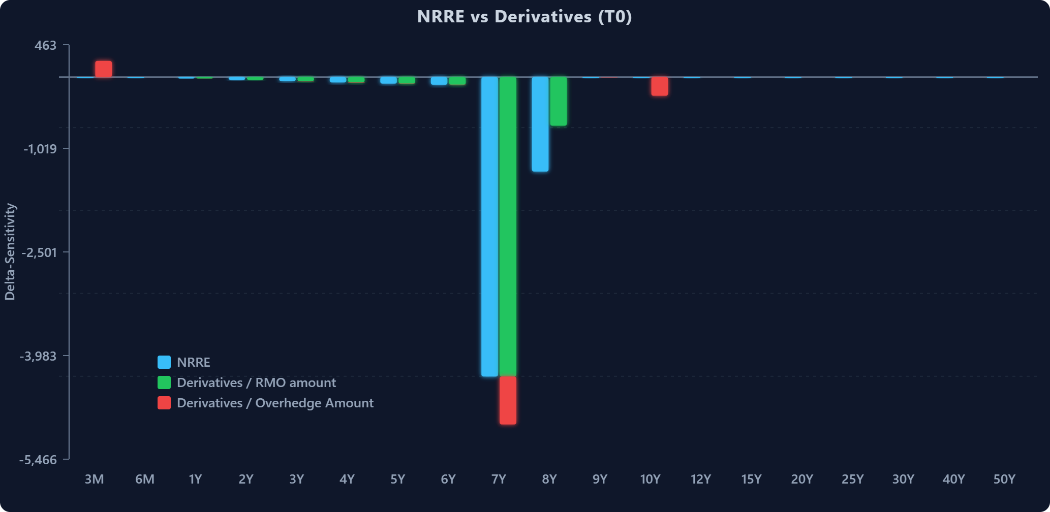
On 3 December 2025, the IASB published the long-awaited exposure draft for Risk Mitigation Accounting (RMA) - which had previously been announced and discussed under the name Dynamic Risk Management (DRM).

      This future framework for the accounting treatment of (interest rate) risk management (successor to IAS 39 Portfolio Fair Value Hedges) will fundamentally change the interlinking of treasury, risk controlling and accounting and has numerous implications. Our experts prepare companies holistically for the complex tasks involved.

      What is risk mitigation accounting?

      RMA addresses the gap that has existed for years between economic overall bank interest rate management using interest rate derivatives as portfolio hedges and their recognition in the balance sheet in accordance with IFRS.

      In the future, it will replace IAS 39 Portfolio Hedge Accounting, which is currently still used in many places as an interim solution, and will therefore primarily affect numerous banks and possibly also insurance companies.

      The core idea of the RMA is to make the dynamic risk management of open net risk positions visible in accounting, also taking into account certain model books. This is intended to eliminate the current weaknesses of existing hedge accounting approaches - including the assumption of rigid hedge relationships and a gross view - in the long term.

      Basic functionality of the RMA

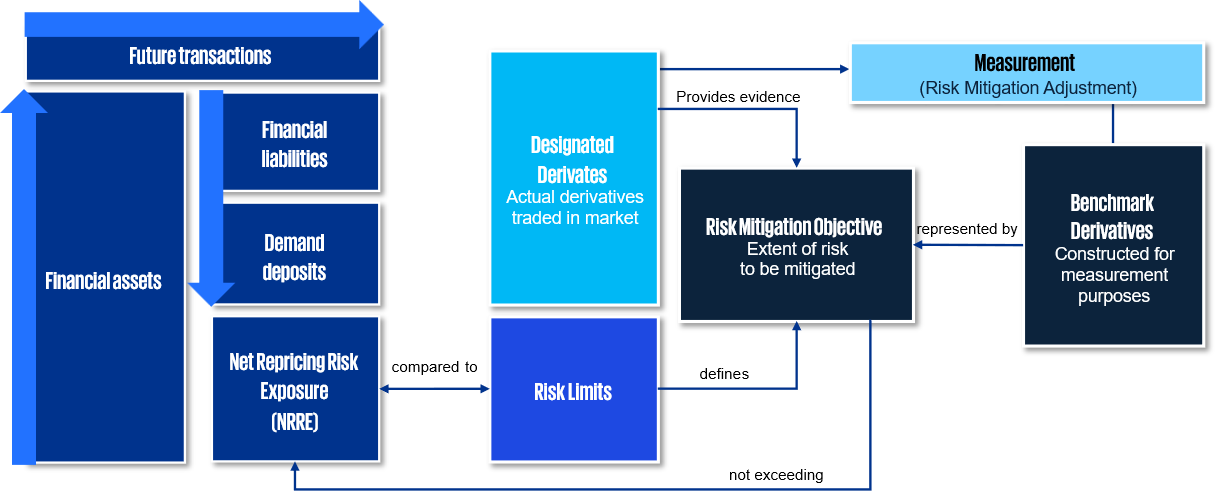
      After identifying the open interest rate risk position on a reporting date (net repricing risk exposure) and the target risk profile (risk mitigation objective), synthetic "perfect hedges" (benchmark derivatives) are created at the beginning of the period in line with the limits from the risk management strategy (risk limits) and compared with the actual designated derivatives.

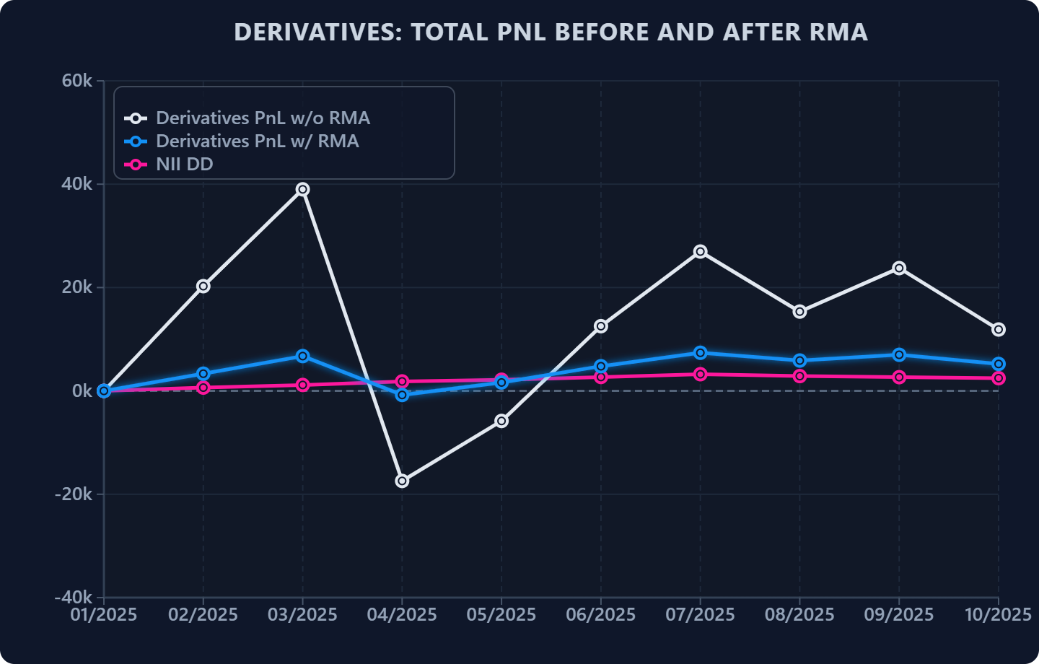
      By comparing the derivative performance between designated and benchmark derivatives at the end of the period using the "lowerof" mechanism, RMA adjustments are determined in such a way that matches are neutralised in the income statement and deviations remain in the income statement. The benchmark derivatives are adjusted to unforeseen changes in the net repricing risk exposure (analogous to actual risk management).

      In addition, accrued interest (NII) from the derivatives is recognised or neutralised on an accrual basis, so that both fair value effects and interest components are taken into account. With RMA, portfolio NII hedges now also appear to be generally recognisable in hedge accounting.


      RMA-Regelwerk

      The close interlinking of treasury, risk controlling and accounting gives rise to new challenges and dependencies, such as a possible discontinuation of the hedging relationship in the event of (significant) changes to the risk management strategy.

      The RMA timeline: When the final standard is expected

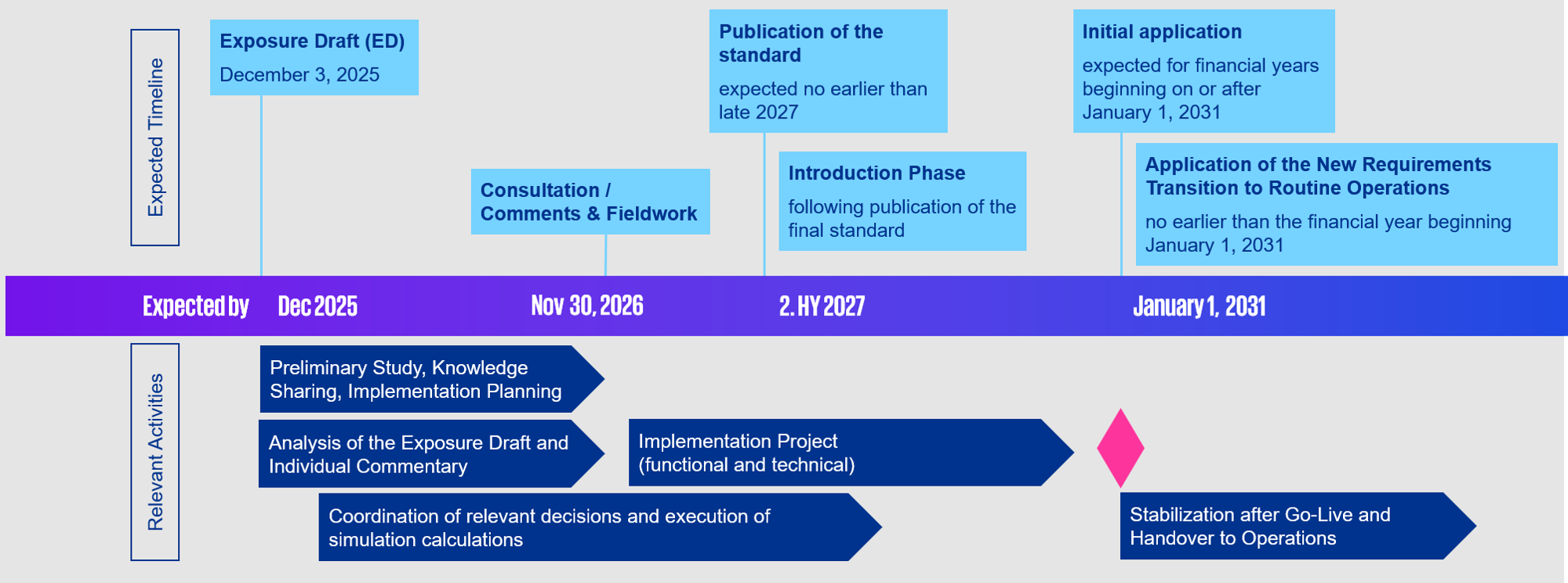
      The Exposure Draft (ED) will be published in December 2025, with an expected consultation period of 240 days (until July 2026). The final standard after evaluation of the consultation is expected in 2027.

      RMA Zeitstrahl


      Three-phase plan until 2030

      • Enablement: RMA basics, model effects on NII/EVE, requirements for risk management strategy/target profile
      • Gap analysis: comparison of relevant, current hedge processes (risk/treasury/accounting) with the requirements of the exposure draft; identification of quick wins/no-regrets
      • Target Operating Model (TOM): roles, processes, data/IT target architecture, decision log
      • Quantification: initial simulation calculations (CNOP, construction of benchmark derivatives, RMA adjustment, NII effects)
      • Co-design and risk reduction: utilisation of the opportunity for individual feedback in the consultation process
      • Adaptation of current processes, data structures, tools, policies and documentation to the final standard
      • Coordination of the new hedge accounting processes with the risk management strategy (focus on limits, strategic position, definition of the risk management intention, handling of internal hedges and external derivatives in a possible IRT desk (internal risk transfer) in the trading book, among other things)
      • Detailing the methodology (buckets, limits, creation of a benchmark for derivatives, capacity and alignment tests), data models, booking and disclosure logic
      • Prototypes and process tests as well as parallel calculations
      • Simulate effects on balance sheet risks / volatility and IRRBB earnings
      • First-time adjustment of the normative ICAAP in the 3-year view 2028/29/30
      • Establishment of the overall process for the RMA (front-to-ledger), automation, controls, test runs
      • Initial application for financial years from 1 January 2030 (expected)
      • Stabilisation and ongoing optimisation in line operations
      • Successive mapping in planning and long-term net interest income simulations
      • Successive adjustment of risk measurement metrics (e.g. IRRBB earnings for derivatives portfolio)

      IFRS Risk Mitigation Accounting: What do banks and insurance companies need to do now?  

      Due to the considerable scope and the necessary interlinking of treasury, risk controlling and accounting, it is advisable to derive a target picture - including the simulation of quantitative effects - at an early stage.

      How we support you in the implementation of IFRS Risk Mitigation Accounting

      Our experts use tried-and-tested approaches to efficiently integrate complex requirements into existing systems and processes. We support you from the functional design in accounting, risk and treasury to the technical implementation and automation of processes.

      Proven process model and preliminary study: We offer a structured phase model from enablement, gap analysis and TOM workshops through to customised simulation of the RMA model. We have already conducted initial preliminary studies at banks on the basis of previous staff papers - you benefit from concrete findings.

      End-to-end expertise: As consultants in accounting, risk and treasury, we combine IFRS design (RMA mechanics, booking logic, disclosure) with risk management/IRRBB, treasury processes as well as data and IT implementation - including market practices for CNOP and the target profile and for mapping behavioural models and hedging strategies.

      Talk to our risk mitigation accounting experts now

      Our experts will be happy to talk to you and present our solutions. We look forward to hearing from you.


      Price risks

      for commodities hedge accounting
      Segel

      Your contacts