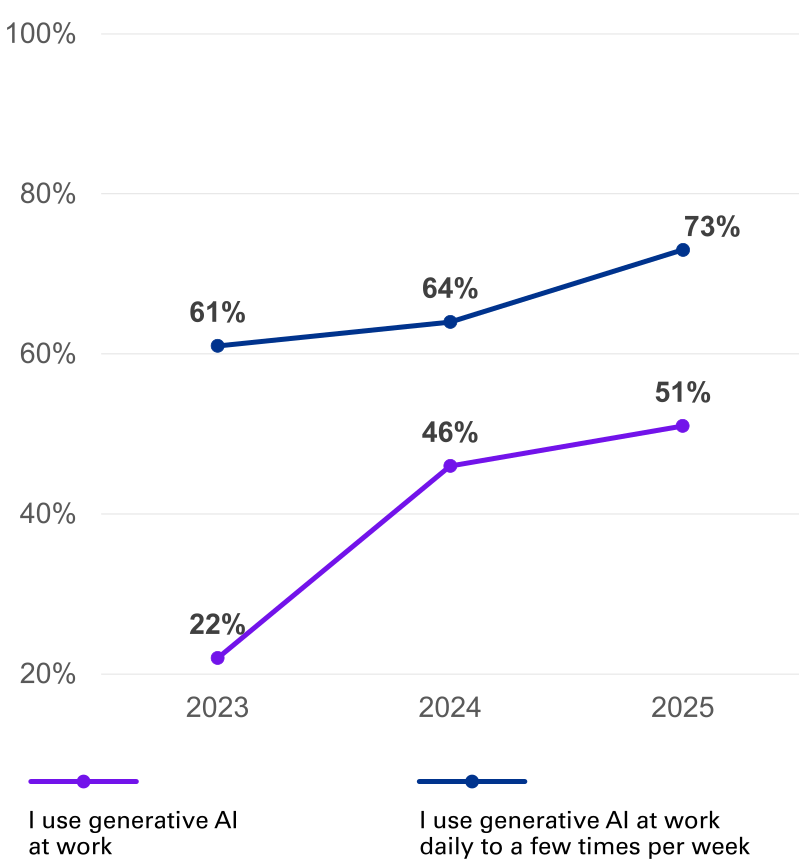
As Canada’s workforce continues to embrace generative artificial intelligence (AI), many employees feel their organization’s training and policies are lacking. New research from KPMG in Canada finds that generative AI adoption has risen to 51 per cent, up from 46 per cent a year earlier. Yet, as employees are expected to integrate AI into daily work, they’re demanding better training and clearer policies from their workplace.
Now in its third year, KPMG’s generative AI adoption index survey shows that while adoption continues to rise each year, the pace of growth has slowed in 2025 compared to 2024. Megan Jones, a partner in the People and Change practice at KPMG in Canada, says this slowdown could be due to growing pains within organizations as their AI journey evolves from experimentation to more concrete integration. Many employees still lack a clear understanding of how to use the technology effectively in their roles.
“Employees were using AI in their personal lives and were often ahead of their companies to begin with but now, employers are catching up and need to more broadly engage their workforce to drive adoption,” says Ms. Jones. “It’s crucial that organizations are investing in tailored training programs, clearly communicating their AI policies and offering their people upskilling opportunities so their workforce is equipped with the confidence to integrate AI into their day-to-day tasks. Without this, employees can feel overwhelmed or unsure where to begin, which makes them less likely to use these tools and also risks disengagement from the broader digital transformation.”
Indeed, survey findings show that employees also recognize the importance of improving their AI literacy with 83 per cent saying they want and/or need to learn how to use generative AI tools more effectively as nearly half say they fear job loss if they can’t keep up with AI advancements. Yet only 48 per cent say the training their employer has provided has been helpful.
Nearly three-quarters appear to be facing technology overload with 36 per cent saying they received training but have not started using the tools because they are too busy to implement new work processes. A further 37 per cent admitted that they started using AI after being trained but stopped because it was too overwhelming.
“It’s encouraging to see how eager employees are to use AI but it’s apparent they are scared of losing their jobs, overwhelmed by the pace of change and feel underprepared for what's ahead. If this continues, organizations risk losing the productivity gains AI is meant to provide,” says Ms. Jones.
“Our survey shows most employees are concerned about hallucinations or inaccuracies in generative AI responses with nearly half admitting this stops them from using the tools at work. Regular AI literacy programs can clear up confusion and teach best practices, helping people feel more confident about using AI. Organizations should focus on emphasizing that AI is not a shortcut and instead is here to enhance roles by enabling people to work smarter, deliver higher-quality outcomes and unlock creativity."