
      • Belgiums lowered reliance on gas-fired generation means wholesale electricity prices are less closely tied to gas, leaving the economy less exposed to higher and more volatile energy costs.
      • Unemployment remains low by historical standards, pointing to a relatively tight labour market. This may support wage growth and provide a buffer to household incomes, helping sustain consumer spending despite rising costs.

      Belgian GDP growth is expected to slow slightly to 0.9% in 2026, down from 1% in 2025, as pressures from a new energy price shock push up inflation, weigh on spending and leads to potential further tightening by the Bank of England, according to KPMG’s latest European Economic Outlook.

        Belgium’s growth rate is similar to the Eurozone’s average with Eurozone GDP forecast to grow by 0.9% in 2026 and 1.2% in 2027.

        Europe is facing a renewed externally driven energy shock following disruption to the Strait of Hormuz, with higher energy prices and supply chain pressures expected to weigh on growth and push inflation higher across the continent.

        Despite this backdrop, KPMG expects most European economies to avoid recession, with resilient labour markets and continued consumer spending helping support domestic demand through the remainder of the year.
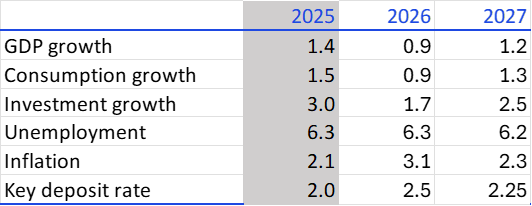
        Table 1: Summary of KPMG’s latest forecasts for the Eurozone economy

        Source: KPMG projections using Oxford Economics' Global Economic Model. GDP, consumer spending and investment are all measured in real terms. Average % change on previous calendar year except for unemployment rate, which is average annual rate, while interest rate represents level at the end of calendar year. Investment represents Gross Fixed Capital Formation. Inflation is measured as HICP.

        Yael Selfin Chief Economist at KPMG UK, said: “Belgium and Europe are once again confronting a major energy-related shock, but the nature of this crisis differs materially from the start of the 2022. Direct gas exposure is lower than during the Russia-Ukraine energy crisis, reducing the risk of physical shortages. However, the broader impact on global commodities and supply chains means the economic effects could prove more widespread.”

        Broader commodity disruption creates new supply chain risks

        The outlook across Europe remains highly dependent on the duration and severity of the disruption. A relatively quick reopening of the Strait later this summer could limit broader economic damage.

        Elevated transportation costs and higher input costs including fertilizers could continue to feed through into inflation into 2027, keeping inflation potentially higher for longer. Disruptions to other commodities such as aluminium and helium are already feeding into industrial supply chains, creating additional pressures for sectors including automotive manufacturing, semiconductors and defence production.

        Potential constraints in jet fuel supply also pose downside risks to Europe’s tourism sector during the peak summer season. Tourism-dependent economies such as Croatia, Portugal and Greece could be particularly exposed should travel disruptions or weaker booking demand persist.

        Yael added: “The breadth of the commodities affected makes this shock potentially more pervasive than the one experienced in 2022. Supply chain disruption now extends well beyond energy itself, affecting industrial and agriculture production as well as tourism activity across Europe.”

        Inflation expected to rise again across Europe

        Eurozone inflation is forecast to average 3.1% in 2026, driven primarily by rising energy prices and transportation costs. Fuel prices have already increased sharply since the onset of the conflict, with indirect price pressures expected to broaden the inflationary impact beyond energy components over the coming months.

        The inflationary effects are likely to vary considerably across countries depending on energy exposure and electricity market structures. Economies more reliant on gas, including Italy and Ireland, may experience stronger inflationary pressures, while countries such as Spain and Switzerland are expected to see more limited pass-through effects due to lower dependence on gas.

        Consumer spending to remain key driver of growth

        Despite the renewed squeeze on household purchasing power, consumer spending is still expected to remain the primary driver of European growth.

        Although rising energy prices are weighing on real incomes and consumer confidence has deteriorated sharply, labour markets across much of Europe remain resilient by historical standards. Continued resilience in some European labour markets is expected to help cushion the impact on household spending.

        European central banks face difficult balancing act

        The European Central Bank is expected to adopt a more hawkish stance, with policymakers signalling that interest rate increases could begin as early as June should inflationary pressures persist.

        The Bank of England may follow a similar path, with a first hike as early as July. Despite a weaker labour market, the risk of a resurgence in domestic price pressures in the UK is still high.

        European Economic Outlook May 2026

        European Economic Outlook - May 2026

        In our latest European Economic Outlook, we consider the potential implications of continued conflict in the Middle East on growth, inflation and interest rates, and the exposure to a more prolonged conflict.

        About KPMG in Belgium

        With over 2000 employees across the country, KPMG in Belgium offers your company personalized and multidisciplinary support in audit, accountancy, tax and legal advice. We also support a wide range of management services: from operational efficiency and cost management, to digital transformations, risk management and deal advice. Our local consultants will support you thanks to their knowledge and through the use of innovative tools to help you face each of your challenges.


        Press contact

        Audee Van Winkel

        PR Manager

        T: +32 473 32 73 44
        E : avanwinkel@kpmg.com