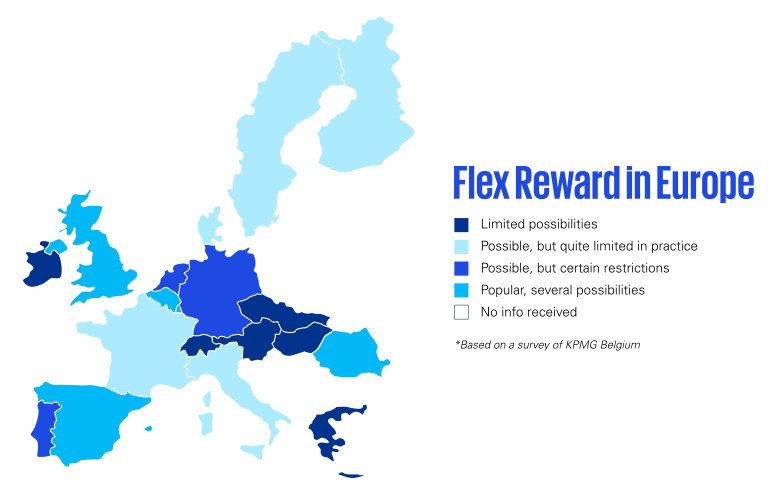
A flexible remuneration plan or cafeteria plan offers employees the opportunity to make choices concerning their remuneration package, within the framework set by their employer. Although there is no single definition of a ‘cafeteria plan,’ the general idea is that employees with a budget (often part of their current remuneration package) can make choices that suit them better.
A classic example of a cafeteria plan is the bicycle lease that an employer can make available. An employer will not usually offer a bicycle lease to everyone. This is partly because it would result in a considerable additional cost and partly because not everyone is interested in a leased bicycle. A bicycle lease is also only feasible as an employment condition for a limited number of employees, due to the condition of regular commuting as a requirement for the (para)fiscal exemption.
In such situations, a cafeteria plan can offer a solution. In this case, the employer offers employees the option of exchanging a certain existing budget (such as the end-of-year bonus or, if applicable, the car budget if the employee has chosen a cheaper company car than the one to which they are entitled) for a bicycle lease. This has several advantages:
- It remains budget-neutral for the employer (the wage cost remains the same because the employee only exchanges part of their existing wage package for something else);
- it allows the employer to encourage the use of alternative (green) mobility;
- the employee can choose whether or not to take the bike lease; and
- the employee optimizes their salary package by aligning it more closely with their personal needs. In many cases, the employee can also use the budget in a more tax-efficient way than if they had to make the purchase privately.
A cafeteria plan is therefore a win-win for all parties.