Ambitious industry decarbonization targets foster a wide range of sustainable hydrogen applications
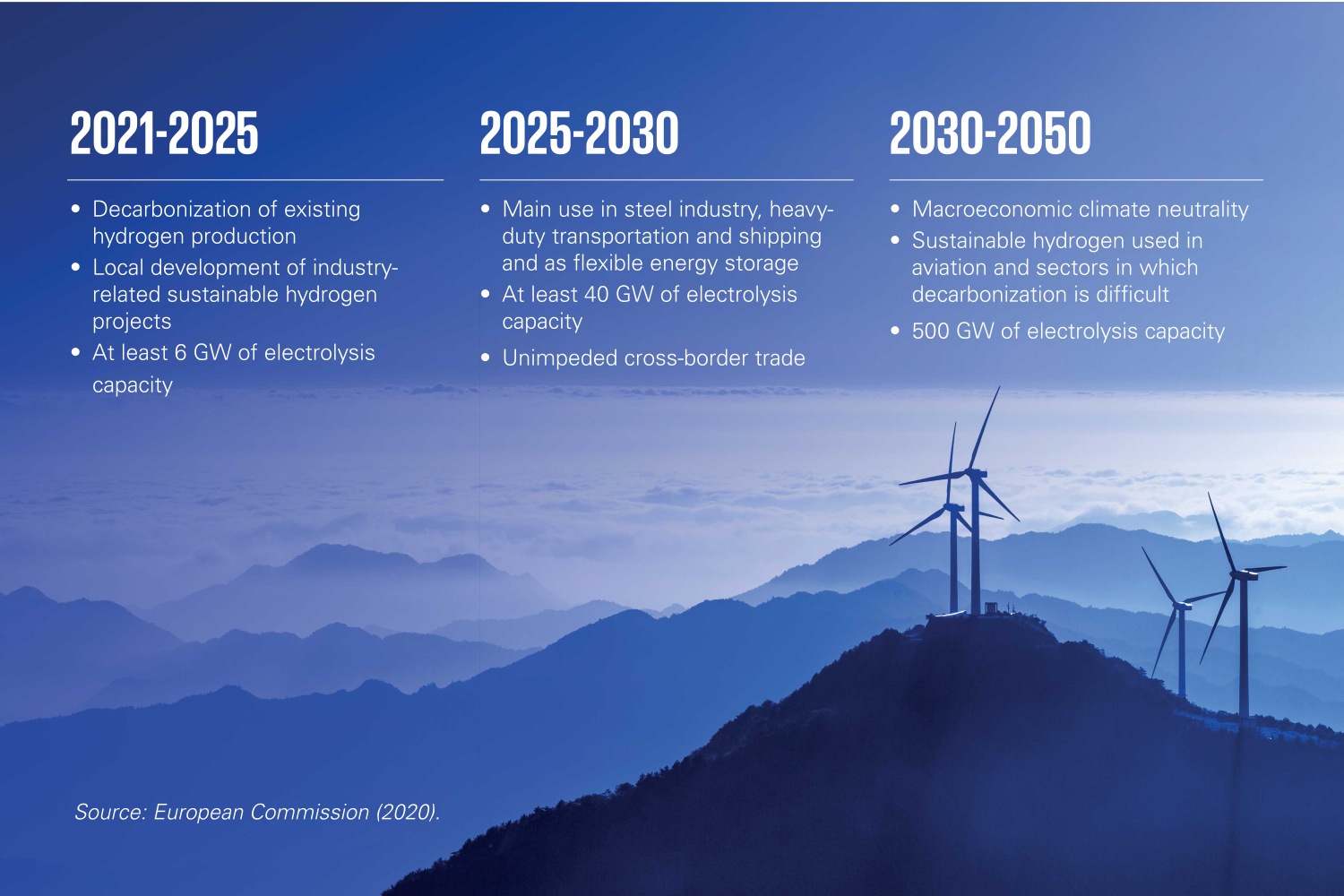
The European Union has defined concrete targets for ramping up the European sustainable hydrogen market up to 2050. However, there is still significant uncertainty about the actual future demand for sustainable hydrogen.
2021-2025
As a first step, the decarbonization of existing hydrogen production will be realized by 2025 by producing carbon-free and low hydrogen via steam methane reforming (SMR) or Autothermal Reforming (ATR) combined with carbon capture and storage technologies and electrolysis. The EU aims for 6 GW of installed electrolysis capacity by 2025, producing up to 1 Mt of sustainable hydrogen when operated 24 hours a day and 365 days per year with renewable electricity.
2025-2030
In a second step, the EU targets 40 GW of installed electrolysis capacity in member countries, producing 10 Mt of sustainable hydrogen, and an additional 40 GW in European non-EU countries and North Africa. In parallel, a hydrogen pipeline network across Europe may allow unimpeded cross-border trade and connect industrial clusters in Northern Europe with wind and solar energy-rich regions in Southern and Eastern Europe and North Africa.
With carbon-free hydrogen reaching cost competitiveness (compared to conventional hydrogen) in this phase, the main fields of application are displacing existing grey hydrogen demand and use in steel production and heavy-duty parts for train and maritime transportation. Furthermore, sustainable hydrogen is expected to become increasingly crucial as a long-term energy storage option, in power grid balancing and industrial, and in residential heating applications likely to be focused in regions within proximity of industrial chubs.
2030-2050
To achieve climate neutrality, the EU considers 500 GW of installed electrolysis capacity to be required by 2050. All previously-mentioned applications will become mature in this phase, and large-scale sustainable hydrogen production and cost competitiveness are expected to enable the decarbonization of hard-to-decarbonize industries and buildings. Furthermore, the sustainable hydrogen-based economy will allow synthetic fuels based on carbon-neutral CO2 to penetrate a broader range of sectors, especially aviation and maritime applications. To add to that, import of hydrogen is going to be important to fulfill all demand. Partnerships with energy export regions such as the middle east will be key.