

This global study explores how organizations are using AI to drive sustainability and where action must accelerate. It draws on insights from over 1,200 executives across twenty markets, spanning energy producers (utilities, renewables, infrastructure developers) and major energy consumers (hyperscalers, data center operators, and technology firms), all of whom play a critical role in shaping global energy solutions.
AI is not a threat to climate progress; it is likely the greatest accelerator of it

Core themes:
- AI is expanding its climate handprint, powering adaptation solutions, enabling greater energy efficiency, biodiversity protection, and circular innovation.
- System-wide transformation: AI is enabling real progress on sustainability across value chains, from manufacturing and transport to agriculture and buildings, and helping to create positive value for companies who are addressing their climate risk exposures.
- Progress is uneven particularly due to challenges in scaling clean energy solutions globally. Infrastructure bottlenecks, policy delays, and financing barriers risk slowing down momentum. The next 24 months, through 2027, will be decisive in closing this gap.
- Market pull for innovation: AI is growing fast and creating new markets for advanced clean technologies, reducing commercialization cycles from decades to years.

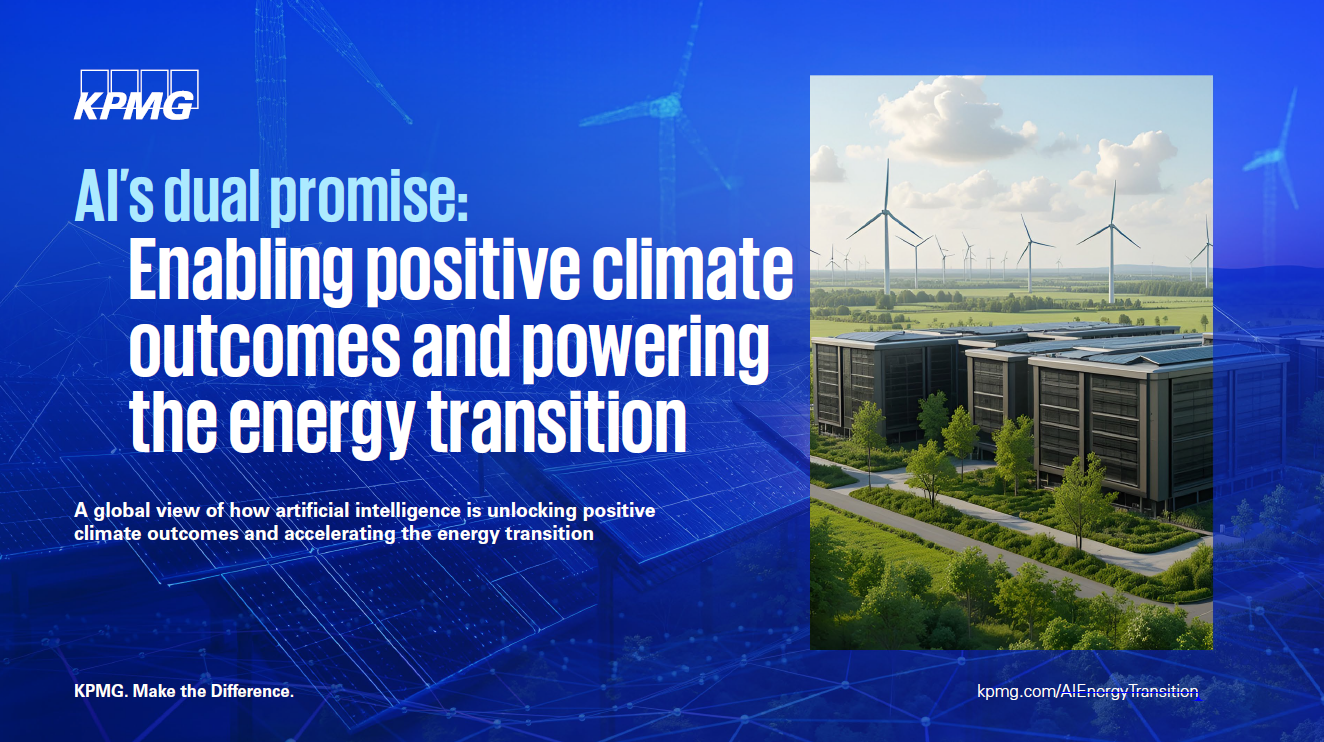
AI's dual promise: Enabling positive climate outcomes and powering the energy transition
The key question is whether your AI strategy is accelerating your climate goals or undermining them?
Revelations from our research call for immediate attention
This report speaks directly to the key stakeholder groups (Hyperscalers, Utilities, Developers, Investors and Governments) who stand at the crossroads of AI acceleration and climate responsibility. Each faces a different version of the same challenge: how to advance AI without undermining sustainability and how to use sustainability as a competitive advantage.
