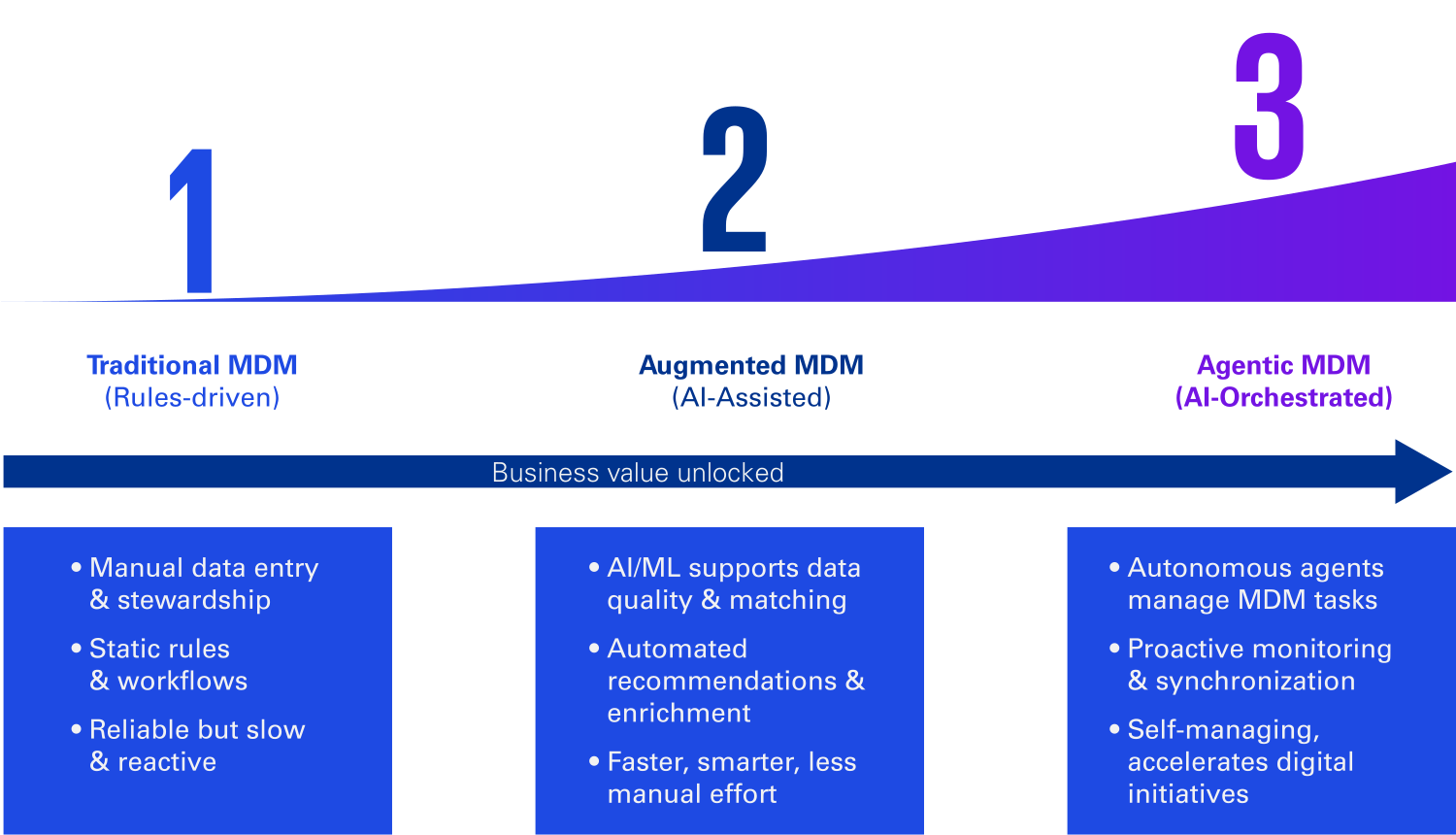
Business value isn’t driven by dashboards, it’s driven by confident decisions, powered by trusted master data. Yet in many organizations, Master Data Management (MDM) still relies on manual stewardship, static rules, and siloed workflows - reliable, but slow, reactive, and costly. The result? Inconsistent data, frustrated users, and missed opportunities.
AI changes that equation. It shifts MDM from clean-up mode to confidence mode, from bottlenecks to business speed. Today, Augmented AI is already helping organizations improve data quality, accelerate processes, and reduce manual effort. And just beyond that horizon lies the next evolution: Agentic AI -autonomous systems that assist and orchestrate data quality, governance, and synchronization in real time. Is your organization ready for that shift?
Seven low-barrier ways to start using AI in MDM today
The good news is you don’t need a full-scale transformation to start seeing value. Many organizations hesitate to adopt AI because they fear complexity, disruption, regulation, or unclear ROI. But the truth is, you can begin with small, low-risk steps that deliver quick wins and build momentum.
For example, take a Copilot chat agent that helps users determine the correct commodity or HS code based on a technical data sheet or product description (of course with human overview). It’s a simple tool, but it saves hours of manual classification, reduces errors, increases consistency, and supports compliance - all without changing your existing systems.
Below are seven pragmatic, low-barrier ways to embed AI into your MDM practices, each designed to improve data quality, reduce manual effort, and enhance user experience without overhauling your current setup.
1. AI-POWERED DUPLICATE DETECTION
Machine learning models can identify near-duplicate records across domains like customer, vendor, or material, even when naming conventions differ. Unlike rule-based matching, AI improves over time by learning from patterns.
- Eliminate redundant records and cut manual cleanup significantly.
2. SMART DATA ENTRY SUGGESTIONS
AI can suggest values during data entry based on historical patterns - for example, auto-filling product categories or vendor types. This reduces errors and accelerates onboarding.
- Improve consistency and reduce training needs for business users.
3. AI-ASSISTED CLASSIFICATION
Building on the idea of smart suggestions, AI can also support more complex classification tasks interpreting product descriptions, technical specifications, or documentation and assigning standardized codes or categories. This reduces manual effort, improves consistency, and supports regulatory compliance.
- Automate classification, reduce errors, and ensure compliance in regulatory reporting.
4. NATURAL LANGUAGE SEARCH IN DATA CATALOGS
AI-driven search allows users to ask questions like “What’s the definition of a global vendor?” or “Who owns customer master data in Germany?” - making metadata more accessible.
- Boost data literacy and reduce dependency on data stewards.
5. AUTOMATED DATA QUALITY MONITORING
AI models can continuously scan for anomalies, such as sudden spikes in missing values or inconsistent formats, and alert the right stakeholders.
- Catch issues early without relying on scheduled reports or manual checks.
6. PREDICTIVE DATA QUALITY SCORING
Instead of waiting for bad data to surface during validation or downstream processes, predictive scoring uses machine learning to assess the likelihood of errors before a record is even created. It looks at patterns in historical data - such as incomplete fields, unusual attribute combinations, or supplier inconsistencies - and assigns a risk score in real time.
- Move from reactive fixes to proactive prevention, reducing costly rework and compliance risks.
7. AI CHATBOTS FOR STEWARD SUPPORT
Deploy a chatbot that answers questions about MDM policies, standards, or workflows. It can guide users through processes like requesting new material or resolving a data issue.
- Free up stewards’ time and empower business users to self-serve.
These use cases are not just technically feasible; they are operationally impactful. By starting with targeted applications like duplicate detection or smart classification, you lay the groundwork for broader AI adoption while keeping governance and control intact.
The key is to start where the value is visible, the risk is low, and the effort is manageable. Once proven, these patterns can be scaled across domains and processes, setting the stage for more advanced capabilities like Agentic AI.
Agentic MDM: The next frontier in Master Data confidence
Once organizations have built trust and momentum with Augmented AI, the real breakthrough comes with Agentic MDM. This is where AI doesn’t just assist, it orchestrates. Policy-driven agents operate as a digital MDM operations team: always on, always learning, and always acting in real time.
Picture this: A global manufacturer is preparing for a product launch. Suddenly, an agent detects a subtle schema drift in supplier data, something that would have gone unnoticed for weeks in a manual process. Instantly, the agent proposes a fix, opens a change ticket, and ensures every downstream system is updated before the launch window closes. No bottlenecks, no last-minute firefighting - just seamless, proactive data management.
Agentic AI brings this level of orchestration to every corner of MDM. Imagine agents that:
- Continuously monitor data quality and spot anomalies the moment they arise, triggering remediation before issues escalate.
- Autonomously synchronize golden records across operational and analytical systems, ensuring every business unit works with the latest, most accurate information.
- Self-heal data pipelines by automatically retrying failed loads, applying fallback mappings, and notifying the right people only when human judgment is truly needed.
- Prioritize and route data issues based on business impact, so a new product launch gets immediate attention, while routine updates are handled quietly in the background.
What sets Agentic AI apart is its adaptability. These agents can be designed to learn from historical patterns, improve through feedback loops, and enforce governance as policy-as-code. The result? MDM shifts from reactive clean-up to a proactive, resilient capability that scales with your business. Organizations benefit from faster time-to-market, fewer errors, and real-time compliance.
Agentic MDM isn’t just about automation; it’s about empowering your organization to move at the speed of business, with data you can trust every step of the way.
Ready, set, scale: A practical guide
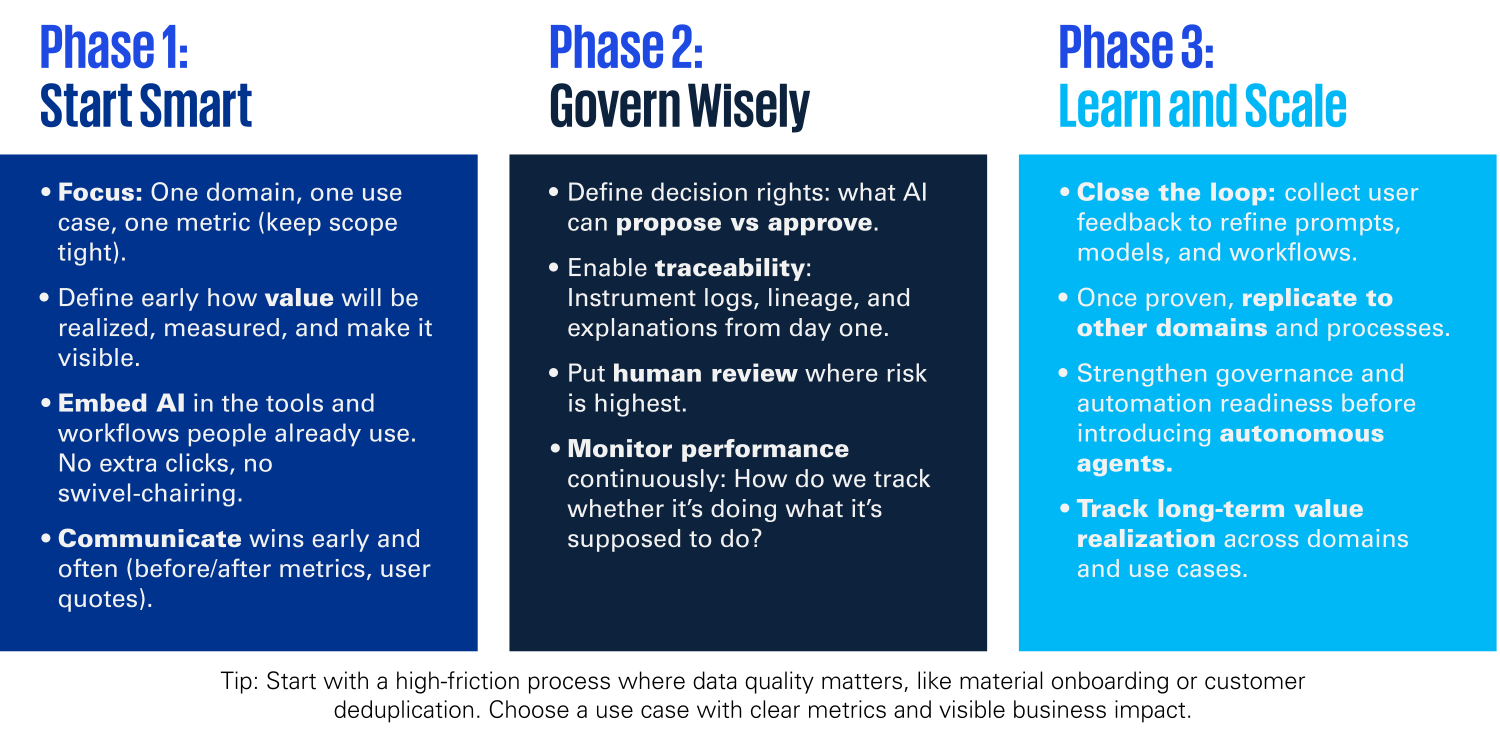
Ready to get started? Rolling out AI in MDM isn’t just about technology, it’s about enabling people, embedding governance, integrating into your architecture, and delivering measurable value. This checklist breaks the rollout into three practical phases, helping you move from pilot to scale with confidence.
With the right guardrails and feedback loops, AI becomes a trusted accelerator, not a risk. Start small, monitor impact, and scale what works.
Building trust through responsible AI in MDM
As with any AI deployment, trust is essential. Organizations must ensure AI agents operate transparently, ethically, and in compliance with regulations like the EU AI Act. That means robust governance with clearly defined roles and oversight, and mechanisms that make decisions explainable and auditable, especially in sensitive domains such as finance. Human-in-the-loop controls remain critical, providing safeguards for intervention and opportunities for improvement. By embedding these responsible AI principles into MDM, businesses protect data integrity and strengthen stakeholder confidence in their digital transformation journey.
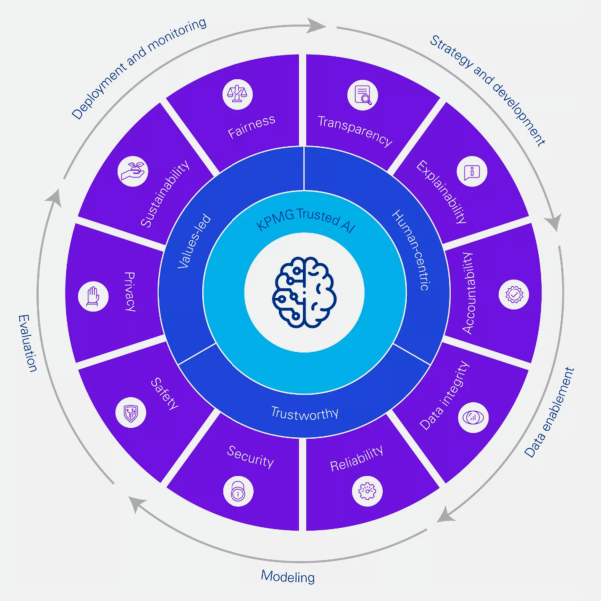
KPMG Trusted AI
KPMG Trusted AI is our strategic approach and framework to designing, building, deploying and using AI solutions in a responsible and ethical manner so we can accelerate value with confidence.
Values-led
We implement AI as guided by our Values. They are our differentiator and shape a culture that is open, inclusive, and operates to the highest ethical standards.
Human-centric
We are embracing AI to empower and augment human capabilities, unleash creativity and improve productivity in a way that allows people to reimagine how they spend their days.
Trustworthy
We will strive to ensure our data acquisition, governance and usage practices uphold ethical standards and comply with applicable privacy and data protection regulations, as well as any confidentiality requirements.
Let’s kickstart your AI-powered MDM journey
As we’ve illustrated, AI doesn’t replace governance, it amplifies it. By starting small, embedding guardrails, and scaling what works, you can move from manual clean-up to real-time orchestration. From decisions you can make, to decisions you can trust.
KPMG helps you design and operationalize MDM end‑to‑end, from defining operating models and roles to implementing standards, workflows, and data quality controls that stick. Whether your priority is data quality, compliance, or enabling digital transformation, we help you build an MDM foundation that works today and adapts for tomorrow.
And when you’re ready, we layer in AI responsibly, as an accelerator, not a replacement, so automation enhances governance and speeds up value creation.
Ready to move from clean to confident? Let’s co-design your next step.
Amalia Morel de Westgaver, Advisor & Annemie Van Cauter, Manager Advisor & Antoon Van Olmen, Director.
Explore
Connect with us
- Find office locations kpmg.findOfficeLocations
- kpmg.emailUs
- Social media @ KPMG kpmg.socialMedia