Rapid urbanization, climate volatility, fiscal constraint and rising social expectations are exposing the limits of traditional approaches to urban planning and investment. The challenge is not a lack of ambition or funding, but rather how decisions are made, investments are structured and delivery is governed and coordinated.

      Addressing the gap between investment and outcomes requires cities to move beyond asset-level justification toward integrated, geography-specific portfolios and place-based business cases that reflect how places function and are experienced in practice. 

      Developed in collaboration with the Davos Baukultur Alliance and UN-Habitat, this white paper supports that shift. Drawing on global case studies, executive insight and practical tools, it sets out how public sector leaders can apply a place-based approach using levers already within their control. 
      At the center of the paper is the Blueprint for livable economies, a decision-making framework designed to help city leaders, investors and partners align outcomes, economic pathways and delivery mechanisms. 


      Diriyah, Saudi Arabia: Integrating heritage as a catalyst for growth

      Diriyah, home to the UNESCO World Heritage Site AtTuraif faced the challenge of transforming a historically significant site into a modern destination. Its key priorities included preserving cultural authenticity, stimulating economic growth, and embedding environmental resilience, all in alignment with Saudi Arabia’s Vision 2030.

      Diriyah adopted a holistic, place-based development model that integrates culture, mobility, infrastructure, and economic strategy into a single, interconnected framework. Unlike traditional siloed planning, the master plan created cumulative and cascading impacts, where each initiative amplifies others.

      For instance, it used transport infrastructure underground to not only preserve walkability but also enhance cultural tourism by making heritage sites more accessible, support local businesses by increasing foot traffic and reduce emissions. Similarly, biodiversity corridors and green public spaces were used to restore natural ecosystems, elevate livability and strengthen climate resilience. Cultural restoration projects complemented these efforts by anchoring a distinct sense of place to drive real estate value and tourism growth.


      About the Davos Baukultur Alliance

      With more than 85 members across 140+ countries, including 28 national governments, global businesses, civil society and international organizations, the Davos Baukultur Alliance brings together public, private and civil society leaders to advance quality as the foundation for better and more livable built environments and infrastructure through collaboration, shared standards and applied practice.


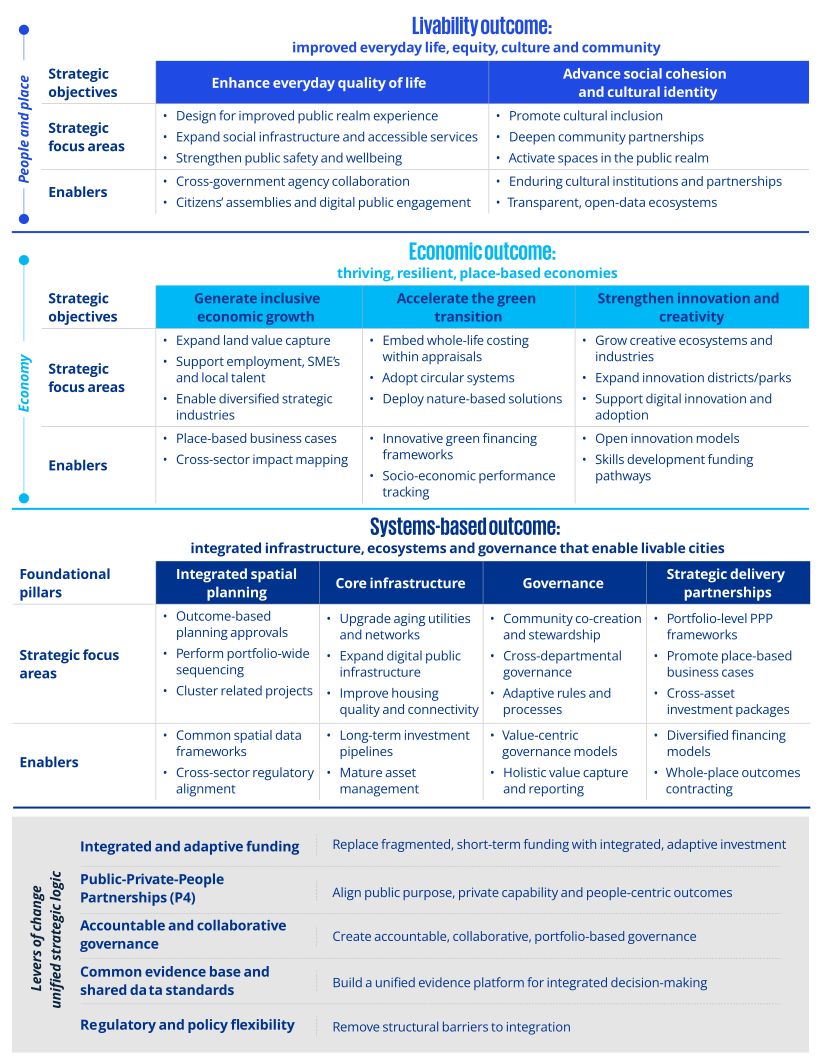
      Blueprint for livable economies: A strategic model for place-based city transformation

      This blueprint synthesizes the four strategic shifts and five levers of change into a single architecture that cities can use to design, fund, and deliver integrated outcomes.

      Livability, Economic and System-based outcomes
      Cities sit at the crossroads of growth, inclusion, and climate resilience. Meeting rising expectations means moving beyond project-by-project delivery to integrated, place-based approaches that unlock lasting value for communities and investors alike.

      Fernando Faria

      Partner, Head of Infrastructure


      The blueprint organizes actions across three layers — people and place outcomes, economic outcomes and systems outcomes — supported by five cross-cutting enablers critical to creating the ecosystems necessary for achieving these outcomes.

      With an emphasis on aligning strategy with delivery, striving to improve investment decisions and helping ensure public capital delivers measurable, long-term value for places and communities, this blueprint offers a practical framework for translating ambition into implementation and supporting cities that are resilient, inclusive and competitive over the long term.

      Download the report today and contact your local KPMG member firm to find out how we can help your city activate this blueprint for livable economies.


      Blueprint for livable economies

      View the full blueprint

      Explore the practical steps to delivering livable economies

      Our people

      Fernando Faria

      Partner, Head of Infastructure

      KPMG Middle East

      Stefan Ritsch

      Partner, Infrastructure

      KPMG Middle East

      Mohamed Dimachkie, PhD

      Cities Lead, Infrastructure Advisory

      KPMG Middle East